Here’s a look back at what happened in the Chicago area on June 21, according to the Tribune’s archives.
Is an important event missing from this date? Email us.
Flashback: June 22, 1958

1958: The last remaining Chicago streetcar made its final run. The last paying trolley customer was Al Carter. Carter was also the last customer at the 1933-34 Century of Progress, which was the second World’s Fair hosted by the city.
Weather records (from the National Weather Service, Chicago)
- High temperature: 101 degrees (1988)
- Low temperature: 38 degrees (1992)
- Precipitation: 1.58 inches (1875)
- Snowfall: Trace (2013)

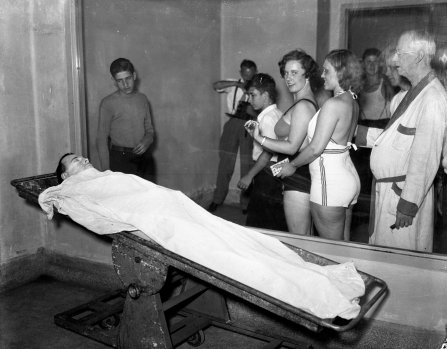
1920: U.S. Army veteran Carl Wanderer claimed his wife Ruth Wanderer was fatally shot by an unknown man during a robbery attempt in the vestibule of their apartment complex before he fatally shot the assailant.
Wanderer later admitted to killing both and staging the scene in what was to be known as “The Case of the Ragged Stranger.”

1921: Bessie Coleman became the first Black woman to earn a pilot’s license. The International Aeronautical Federation in France presented it to her almost two years before fellow aviator Amelia Earhart.
Coleman returned to the United States aboard the steamer ship Mancuria amid fanfare on Sept. 25, 1921. She proclaimed herself the “only Negro aviatrix in the world,” the Tribune reported, and intended “to give exhibition flights and thus inspire the colored citizens with a desire to fly.”

1964: The Rev. Martin Luther King Jr. was the keynote speaker at the Illinois Rally for Civil Rights held at Soldier Field, where he told the crowd of more than 57,000, “We must continue to engage in demonstrations, boycotts, and rent strikes and to use all the resources at our disposal. We must go to the ballot box and vote in large numbers. But nonviolence is the most total weapon available to the Negro in his struggle for human dignity.”
The predominantly Black crowd that gathered to hear him speak was smaller than expected, however, due to rain.
1971: The Chicago Teachers Union voted by a 2-1 ratio to accept a plan to integrate faculties in the city’s public schools. The plan called for the faculty of any one school to be limited to no more than 75% Black or 75% white teachers. The vote of 11,681 to 5,566 represented a larger membership turnout than for the teachers’ contract vote at the beginning of the year.

1996: Doors to the Museum of Contemporary Art’s new building on East Chicago Avenue opened for the first time to the public at 7 p.m. and remained so until 7 p.m. the following day. The unique 24-hour concept was considered its own performance piece for the approximately 25,000 people who visited during that time period.
Missing, however, was the museum’s founder Joseph Randall Shapiro, who died just days earlier at the age of 91.

2011: Ferocious winds spawned tornadoes that hit Downers Grove and Mount Prospect, but warning sirens in the communities remained silent. In both cases, tornadoes about 200 yards wide traveled roughly 2 miles, toppling trees, tossing lawn furniture and knocking down power lines.
Want more vintage Chicago?
Subscribe to the free Vintage Chicago Tribune newsletter, join our Chicagoland history Facebook group, stay current with Today in Chicago History and follow us on Instagram for more from Chicago’s past.
Have an idea for Vintage Chicago Tribune? Share it with Kori Rumore and Marianne Mather at krumore@chicagotribune.com and mmather@chicagotribune.com