
About one year after Nippon Steel partnered with U.S. Steel, activists nationwide and globally are still fighting for cleaner technologies.
“Gary needs and deserves investment in clean steel,” said Lisa Vallee, organizing director of Just Transition Northwest Indiana. “These communities have paid an extraordinary price for America’s progress. They have borne the pollution, the health impacts and the loss. And now, when the technology exists to dramatically reduce pollution and produce truly cleaner steel, Nippon Steel is choosing to build that future somewhere else.”
Vallee was one participant in a Monda joint virtual press conference with Indiana and Pennsylvania activists calling on Nippon Steel to make green investments in U.S. Steel facilities. The groups held the press conference ahead of Nippon’s annual executive and shareholder meeting in Tokyo.
In addition to Vallee, speakers included Gary Advocates for Responsible Development board member Kwabena Rasuli, Breathe Project Executive Director Matthew Mehalik, Indiana University Environmental Resilience Institute Executive Director Gabriel Filippelli, and SteelWatch Asia Lead Roger Smith.
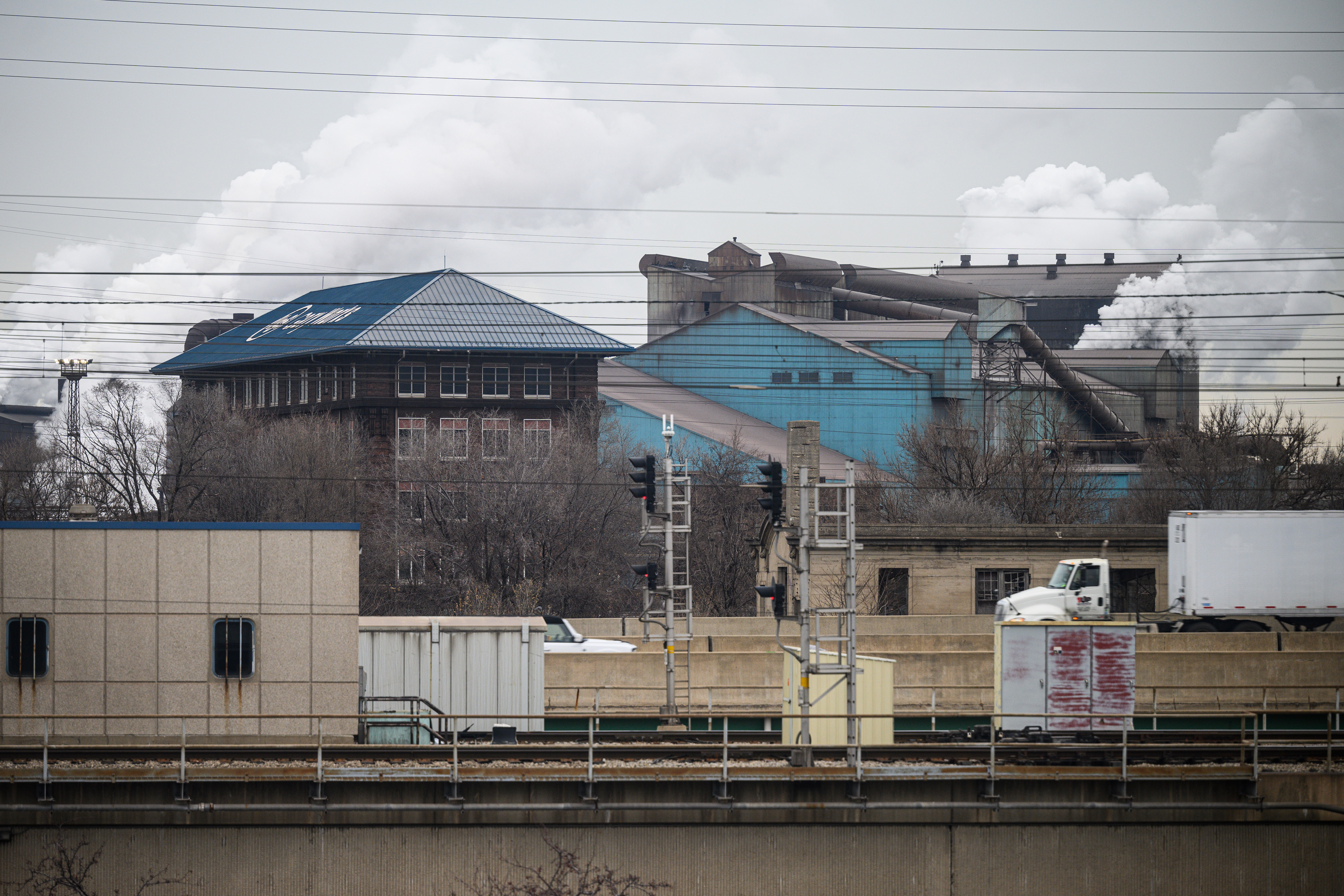
Northwest Indiana activists are fighting for direct reduction at U.S. Steel’s Gary Works facility. According to the Association for Iron and Steel Technology, direct reduction creates sponge iron, which “is produced in a reactor by direct reduction of iron ore in solid form, utilizing natural gas as the reducing agent to produce pellets or briquettes.”
Direct reduction by itself cannot create steel, according to a previous statement from U.S. steel, and direct reduced iron is a feedstock used in electric arc furnaces that produce steel. U.S. Steel is investing $1.9 billion into a direct reduced iron facility in Osceola, Arkansas.
Rasuli said during Monday’s press conference that Gary residents want the same kind of investment.
“We are the people who have made Gary Works what it is today, and we have paid the price for that,” he added.
With the reline of Gary Works’ blast furnace #14, the facility is on track to run its largest blast furnace for about 15 to 20 more years, Rasuli said, and he’s worried about the impact that will have on regional pollution and health.
“Nippon has the opportunity to do the right thing and make it right for the people of Gary,” he said. “We have the people, we have the experience, we have the location and we have the infrastructure.”
A previous U.S. Steel statement said the company would need to build a new electric arc furnace-based steel “from the ground up.”
However, in a previous GARD report, the group found that U.S. Steel could install electric smelting furnaces at Gary Works, which could then melt direct reduced iron and remove its impurities. The molten iron could then be fed into the facility’s basic oxygen furnaces to create steel, according to the report.
U.S. Steel has said that is not being done anywhere nationally or at the scale needed for Gary Works.
A U.S. Steel spokesperson responded to the press conference in a Tuesday statement, saying that both its Gary Works and Mon Valley Works facilities have achieved environmental compliance rates exceeding 99%. The facilities employ thousands and “are committed to a shared vision of good paying jobs, environmental excellence and being good neighbors.”
Investments at Gary Works will make steel “cleaner, more efficient and higher quality,” according to the statement, and the projects will also enable production of new steel products, reduce coke consumption, and improve operational efficiency and the long-term competitiveness of Gary Works.
“The narrative that these investments will lead to job loss in the coming years is both sensational and damaging to our growing workforce,” the statement said. “Calls to replace Gary Works or the Mon Valley Works with an electric arc furnace … steelmaking process, as in our Big River Steel Works in Arkansas, ignore the significant economic and technological realities of steelmaking. The two facilities are fundamentally different.”
The Big River Steel Works direct reduction facility was built from scratch, but to bring direct reduction and electric arc furnaces to Gary Works, the mill would have to be shut down and rebuilt, which the company said would bring “years of disruption, substantial job losses and reduced ability to serve key customers.” Electric arc facilities run with fewer employees as well, according to U.S. Steel.
“We recognize that a variety of groups are engaged in conversations about the future of steelmaking,” the U.S. Steel statement said. “While many of these organizations are passionate about environmental issues, they may not always have the detailed insight into the operational realities of producing the high-quality steel grades our customers rely on — work we have been dedicated to since our founding in 1901. We welcome dialogue about emerging technologies, but it is important that discussions are grounded in practical, science-based assessments of what is feasible today and what is required to meet customer needs while continuing to reduce environmental impact.”
Vallee claimed Monday night that lack of clean steelmaking will create economic issues for Northwest Indiana, saying that facilities that don’t adopt cleaner technologies risk becoming uncompetitive and obsolete.
“(Northwest Indiana) should be first in line for the investment that makes steel production cleaner, safer and more sustainable,” Vallee said. “We need these jobs. We need these investments, but most importantly, we have earned the right to be at the front of the line for this technology, not left behind once again.”
Filippelli, who created an Indiana University report about the need for clean steel, echoed Vallee’s sentiments. Relining the blast furnace will extend the life of outdated coal-based technologies into the 2040s, he added.
Partially modernizing a facility like Gary Works would cost about $1.5 to $2 billion, Filippelli said. Full modernization would cost more, he said.
“If Indiana invests in modernizing now, the state can remain a national leader in steel while capturing new economic opportunities,” Filippelli said Monday. “They’re all well within the scope of steel companies’ recent capital investments.”