
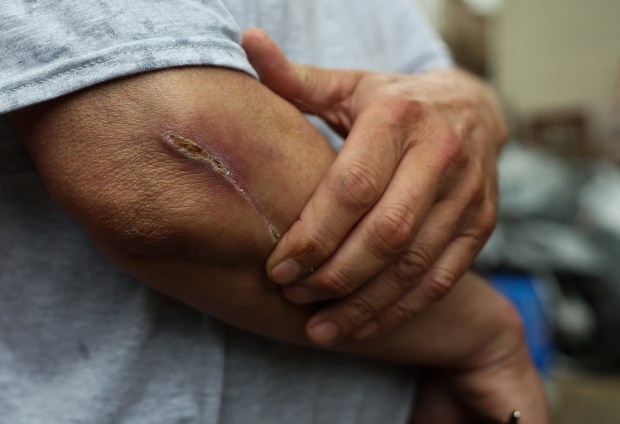
The gunshot wound on Thomas Torres’ right arm is three or four inches long and still healing.
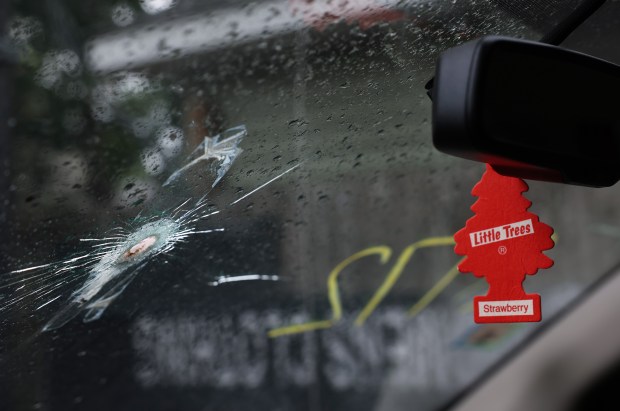
It’s been about a month since Torres and a friend were shot as they drove down South Throop Street to a morning appointment in the Back of the Yards area. Torres was shot in the arm, and his friend was shot in the back. A few hundred feet in front of them, Pedro Ramírez, a Tilden High School junior on his way to school, was killed.
Torres, 55, does not believe he or his companion were the targets of the shooting that morning. Nor does he think the gunfire was meant for Ramírez. But that’s about where his certainty runs out. In the past month, he’s asked himself one question over and over: “What person wakes up at 7:30 a.m. and shoots a 17-year-old little guy and two old men?”
Torres, his companion and Ramírez were three of the people wounded or killed in 60 shootings around the Deering District (9th) since the start of the year. The district, and particularly the Back of the Yards area, is enduring a burst of gun violence after a historic dip last year.
CPD data shows that across Chicago, shootings and homicides are still much lower, year-to-date, than they were in 2022 as the city emerged from the pandemic. And homicides in most of the city are virtually flat or decreasing sharply compared to the same period last year.
A swath of the city’s South Side, and the Deering District in particular, is the exception. The district, which stretches from Chinatown, Bridgeport and Canaryville across the Back of the Yards and McKinley Park to Gage Park, has so far tallied a 183% increase in homicides compared to the same period in 2025. The CPD area that covers Deering, known as Area 1, has seen a 68% increase in homicides, data shows.

That means two things. First, it means the uptick in gun violence Chicago has seen in 2026 is driven in large part by shootings in a relatively small portion of the city. And it means that the people who live in those neighborhoods — many of whom are already too familiar with gun violence and its staggering costs — are shouldering an even bigger share of the trauma and uncertainty gun violence unleashes.
The wave of shootings has put violence prevention workers on high alert as the summer wears on. And it’s raised the existential question of whether the city can sustain its progress driving violence down after the gun violence rate dropped to ten-year lows in 2025.
Northwestern University sociologist Andrew Papachristos, who studies neighborhood public safety and how violence tends to concentrate among small groups of people, said it’s hard to know at this point if something has shifted for the long term that’s driving the changes in neighborhoods like Back of the Yards. For the moment, he continued, the contrast between the neighborhoods on the Near South Side and the rest of the city highlights what’s often called “the safety gap”: “The whole level (of violence) has gone down, but it’s gone down further for the safest communities and that means the other communities are still really feeling the brunt of it.”
The question facing people dedicated to community safety in Back of the Yards and neighboring areas is how to soften that blow and its long-term effects.
Spike drivers
The Chicago Police Department declined to make Area 1 leadership or command staff in the Deering District available for an interview. In response to questions from the Tribune about potential drivers of the uptick in shootings, department representatives wrote that there were “multiple factors and conflicts” that could drive increases. CPD “continuously assesses the activity and crime patterns within every community throughout the city, including Area One.
“To address this crime, we regularly review and strategically adjust resources based on what we are seeing on the ground,” CPD said.
Mayor Brandon Johnson said Thursday he’d spoken to Deering District Commander Joseph Mark and other leaders in Area 1 heading into the Fourth of July weekend, typically one of the year’s busiest weekends for violence.

Police sources around Area 1, which covers much of the South Side through 75th Street, didn’t identify one specific factor contributing to the rise in homicides. Some noted domestic homicides have been on the rise throughout the city and said they had noticed that trend in their districts. And some nodded to flare-ups between street gangs and cliques in the Deering District and elsewhere. Others pointed to attacks that killed multiple people, like an Englewood house fire that’s being investigated as arson and left four people dead.
Papachristos echoed that observation, noting some neighborhoods that have seen the steepest increases in shooting victims aren’t seeing exponential shooting growth, but instead more people wounded in fewer attacks.
“When you have these multi-victim shootings it’s going to drive the percentages higher with the same number of incidents, or even fewer,” he said.
Beyond the bigger numbers, the psychological effect on a neighborhood is also very different, he said. The violence and the fear it creates is even more public, in-your-face and wider-reaching.
He was hesitant to identify a particular cause behind the growth in multi-victim shootings, however. The type of guns used was a possible factor, he said. And conflicts between street gangs, while nothing new in Chicago, “tend to be like dimmer switches rather than on and off switches” as influences on the overall level of violence in a neighborhood.
For Sam Castro, the director of strategic initiatives and partnerships at the Institute for Nonviolence Chicago, generational feuds between gangs are a constant in his work.
“It’s just sometimes it can be a person’s anniversary or a person who just came home (from prison) to reignite the fuel in the fire and agitate people,” he said.
The spike itself
Castro, whose group runs much of the community violence intervention work in and around Back of the Yards, had the sense long-standing clashes in the neighborhood were about to reignite beginning with a March shooting that left two men dead near the intersection of 50th and Justine streets.
After that, Castro said, “there was a whole bunch.”
Beginning in May, police reports detail an accelerating string of attacks, some with clear connections to wider conflicts and some without.

In the early morning hours of May 2, a man identified by the Cook County medical examiner’s office as Andre Rivers was standing on the sidewalk near the intersection of 50th and Western when he started to yell back and forth briefly with people driving in a light blue Honda CRV. The car pulled a U-turn and jumped a curb to hit Rivers, then reversed and ran over him again.
Despite a note in the report that the assailants were yelling gang slogans, it’s not clear to police why 65-year-old Rivers would have been a target.
That evening, a man identified by the medical examiner’s office as Nelson Urrutia Jr. was standing on the sidewalk near the intersection of Richmond and 54th streets in Gage Park when a dark sedan drove up and three people began to shoot. Urrutia, 32, appeared to fire back but was shot multiple times and died almost instantly, according to the medical examiner’s office.
Hours later, a dispute at a party in New City escalated to a shooting that left two teenage boys and a young man wounded.

Three days later, 26-year-old Krystal Cruz was sitting in her car near West 50th and South Wood streets when two shooters on motorcycles sped by and fired before fleeing to the east. Cruz was shot multiple times and pronounced dead soon afterward. Her two younger brothers were with her and also wounded, but survived.
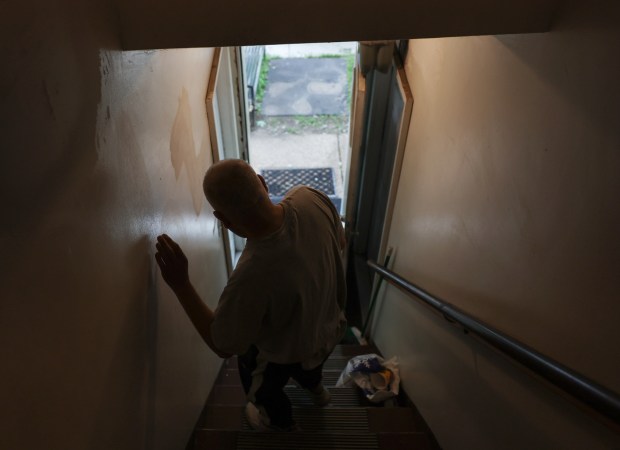
Then came the May 26 shooting that killed Ramírez and wounded Torres and his friend. Torres said he’s been aware of his safety through the decades he’s spent in the neighborhood. He said a neighbor’s son was killed across Ashland a few years ago.
“I walk out through that door … you never know,” he said.
But he never saw himself as a likely target.
“A lot of people know me,” he said. “I don’t go out much because of my heart.”
He doesn’t know who shot him, because the assailants fired at his car from behind.
Historically, the La Raza street gang has controlled a piece of the neighborhood that lies southeast of the intersection of 47th Street and Ashland Avenue. La Raza’s longtime rivals, the Latin Saints, have for decades held down the northwest area of that intersection.
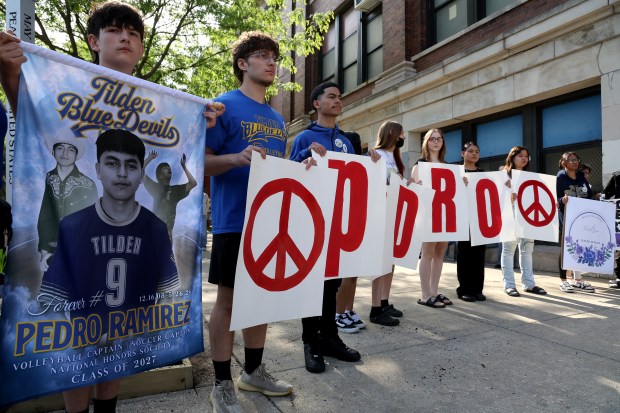
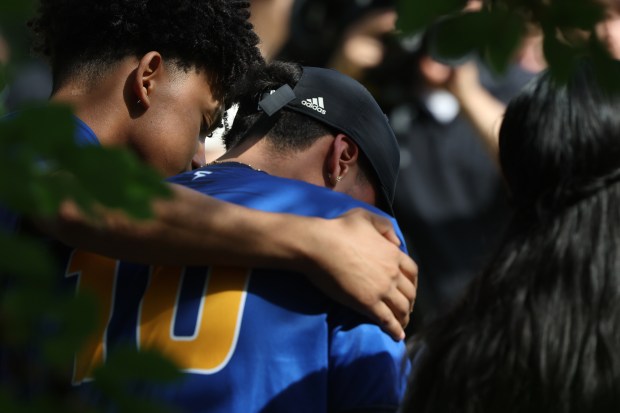
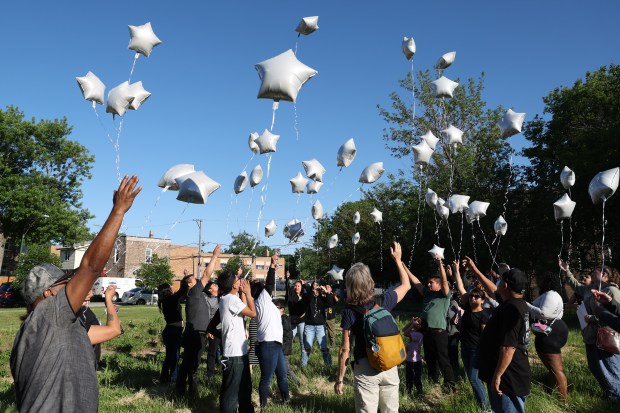
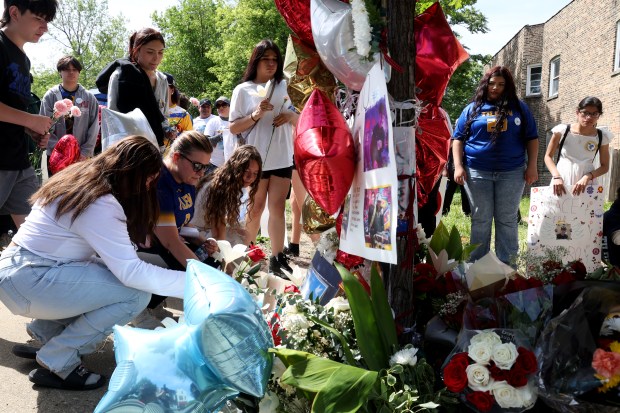
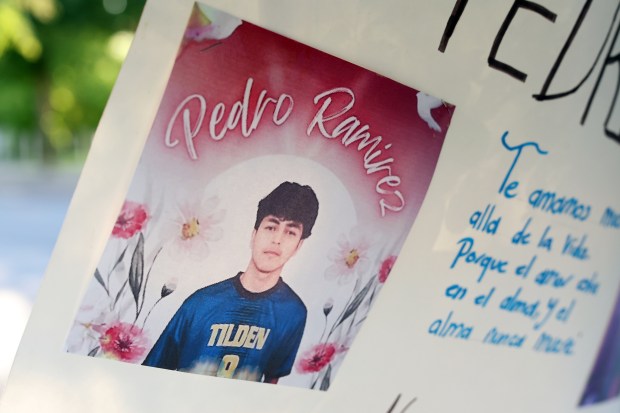
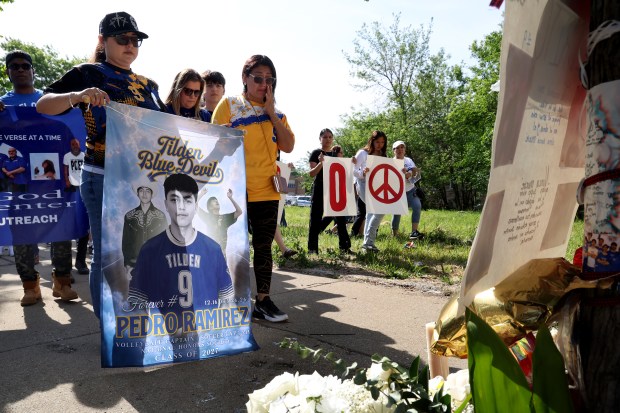
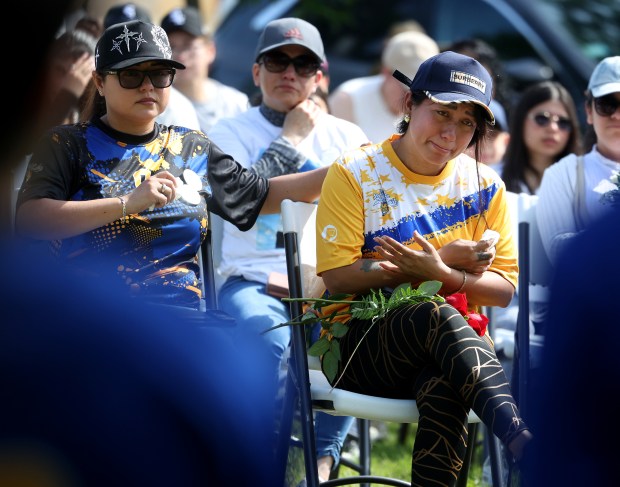
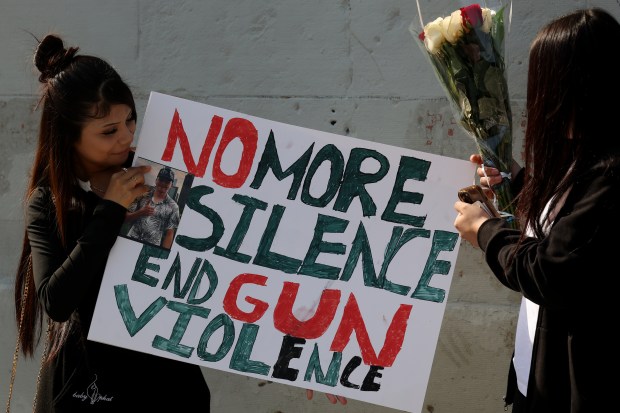
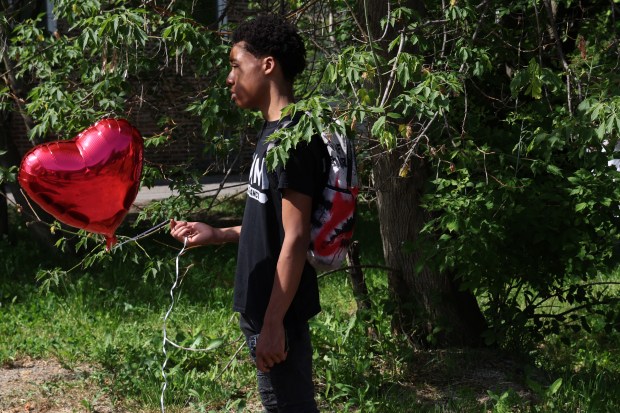
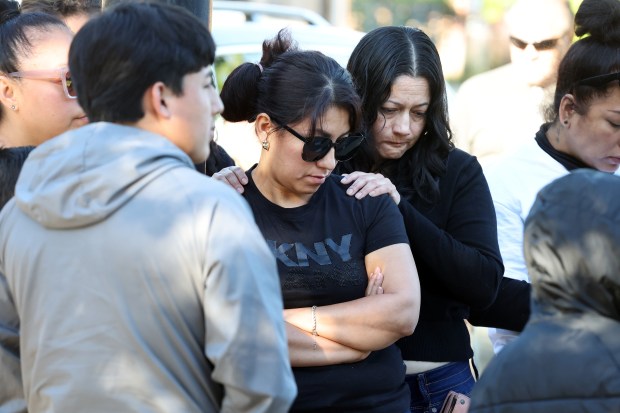
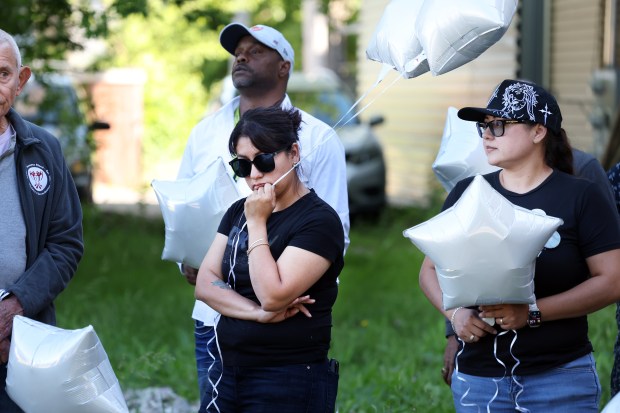
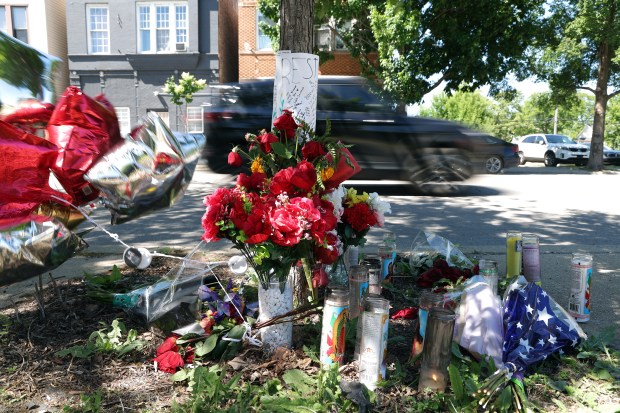
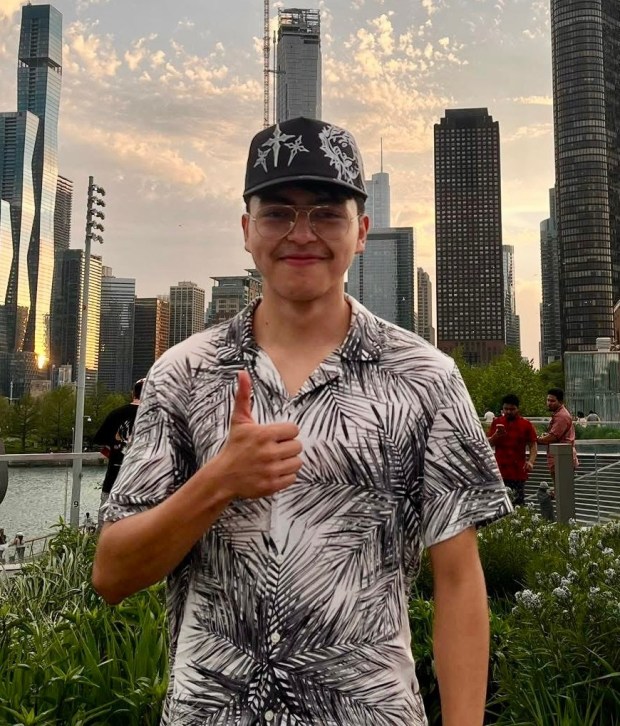
The shooting that wounded Torres and killed Ramírez took place just south of La Raza’s corner of town. Police briefly arrested and questioned one man, whom court records describe as a Saints member, shortly after the shooting. The Tribune is not naming the man because he was not charged.
A week and a half later, a group of unknown shooters walked up to a party south of Cornell Square Park, in New City, and fired into the crowd, hitting seven people. Two died — Lamar Butler, 32, and Isaac Bradley, 42.
According to initial reports obtained by the Tribune, authorities were investigating the possibility a separate gang conflict motivated that shooting.
Solutions for right now
Castro, of the Institute for Nonviolence, and his team are scrambling to coordinate support and services for the victims, their families and others close to them. At the same time, they’re trying to head off other shootings.
Much of that preventative work depends on on how effectively outreach workers can keep up relationships among groups in conflict, how quickly they can shift priorities and how much time they can spend in the highest-risk areas.
It also means talking to “some of the guys from different groups” and offering them different opportunities like workforce development classes, safe places to spend time and chances to get out of the neighborhood, he continued.
They’re stretched thin. Castro said a portion of the group’s funding recently evaporated, forcing him to let go of an outreach worker and two victim advocates who served the Back of the Yards area. The supervisor of the neighborhood outreach team died of natural causes last week. That leaves five staff members, plus Castro, working in the area that reaches from Western Avenue to the Dan Ryan, between 43rd and 55th streets.

“There’s obviously gaps in the community with certain groups,” he said. “There’s only so many of us and then we have to figure out how to navigate our team’s safety as well, because everybody can’t go everywhere.”
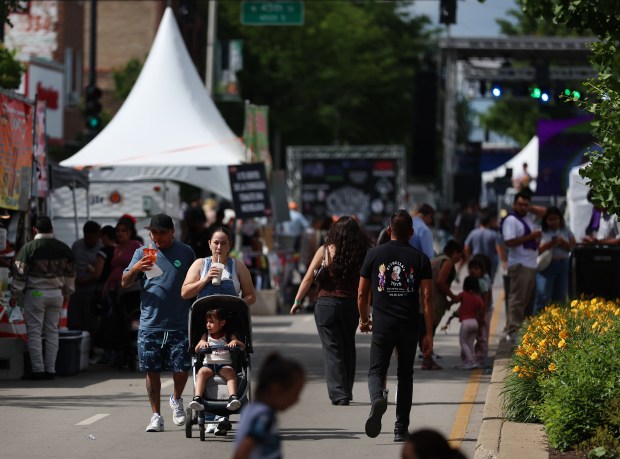
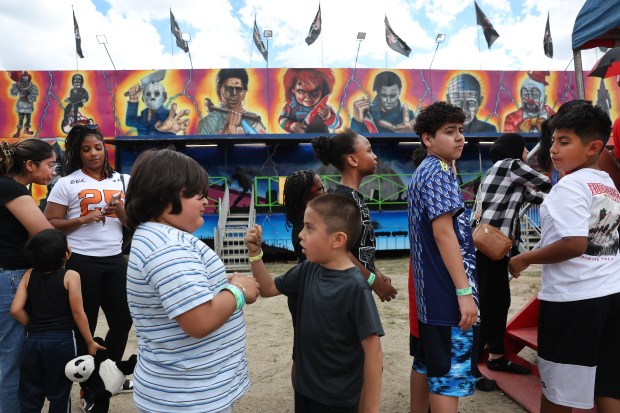
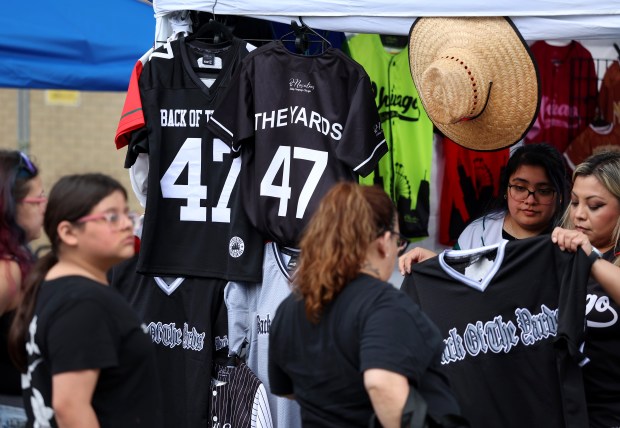
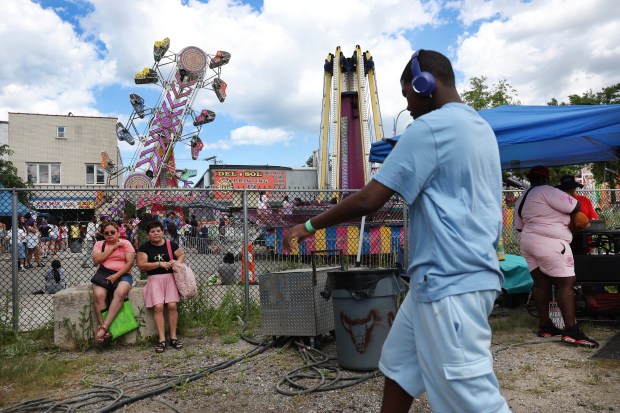
But Castro said he was encouraged by the recent Fiesta Back of the Yards, held over three days in June. Though the festival has in the past seen fights and assaults between rivals, Castro said, this year’s “went amazing.”
“It shows that when we come together as a whole, we can make it safer,” he said. “People need to know there is a plan, and be part of that plan.”


Ald. Raymond Lopez, 15th, would prefer a different approach.
“We have plenty of programs for anti-violence,” he said. “You have mindsets that no amount of programming is going to entice them to walk away from this lifestyle.”
Lopez, a vocal pro-police City Council member whose Southwest Side ward covers part of the Deering District, said he’s noticed “a definite shift” in how the area gets policed over the last year. He questioned how much support district officers get from the leadership of Area 1 and the department’s patrol division.
Lopez wants to see more support for Area 1 detectives, more coordination with federal agencies to process and track weapons recovered in crimes and more manpower to go after “the not even 200 people causing problems” in a given neighborhood.
Solutions that will take time
Beyond the day-by-day timeframes of particular shootings or arrests, bringing violence back down to 2025 levels — and keeping it on the decline — is a project that has spanned decades and promises to stretch far into the future.
Ald. Jeanette Taylor, 20th, whose ward covers an eastern section of Area 1, said while in the short term she wanted to see less turnover in the police districts her ward covers, “we are not going to be able to out-police and out-arrest our way out of this.”
Beyond more communication among neighbors and the establishment of new block clubs, Taylor, a member of the City Council progressive caucus and longtime community organizer, emphasized the need to build connections in neighborhoods that have historically seen low levels of trust in law enforcement.
“We started to repair the relationship that community has (with) the police,” she said. “But we have a long way to go.”
Castro, whose team shrunk despite the challenges they’re facing, worries about long-term support for the kinds of generational issues they work to solve. 2025 was a banner year, he said, but may have given the impression the work it took to get there had a finite end point.
“(Funders) see a success, they forget that it takes resources to do maintenance on those relationships,” he said.
His team is looking to establish more peacekeepers — people still involved in gangs who can be effective at curbing violence before it happens — in some portions of Back of the Yards and reinforce relationships. They’re hopeful that over time, those additions will chip away at violent cycles of retaliation.
Chicago, Cook County and Illinois have made big bets in recent years to expand civilian-based violence prevention work like street outreach and case management, behavioral health services, employment and educational opportunities.
Papachristos, a principal researcher for the city’s premier intervention initiative, known as SC2, noted it will take time to see that work pay off in full. And there will always be flare-ups and unexpected new factors, he continued.
The question in the long run, he said, is how to make sure 2025’s numbers become the new ceiling for violent crime in Chicago, “so that when we have a bad year, we quickly recover.”