Some might be conflicted when it comes to celebrating our divided country this year. And, it turns out, some Chicagoans in 1876 felt the same way.
“Since the (Civil) War, the average Chicagoan has taken comparatively little interest in ‘the day we celebrate,’” the Tribune observed on July 5, 1876. “Nothing of (the Fourth of July) remains to-day, so far as Chicago is concerned, save a large number of headaches, the smoldering ruins of a few small-sized conflagrations, an occasional thumbless hand, and a general feeling of used-upness.
“A hundred years hence, (people) may search the files of the Tribune of the century previous to ascertain how the then half-million population of Chicago celebrated the first Centennial of the nation’s existence for the purpose of instituting a kind of Plutarchian comparison between the days that were and the days that are. … and they will do just as Chicago did yesterday.”
That’s why the Tribune is taking a look back at what the Chicago area and the state of Illinois have uniquely contributed to the nation — and the world — from scientific inventions and pioneering businesses to food, culture, sports and transportation modernizations.
Celebrating the state’s fabulous firsts
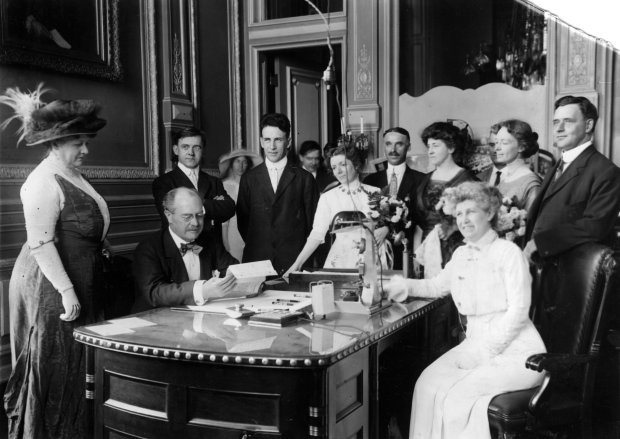
On June 26, 1913, Gov. Edward F. Dunne of Illinois, seated, signed the Suffrage Bill that gave Illinois women the right to vote. Dunne signed the bill in the presence of his wife and suffragette leaders Grace Wilbur Trout, Elizabeth Booth, Antoinette Funk and Margaret Haley. (Acme)
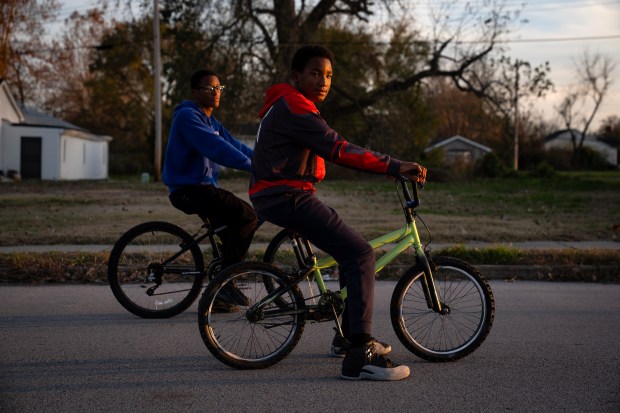
Brooklyn residents Amir Watson, right, and Promise Houston ride bikes on Madison Street on Nov. 24, 2024. Brooklyn, Illinois is considered to be one of the country's first Black settlements, the first majority-Black town in America to incorporate and the oldest such-town still in existence today. (E. Jason Wambsgans/Chicago Tribune)
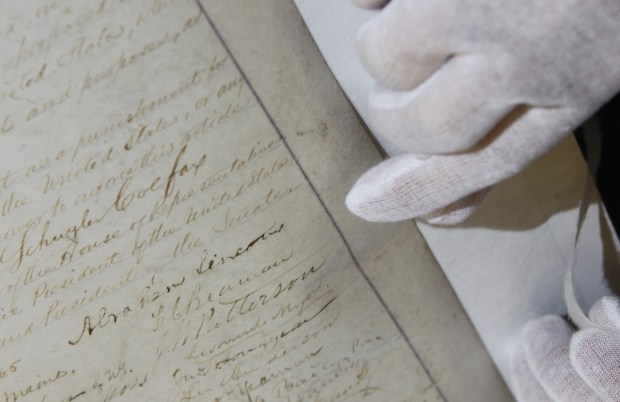
Illinois' copy of the 13th Amendment, which banned slavery in the U.S., bears the signature of President Abraham Lincoln. Graphic Conservation Co. head conservator Christina Marusich points to the signature on the document, which was in Chicago for preservation on Nov. 17, 2011. (Antonio Perez/Chicago Tribune)
A silo is used for storage on a farm off North Dwight Road in Morris on Sept. 20, 2024. (Tess Crowley/Chicago Tribune)
The Home Insurance Building in Chicago is considered the world's first modern skyscraper. It was designed by William Le Baron Jenney and had an interior metal frame to support its weight. The building was demolished in 1931. (Chicago History Museum)
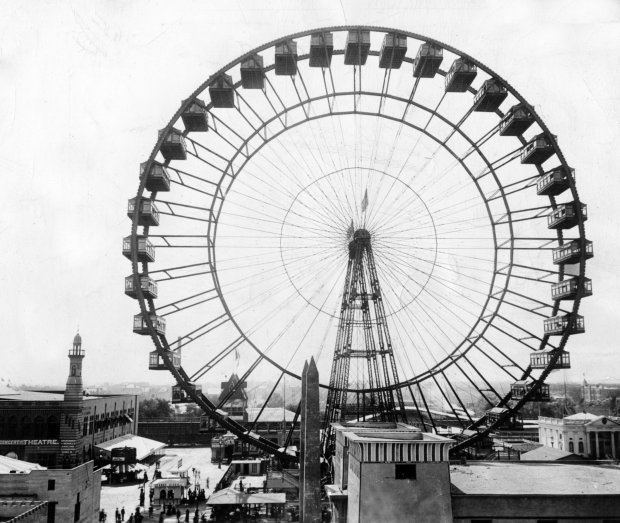
The first Ferris Wheel was built by George W. Ferris for the World's Columbian Exposition in 1893 in Chicago. (Chicago Herald-American)
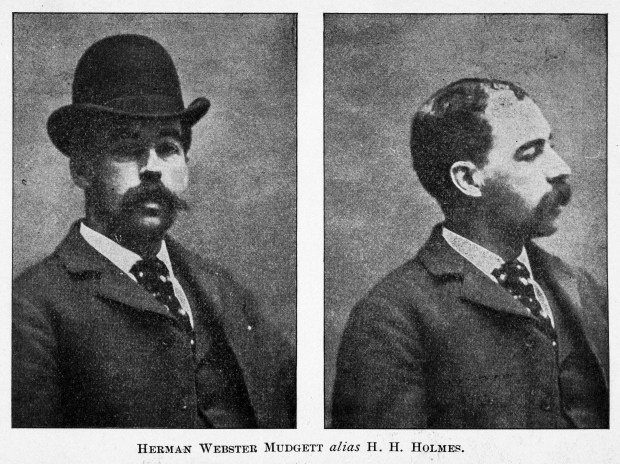
Convicted serial killer Herman Webster Mudgett, better known by his alias H.H. Holmes, is considered America's first serial killer. The photos of Holmes originally appeared in the book "The Holmes-Pitezel Case: A History of the Greatest Crime of the Century" by Frank P. Geyer. (Chicago History Museum)
In 1893, Dr. Daniel Hale Williams, a pioneering Black surgeon, performed the first successful suture of a human heart and pericardium at Provident Hospital in Chicago. (Chicago Tribune archive)
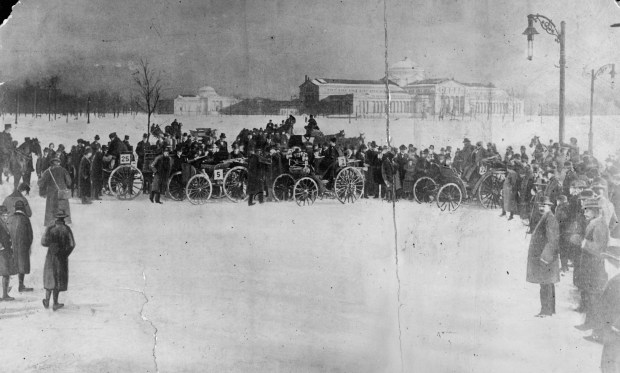
Chicago's first auto race is about to start in Jackson Park on Thanksgiving Day, Nov. 28, 1895. (Chicago Times-Herald)
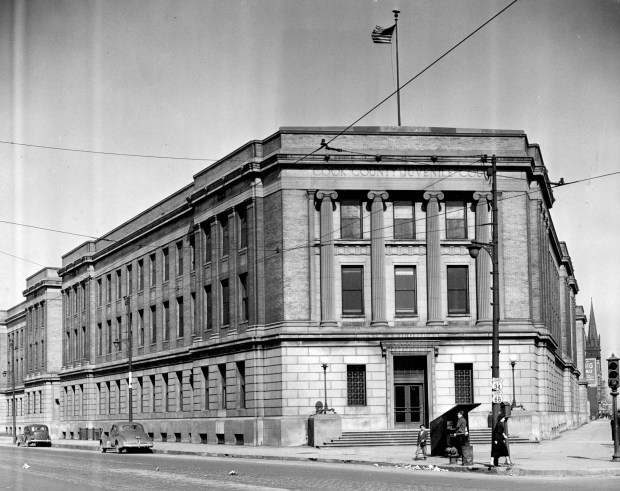
Cook County Juvenile Court building in Chicago, circa 1939. (Chicago Tribune historical photo)
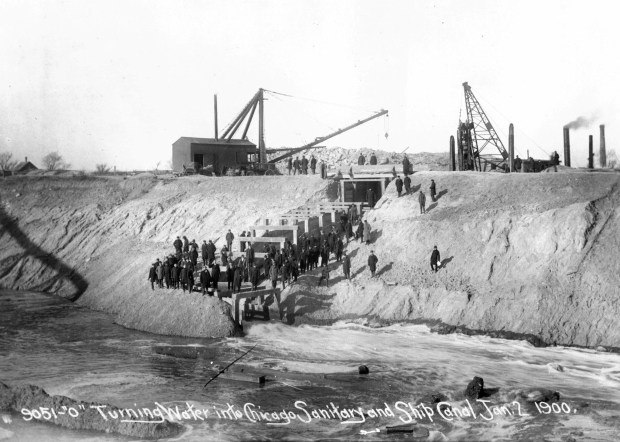
The earth section of the Sanitary and Ship Canal was constructed by horse-drawn graders, which scraped up the earth and dumped it into accompanying wagons. The first water trickled into the finished Sanitary and Ship Canal from Lake Michigan at Needle Dam on Jan. 2, 1900. (Chicago Tribune archive)
Nobel Prize winning professor Albert A. Michelson of the University of Chicago in an undated photo. (University of Chicago)
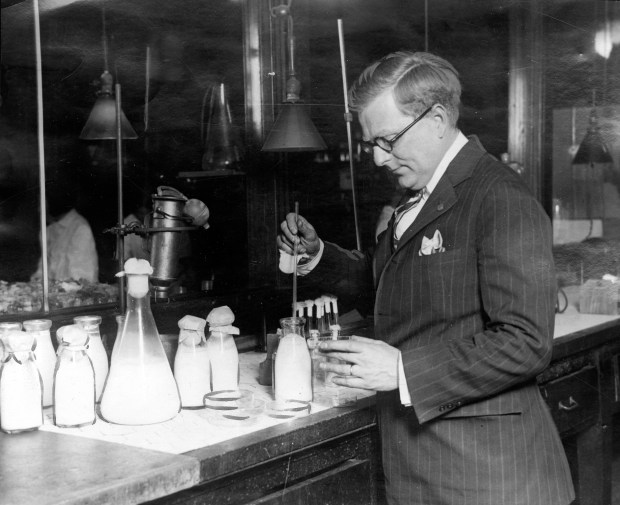
Health Commissioner Herman Bundesen examens samples of impure milk in his laboratory, circa 1925. (Chicago Tribune historical photo)
A few minutes after this photo was taken in Grant Park on July 21, 1919, the Wingfoot Air Express blimp crashed through the skylight roof of the Illinois Savings and Trust Bank in Chicago's Loop, killing 14 people. (ACME)
University of Illinois professor Joseph Tykociner gave the first public demonstration of his “sound on film” invention on June 9, 1922. In one of the segments, Tykociner’s wife Helena, shown here in a screengrab, rings a bell while saying, “I will ring … Did you hear the bell ringing?” (University of Illinois Archives)
Pioneer gay civil-rights activist Henry Gerber lived from 1924 to 1925 at 1710 N. Crilly Ct., a small 2 1/2 -story Queen Anne row house, in the Old Town Triangle district in Chicago. (Chicago Tribune archive)
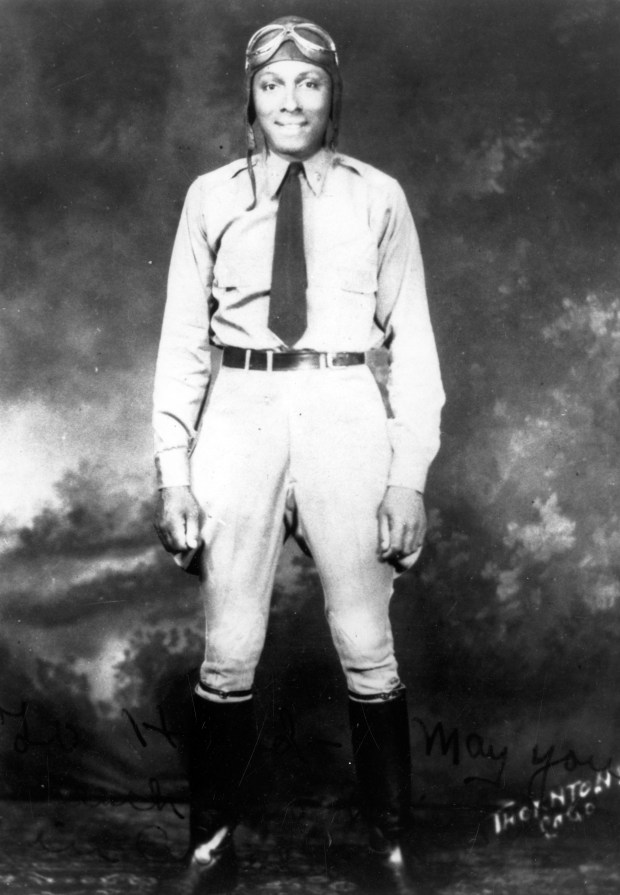
John Charles Robinson was a pioneer aviator from Chicago nicknamed the Brown Condor. Robinson started an airport in Robbins with Bessie Coleman and Cornelius Coffey. (Smithsonian Institution)
Technician Hale Erickson, from left, Dr. Hjalmar Wallin and nurse Doris Stone check blood for count and storage in ice box at Cook County Hospital on March 14, 1947. (Hugh Sinclair/Chicago Tribune)
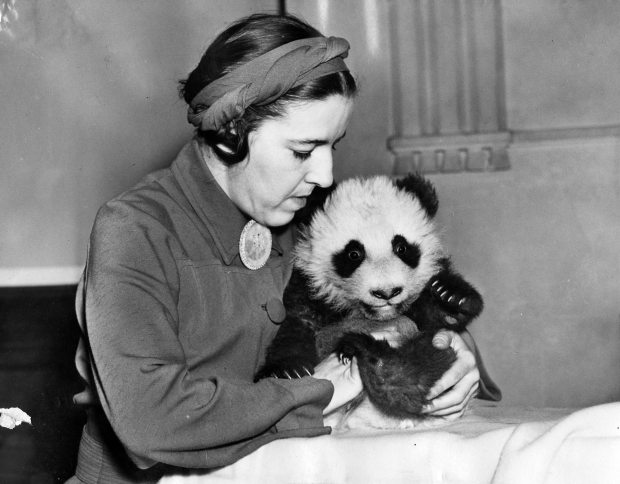
Su-Lin, a baby giant panda, and her captor, Ruth Harkness of New York, who sold the panda to the Brookfield Zoo in Chicago for $20,000. (Chicago Tribune historical photo)
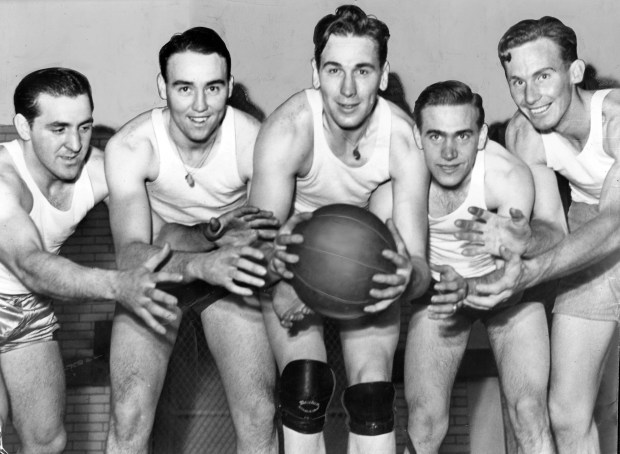
The Chicago Bruins started their season in 1939 with, from left, Bill Phillips, forward; Frank Linskey, guard; Mike Novak, center; Wibs Kautz, guard, and Eddie Oram, guard. The team practiced under Coach Sam Lifschultz. Editors note: this historic print shows a hand painted background. (Chicago Tribune historical photo)
The west stands of Stagg Field at the University of Chicago in the mid-1940s. It was in a secret laboratory under the stands that physicist Enrico Fermi and a team of scientists achieved the first controlled and self-sustained nuclear reaction that led humanity into the Nuclear Age. (Argonne National Laboratory)
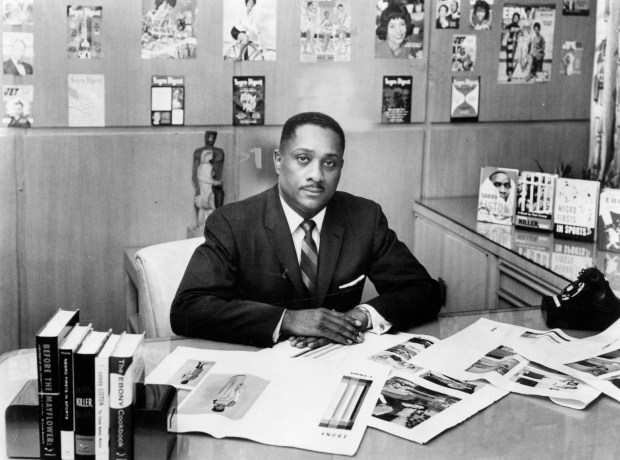
John H. Johnson, publisher of Ebony magazine, circa 1967. (Chicago Tribune archive)
Saint Frances Xavier Cabrini. (The National Shrine of Saint Frances Xavier Cabrini)
Pat Nixon, wife of President Richard Nixon, watches as Richard Meagher, manager of production, explains a model of Commonwealth Edison's Dresden nuclear plant on Feb. 6, 1970, near Morris, Illinois. (Arthur Walker/Chicago Tribune)
The revolution in birth control can be dated to 1960, when the federal government approved the first birth control pill, "Enovid," sold by G.D. Searle. (Chicago Tribune archive)
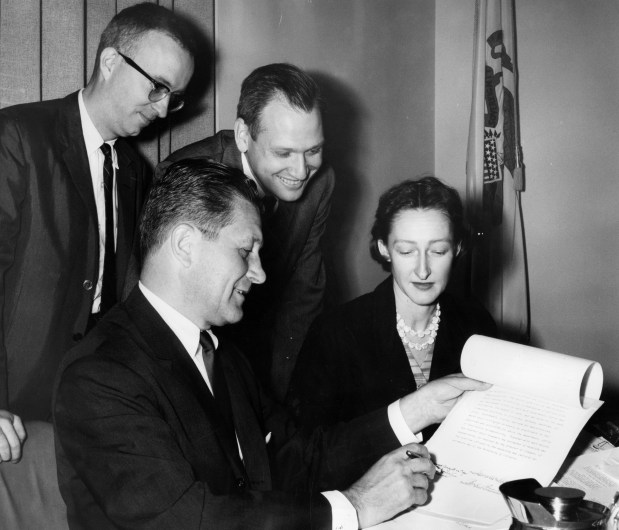
Gov. Otto Kerner signs the last of the bills involving the legislative session on Aug. 25, 1961, at the state of Illinois building in Chicago. James Moran, standing from left, and Harry Golter, both special research assistants on legislation, along with Dawn Clark, assistant to the governor, watch the signing. (George Quinn/Chicago Tribune)
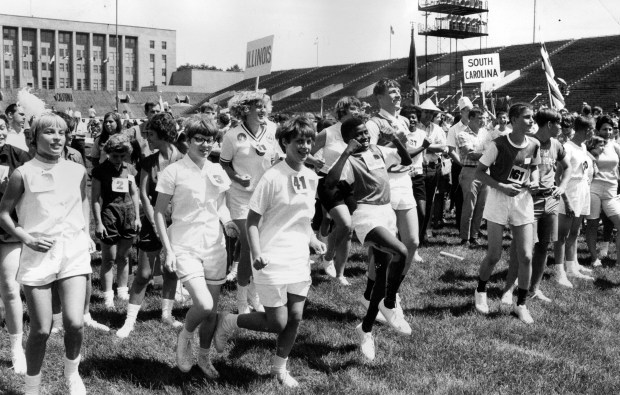
The Chicago Special Olympics, co-sponsored by the Chicago Park District and the Joseph Kennedy Jr. foundation, was held for the first time on July 20, 1968, at Soldier Field in Chicago. The event provided an athletic competition for people with disabilities. (William Yates/Chicago Tribune)
Children from Grant Elementary School in Springfield present Sen. Egbert B. Groen with a petition with 38,000 signatures in support of the Environmental Protection Act on May 26, 1970. (James Quinn/Chicago Tribune)
Gay Liberation Front members march through Bughouse Square on their way to a rally at the Civic Center (now Daley Plaza) on June 27, 1970, as part of the city’s first Gay Pride Week. (Chicago Tribune historical photo)
Martin Cooper, from Chicago, who as a Motorola executive led the team that built the first mobile cellphone, holds a prototype of that phone at his home on April 4, 2025, in San Diego. On April 3, 1973, he dialed his Chicago-built cellphone prototype from a street in Manhattan. Cooper officially claimed the first-ever cellphone call in history when his rival at AT&T answered. (Gregory Bull/AP)
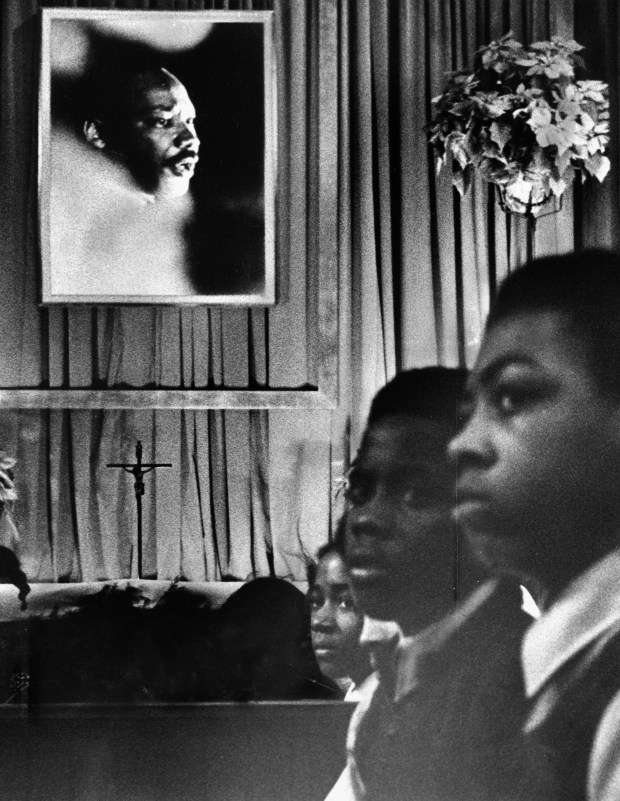
A portrait of the Rev. Martin Luther King Jr. hangs above a memorial service for the slain civil rights leader at Holy Angels Catholic Church at 607 Oakwood Blvd. on Jan. 15, 1974, in Chicago. (William Kelly/Chicago Tribune)
Morton Grove police Officer Robert J. Jones holds all 12 handguns turned in by the town's residents after the village banned possession on Feb. 1, 1982. "They are the most photographed guns in the world," Jones said, speaking of the interest in the Morton Grove law. (Chuck Berman/Chicago Tribune)
Willie Nelson performs at the first Farm Aid in Champaign on Sept. 22, 1985. (Ernie Cox Jr./Chicago Tribune)
Illinois Secretary of State Alexi Giannoulias holds his 11-month-old daughter, Alexia, and the bill signed by Gov. JB Pritzker to prevent book bans on June 12, 2023, at the Harold Washington Library in Chicago, while Pritzker applauds. (Brian Cassella/Chicago Tribune)
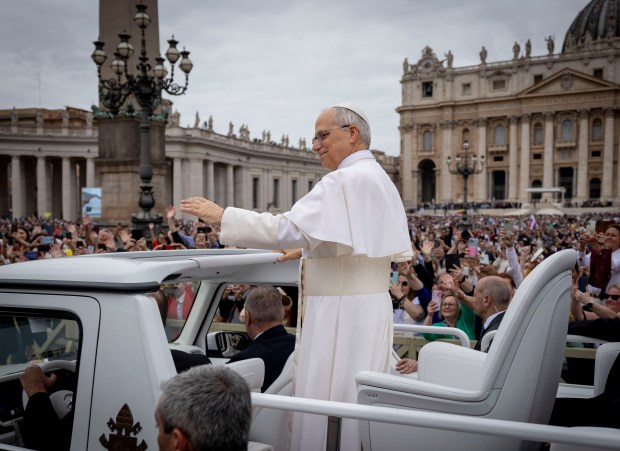
Pope Leo XIV waves to the crowd while holding his first general audience on May 21, 2025, in St. Peter’s Square at the Vatican. Leo is the first pontiff from the U.S. in the 2,000-year history of the Roman Catholic Church. (Brian Cassella/Chicago Tribune)
1 of 35
On June 26, 1913, Gov. Edward F. Dunne of Illinois, seated, signed the Suffrage Bill that gave Illinois women the right to vote. Dunne signed the bill in the presence of his wife and suffragette leaders Grace Wilbur Trout, Elizabeth Booth, Antoinette Funk and Margaret Haley. (Acme)
Our series starts with fabulous firsts — ideas that took root here in Illinois before they captured the world’s attention.
Our state is home to giants of industry and innovation. Entrepreneurs have launched first-of-their-kind ventures here. We have welcomed diversity, better representation, empowerment and demonstration on behalf of people of color, the LGBTQ+ community, those with disabilities and women.
Our residents have perfected techniques to help save lives of people, animals and the environment. Some Chicagoans have been honored for their work with awards — including the Nobel Prize — or lifetime achievement honors. Others have been declared saintly for their devotion to the sick and poor. Then there are people or events we might prefer to forget for they have brought death or destruction. But combined with the good, these are the things that make up the fabric of the place we live. Read more here.
Art, culture, food and music made here — and then shared with the world
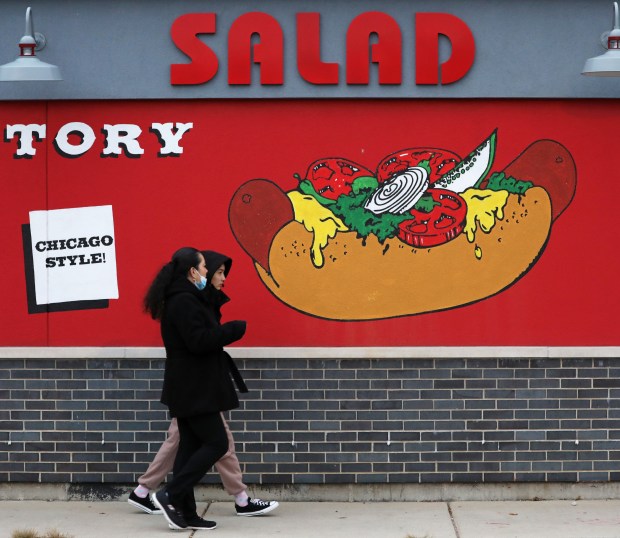
Two women walk past a mural of a Chicago-style hot dog painted on the side of a restaurant in the 2200 block of North Milwaukee Avenue on Nov. 18, 2021, in Chicago. (John J. Kim/Chicago Tribune)
“America Windows,” Marc Chagall’s stained glass panels are part of a walking tour titled “The Art of Ferris Bueller” that looks at the same artworks as Ferris and his friends in the 1986 movie “Ferris Bueller’s Day Off.” (Antonio Perez/Chicago Tribune)(Antonio Perez/Chicago Tribune)
The Mold-A-Rama exhibit at the Museum of Science and Industry features a small plastic statue of a gorilla and others on Jan. 20, 2023, in Chicago. The small plastic statues are made inside freestanding coin-operated and credit card machines in museums and zoos. (Antonio Perez/Chicago Tribune)
Ken Watkins, president and founder of the National Steppers Society, and Elise Williams warm up for the step-dancing semifinals on Feb. 8, 1999, at Daley Center in Chicago. (Charles Osgood/Chicago Tribune)
The cast of Second City -- Bill Mathieu, Howard Alk, Eugene Troobnick, Andrew Duncan, Barbara Harris, Mina Kolb and Severn Darden -- assemble for one of the skits in the new satirical revue entitled, "The Third Programme," circa July 31, 1960. (Chicago Tribune archive photo)
Playboy magazine founder Hugh Hefner, a University of Illinois alum, turned a modest America on its ear with photographs of beautiful nude women mixed with provocative writing. Date on magazine is June 1963. (John Austad/Chicago Tribune)
Robert L. May, 67, stands outside his home at 9515 Avers in Skokie, with one of his Rudolph the Red Nosed Reindeer on Dec. 20, 1972. (William Yates/Chicago Tribune)
The Statue of the Republic, at 65 feet tall, stood across from the domed Administration Building at the 1893 World's Columbian Exposition. (Chicago Tribune archive)
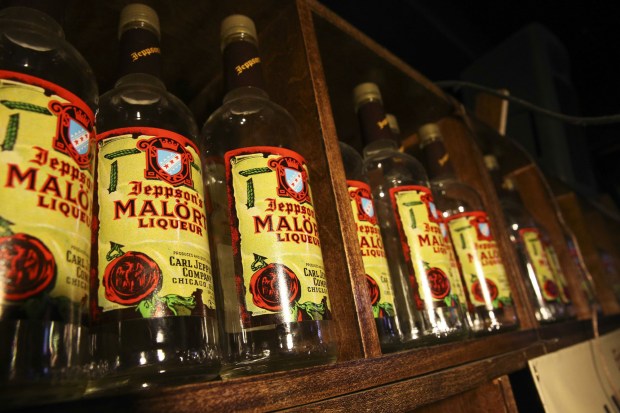
Empty bottles of Malört line a shelf at an Irving Park neighborhood bar in Chicago in 2014. (Nuccio DiNuzzo/Chicago Tribune)
The first Dairy Queen opened in Joliet on June 22, 1940. By the time this advertisement was published in the Tribune in 1950, there were six locations in the Chicago area. (Chicago Tribune)
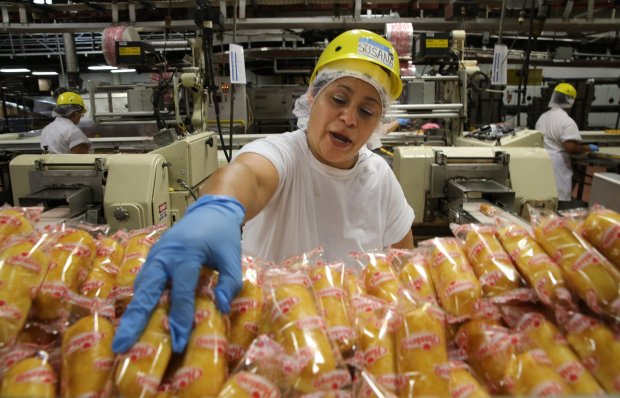
Workers return to the line to package Hostess Twinkies on July 15, 2013, which roll out by the thousands at the bakery in Schiller Park. (Antonio Perez/Chicago Tribune)
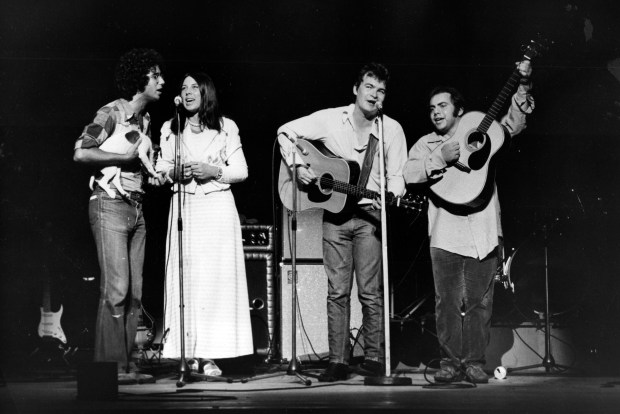
John Prine, third from left, performs an encore with Bill Quateman, from left, Bonnie Koloc and Steve Goodman at Ravinia on July 21, 1972. (Charles Osgood/Chicago Tribune)
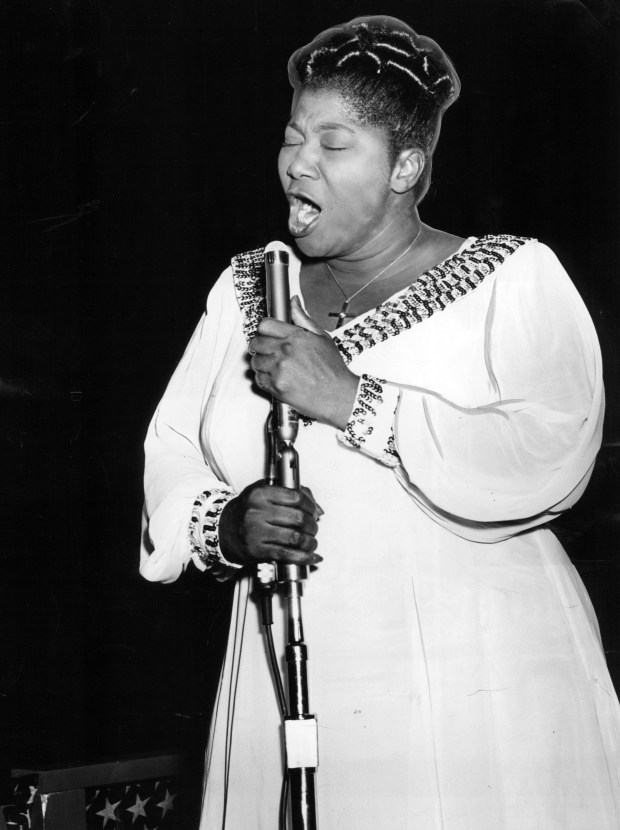
Mahalia Jackson sings "Hallelujah Chorus" from "The Messiah" in 1955. (Chicago Tribune historical photo)
1 of 13
Two women walk past a mural of a Chicago-style hot dog painted on the side of a restaurant in the 2200 block of North Milwaukee Avenue on Nov. 18, 2021, in Chicago. (John J. Kim/Chicago Tribune)
Some things are so good they just have to be shared. And in true Midwestern fashion, that’s what our state has done.
Here’s a look back at what the Chicago area and the state of Illinois have uniquely contributed to the nation on its semiquincentennial, the focus turns to the finer things in life — the arts, culture, food and music.
What follows are the creations that were founded, gifted to or perfected here, and then were embraced by the rest of the country and beyond. Despite their popularity on a bigger stage, these notions continue to hold onto their local origins. Read more here.
The political land of Lincoln, but also Addams, Daley, Washington, Jackson, Obama and more
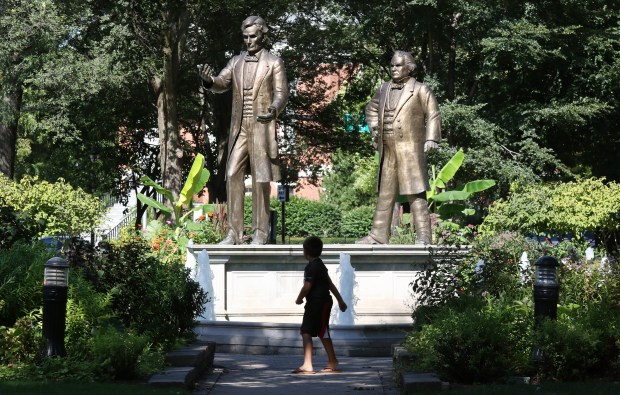
A child stands in front of statues of Abraham Lincoln, left, and Stephen A. Douglas at Washington Park, Aug. 20, 2015, in downstate Ottawa. The park is where the first Lincoln-Douglas debate was held. (John J. Kim/Chicago Tribune)
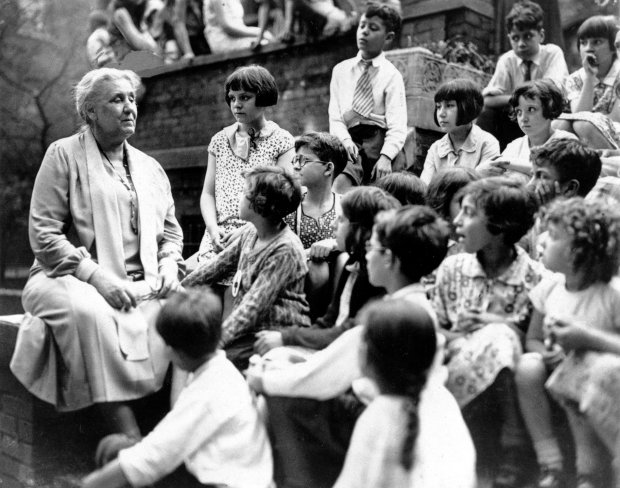
Jane Addams talks with a group of young people visiting her settlement house called Hull House in Chicago. (AP)
Republican U.S. Rep. Oscar Stanton De Priest of Illinois gives out pamphlets to supporters in 1930. (Chicago Tribune historical photo)
President Harry S. Truman holds an edition of the Chicago Daily Tribune on Nov. 4, 1948, which, based on early results, mistakenly announced "Dewey Defeats Truman." (Byron Rollins/AP)
Mayor Richard J. Daley looks over his notebook on his first morning at the mayor's desk on April 21, 1955. (Arthur Walker/Chicago Tribune)
The Rev. Jesse Jackson, center, leaves a meeting with Southern Christian Leadership Conference leader Ralph Abernathy on Dec. 3, 1971, at the Marriott Hotel in Chicago. Jackson would soon split from the civil rights group to form Operation PUSH. (Walter Kale/Chicago Tribune)
Carol Moseley Braun waves to supporters after defeating Alan Dixon for the Democratic nomination to the U.S. Senate on Dec. 18, 1992. (Eduardo Contreras/Chicago Tribune)
President-elect Barack Obama and wife, Michelle, and daughters Sasha and Malia, greet supporters after Obama gave his acceptance speech on winning the presidential election, Nov. 4, 2008, in Grant Park in Chicago. (Phil Velasquez/Chicago Tribune)
1 of 8
A child stands in front of statues of Abraham Lincoln, left, and Stephen A. Douglas at Washington Park, Aug. 20, 2015, in downstate Ottawa. The park is where the first Lincoln-Douglas debate was held. (John J. Kim/Chicago Tribune)
The Prairie State’s political arena has always been the place for civil debate — and violent confrontation — for rights.
Illinois is where presidents have been born, gained experience to lead the nation — and even forced to resign, thanks in part to efforts by the Tribune. It’s where some of the nation’s best leaders have rallied on behalf of immigrants, laborers, women and people of color. Yes, it’s the land of Lincoln, but also (Jane) Addams, (Frances) Willard, (Richard J. and Richard M.) Daley, (Harold) Washington, (Eugene) Debs, (Jesse) Jackson and (Barack) Obama.
What follows are dozens of examples of how those whose names are familiar (or aren’t) and legendary (or infamous) for their actions while representing the state have been embraced (or renounced) by the rest of the country and beyond. Read more here.
Sports teams and individuals that have achieved greatness — or infamy
George Halas, center of front row, and the 1920 Decatur Staleys. They moved to Chicago and became the Bears. (Chicago Tribune archive)
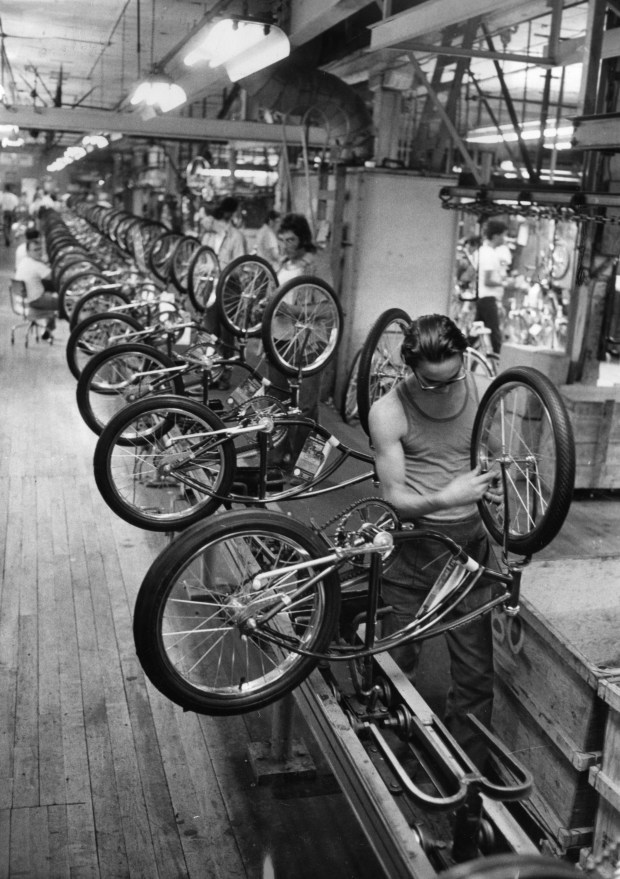
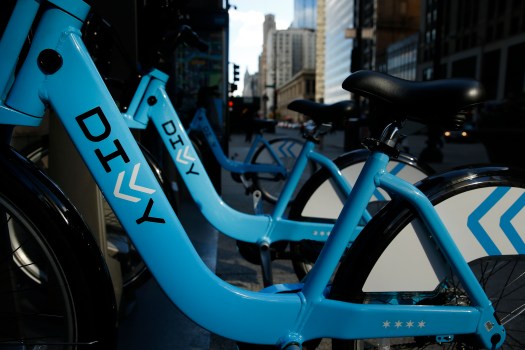
Schwinn Sting-Ray bikes move along an assembly line at a Schwinn Bicycle Co. factory on Kostner Avenue in Chicago on Aug. 22, 1972. (William Loewe/Chicago Tribune)
Boxing legend Jack Johnson, right, in 1910. (Chicago Tribune historical photo)
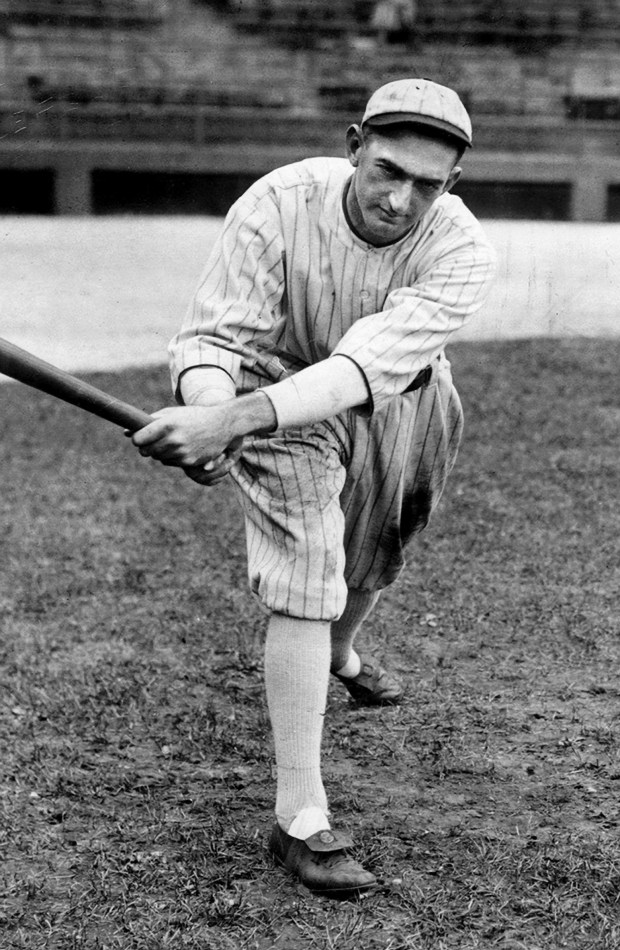
Chicago White Sox outfielder "Shoeless" Joe Jackson, a prominent figure in the 1919 World Series scandal. (Chicago Tribune archive)
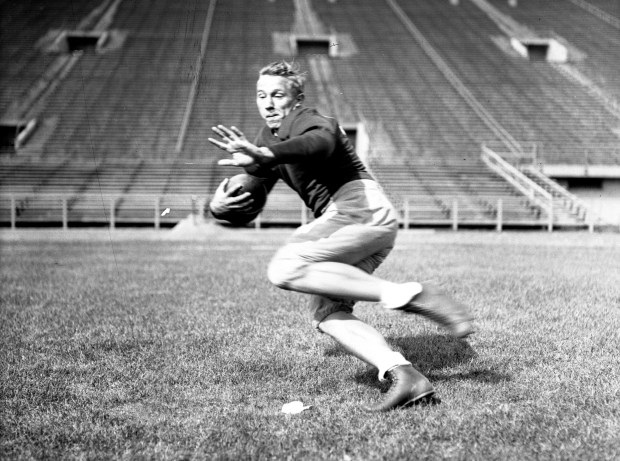
University of Chicago Maroon Jay Berwanger in an undated photo. (Chicago Tribune historical photo)
Anne Pernice, from left, Midge "Toughie" Brashun, Mary Lou Palermo and Jean Porter get tangled up during a roller derby match at the Chicago Coliseum in December 1953. Pernice and Palermo starred for the Chicago Westerners. (Chicago Tribune historical photo)
Benny the Bull appears unhappy during the Bulls-Kings game on Nov. 26, 1974, at the Chicago Stadium. The Bulls fell 93-90, dropping into third place in the NBA Midwest Division. (Chicago Tribune historical photo)
At great risk to his exposed knees, Chicago White Sox outfielder Pat Kelly slides safely into third base on Aug. 8, 1976, after Jim Spencer's fly ball to left field. (Edward Wagner Jr./Chicago Tribune)
Nancy Faust, organist for the Chicago White Sox, plays at Comiskey Park on June 5, 1971. (Don Casper/Chicago Tribune)
The Chicago Bulls celebrate winning the team's first championship on June 12, 1991, at the Forum in Inglewood, California. (Charles Cherney/Chicago Tribune)
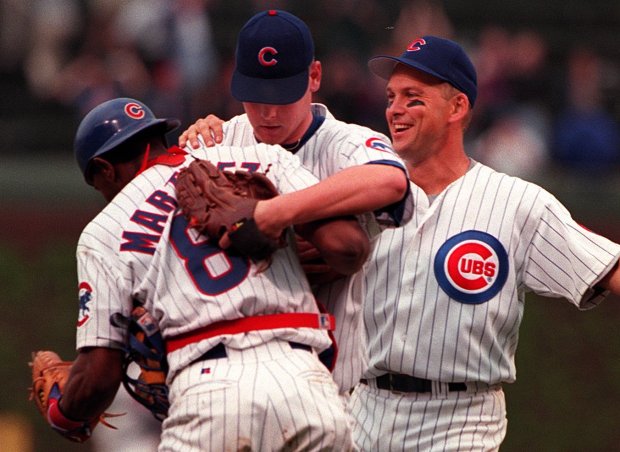
Chicago Cubs pitcher Kerry Wood, center, hugs catcher Sandy Martinez as first baseman Mark Grace runs in to celebrate after the Cubs beat the Houston Astros 2-0 on May 6, 1998. With 20 strikeouts in the game, Wood tied Major League Baseball's strikeout record. (Heather Stone/Chicago Tribune)
1 of 11
George Halas, center of front row, and the 1920 Decatur Staleys. They moved to Chicago and became the Bears. (Chicago Tribune archive)
Our sports list goes beyond Michael Jordan, Walter Payton, Ernie Banks and Red Grange — legends we’ll give their due later in the series.
The state’s sports history runs deep, which means this list can’t cover every accomplishment. But we highlight achievements that have left an imprint on the world. Read more here.
From ‘The Jungle’ to Shel Silverstein, how the state has helped shape the printed word
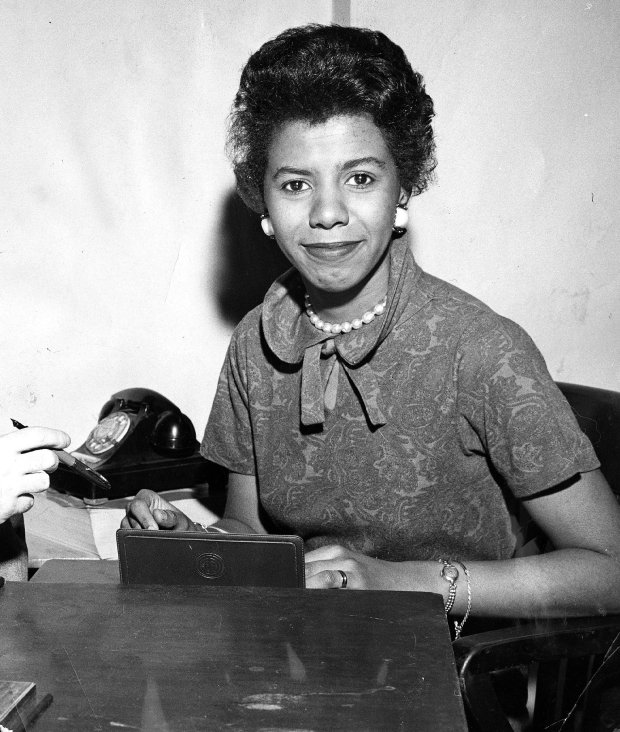
Playwright Lorraine Hansberry in 1959. (Chicago Tribune archive)
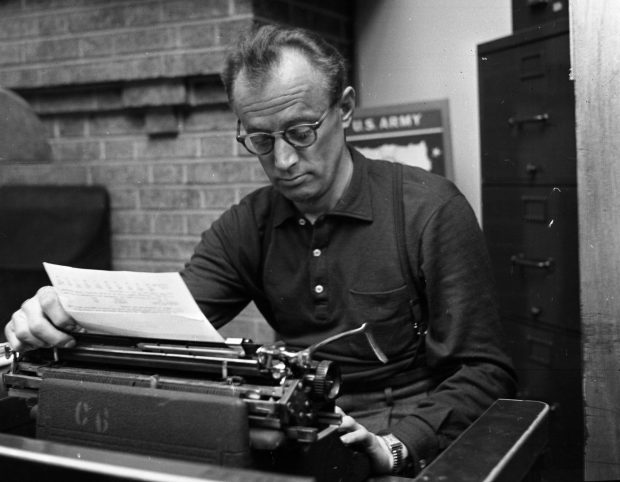
Nelson Algren writes on May 24, 1956, in Chicago. (Arnold Tolchin/Chicago American)
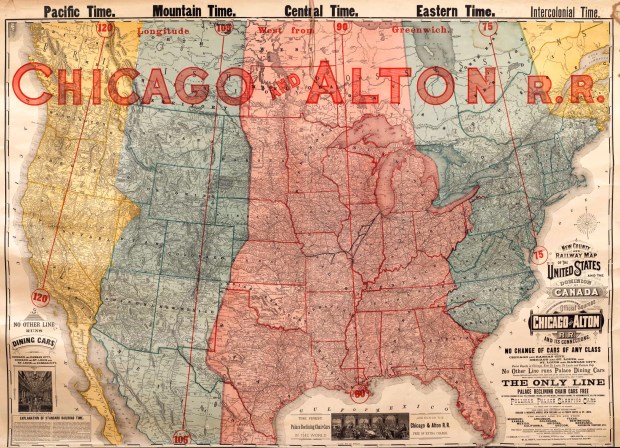
A Chicago & Alton Railroad map shows the new time zones created in 1883 to help railroads with scheduling. (Rand, McNally & Co.)
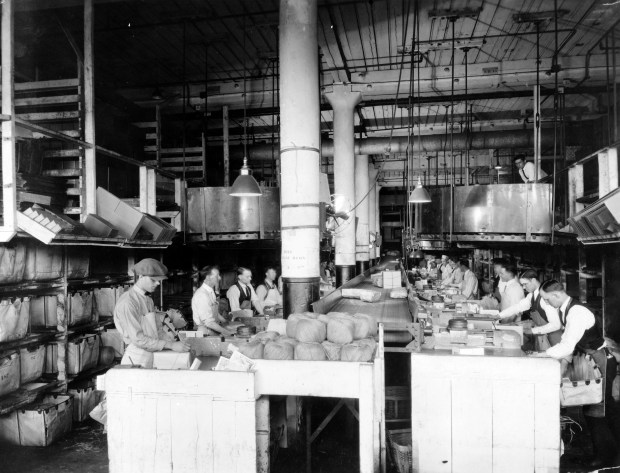
The Sears Roebuck & Co. Merchandise building had a packing department for mail orders at 924 South Homan Ave. in Chicago. (Library of Congress)
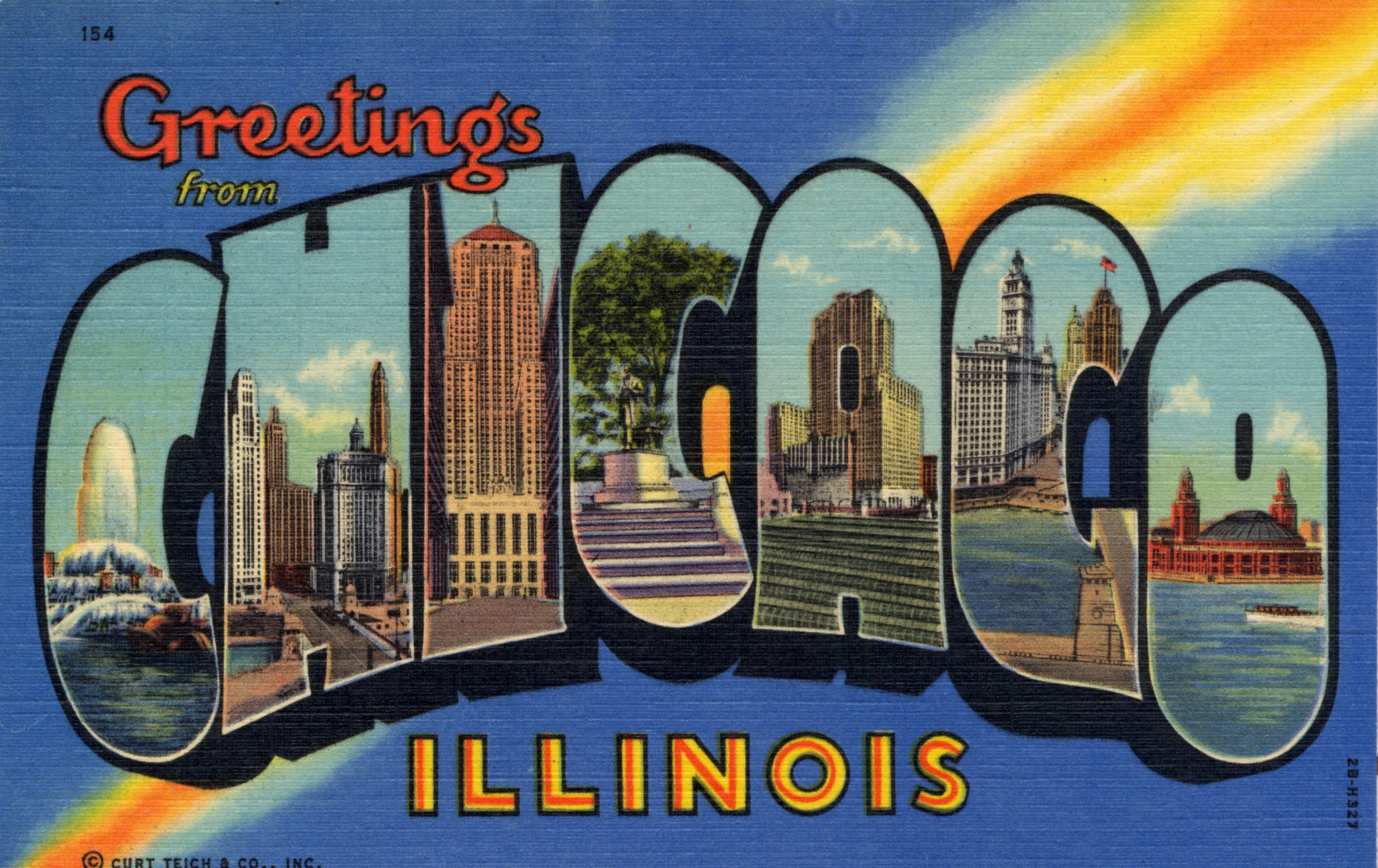
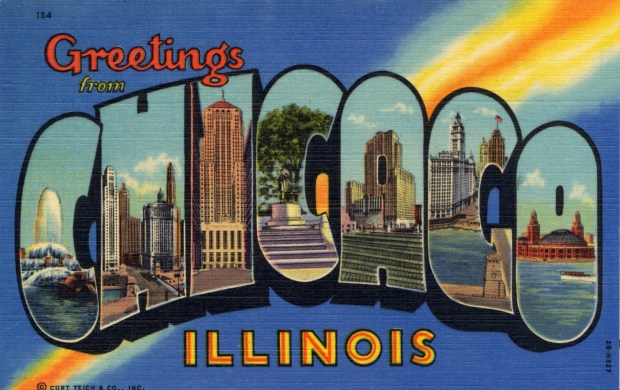
A “Greetings from Chicago” postcard in the Curt Teich Postcard Archives Collection at the Newberry Library in Chicago. (Newberry Library)
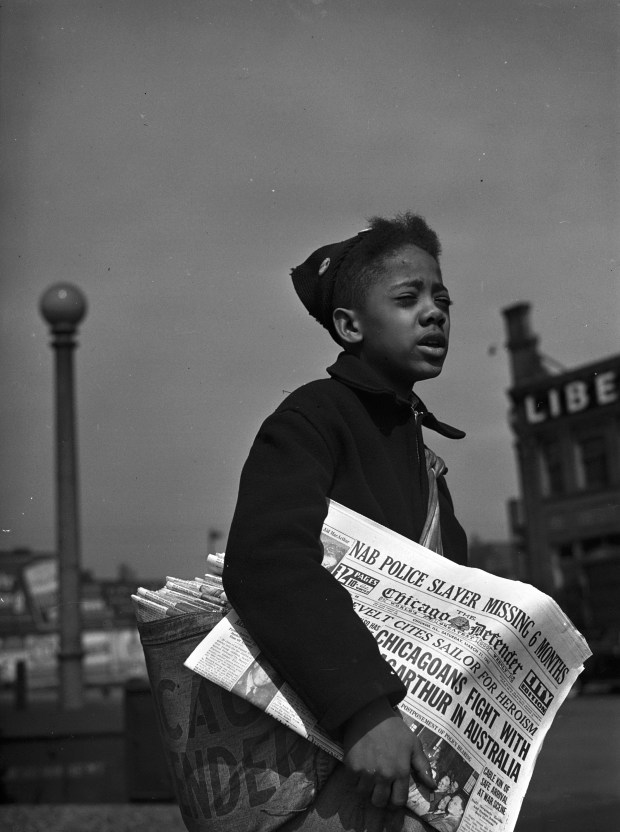
A newsboy sells the Chicago Defender in April 1942. (Jack Delano/Library of Congress)
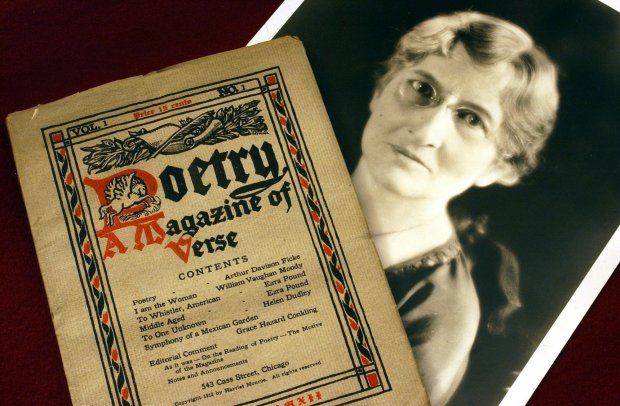
A copy of the original 1912 issue of Poetry Magazine, then called "Poetry: A Magazine of Verse," sits over a photo of founder Harriet Monroe. (Chuck Berman/Chicago Tribune)
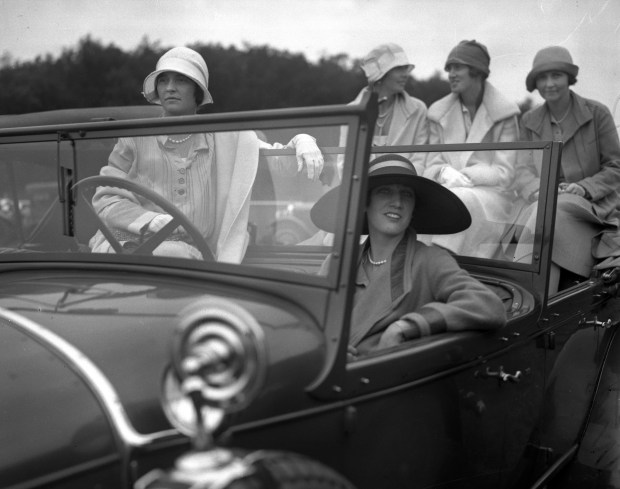
Ginevra King is in the driver's seat, left, with Mrs. J.C. Burgard and other society ladies from Lake Forest in September 1926. With the two women are, in back row from left, Mrs. Nelson Tabbot, Mrs. Knight Cheney Cowles and Lacy Armour. (Chicago Tribune historical photo)
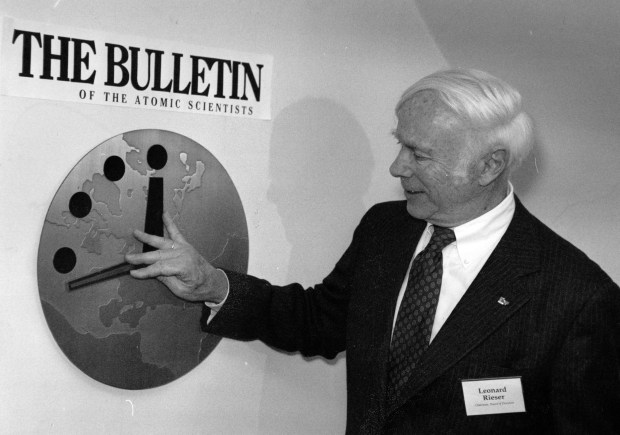
Dr. Leonard Rieser, chairman of the board of the Bulletin of the Atomic Scientists, moves the hand of the Doomsday Clock back to 17 minutes before midnight at offices near the University of Chicago on Nov. 26, 1991. (Carl Wagner/Chicago Tribune)
Nelson Algren at the corner of Bosworth Avenue and Division Street in Chicago on May 24, 1956. (Arnold Tolchin/Chicago American)
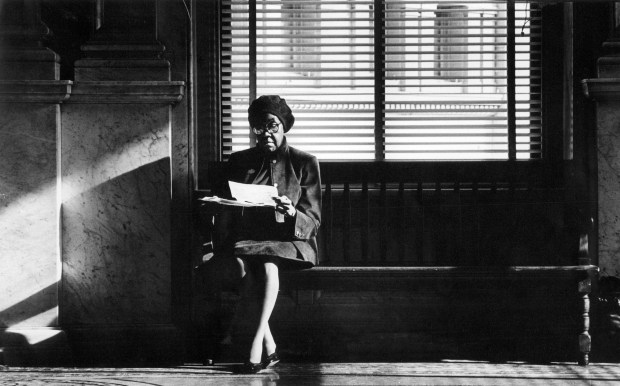
Gwendolyn Brooks reviews papers in a sun-lit area of the Library of Congress on Dec. 13, 1985, in Washington D.C. Brooks was the consultant in poetry to the library. (Paul F. Gero/Chicago Tribune)
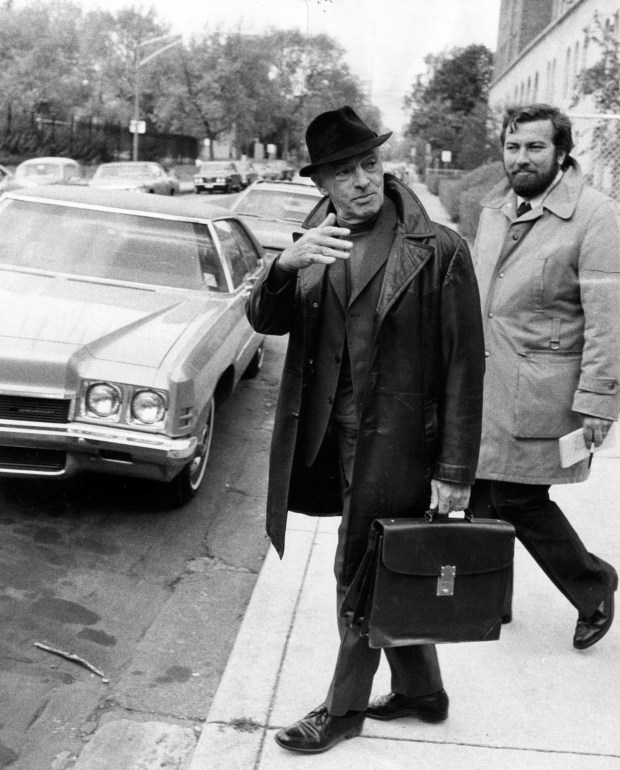
Author Saul Bellow, center, leaves his home on Oct. 21, 1976, in Chicago. Bellow had won the Nobel Prize. (George Quinn/Chicago Tribune)
Famed oral historian Studs Terkel, 89, under the Howard "L" tracks near Leland and Broadway on Sept. 24, 2001. (Chris Walker/Chicago Tribune)
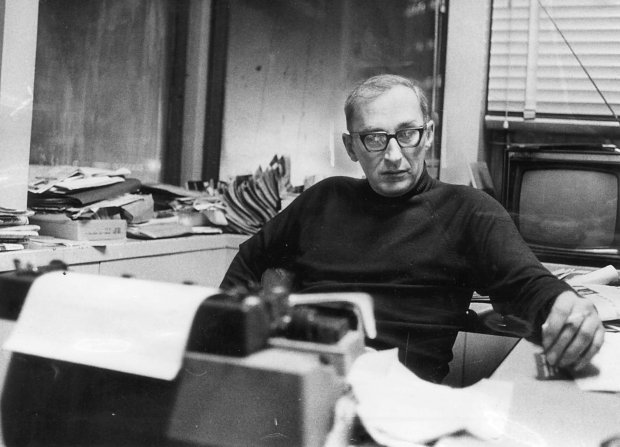
Mike Royko at his desk at the Chicago Daily News in 1974. (Frank Hanes/Chicago Tribune)
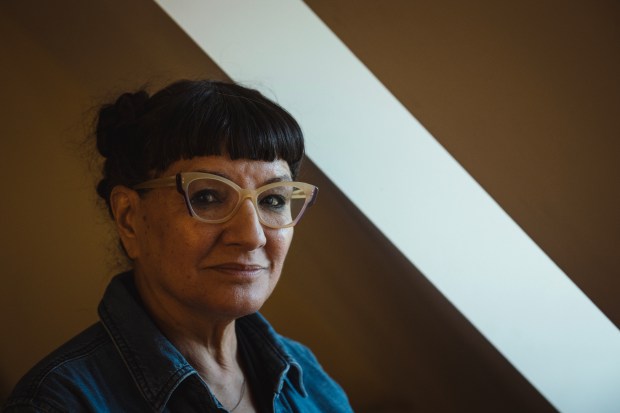
Poet and novelist Sandra Cisneros before an event at the National Museum of Puerto Rican Arts and Culture, on Oct. 23, 2024. (E. Jason Wambsgans/Chicago Tribune)
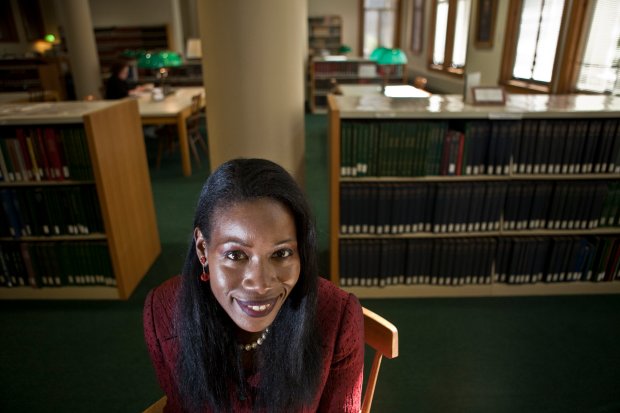
Pulitzer-prize winning author Isabel Wilkerson at the Newberry Library Genealogy reading room in Chicago on Sept. 30, 2010. (Zbigniew Bzdak/Chicago Tribune)
Jonathan Eig, a writer who has become one of the most accomplished biographers in the country, in his Chicago home office on May 16, 2023. (Brian Cassella/Chicago Tribune)
1 of 17
Playwright Lorraine Hansberry in 1959. (Chicago Tribune archive)
In America’s 250 years, Chicago has come alive on the page in rugged novels and mail-order catalogs, elegant poems, wax-engraved maps and brightly colored postcards. Oz, glittery and dreamlike, was conceived here. And one of the area’s authors wrote “Fahrenheit 451,” a tale of what society would be like without books.
Chicago is the home of Ernest Hemingway and of Hugh Hefner, names that won’t appear below but are a part of our continuing series. As is journalist Ida B. Wells, Johnson Publishing (Ebony and Jet) and Maurine Dallas Watkins, who wrote the book that inspired the musical that bears our city’s name.
Chicago is the story. It always has been. Our list of the most influential things ever written in, or about, Chicago. Read more here.
What we’ve invented, innovated, created and manufactured
Trader Pat Hillegass looks up at the trading boards on the floor of the Chicago Board of Trade on Dec. 8, 1999. (Milbert Orlando Brown/Chicago Tribune)
Women board a Pullman train car with the assistance of a conductor, left, and a porter, circa 1915. (Chicago History Museum)
Pens in the Union stock yard filled with cattle in 1948. (Chicago Tribune historical photo)
The Gold Room at the Congress Hotel in Chicago on Feb. 12, 2020. (José M. Osorio/ Chicago Tribune)
Rich Holm, a member of the Earth Science Club of Northern Illinois, shows a Tullimonstrum, or tully monster, that was found at the Mazon Creek fossil beds on May 8, 2025, in Braceville. (Audrey Richardson/Chicago Tribune)
Workmen guide the final steel girder into position to top off the Sears Tower at 1,454 feet on May 3, 1973, in Chicago. (Charles Osgood/Chicago Tribune)
published May 4, 1973
Date Created: 1973-05-03
Copyright Notice: Chicago Tribune
Folder Description: Sears Tower
Folder Extended Description: Exterior
Title: SEARS TOWER EXTERIOR
Subject: SEARS TOWER
Jesse Sullivan, from Dayton, Tennessee, demonstrates what the Rehabilitation Institute of Chicago doctors call a bionic arm that he controls by thought-powered movement. Sullivan's earlier devices are at right. He lost both arms above the shoulder in a work-related accident in 2001. (Chuck Berman/Chicago Tribune)
1 of 7
Trader Pat Hillegass looks up at the trading boards on the floor of the Chicago Board of Trade on Dec. 8, 1999. (Milbert Orlando Brown/Chicago Tribune)