
Advocates for victims of domestic violence released a report Thursday recommending reforms to Chicago, Cook County and state systems to cut down on the “culture of confusion” and create a unified, central system that makes protecting victims easier.
The Cook County Violence Against Women Task Force wants more data to be public and to ensure Cook County Courts are subject to open records laws.
The group was created by Chicago Ald. Silvana Tabares and Cook County Commissioner Donna Miller in response to an increase in fatal domestic shootings and homicides in recent years.

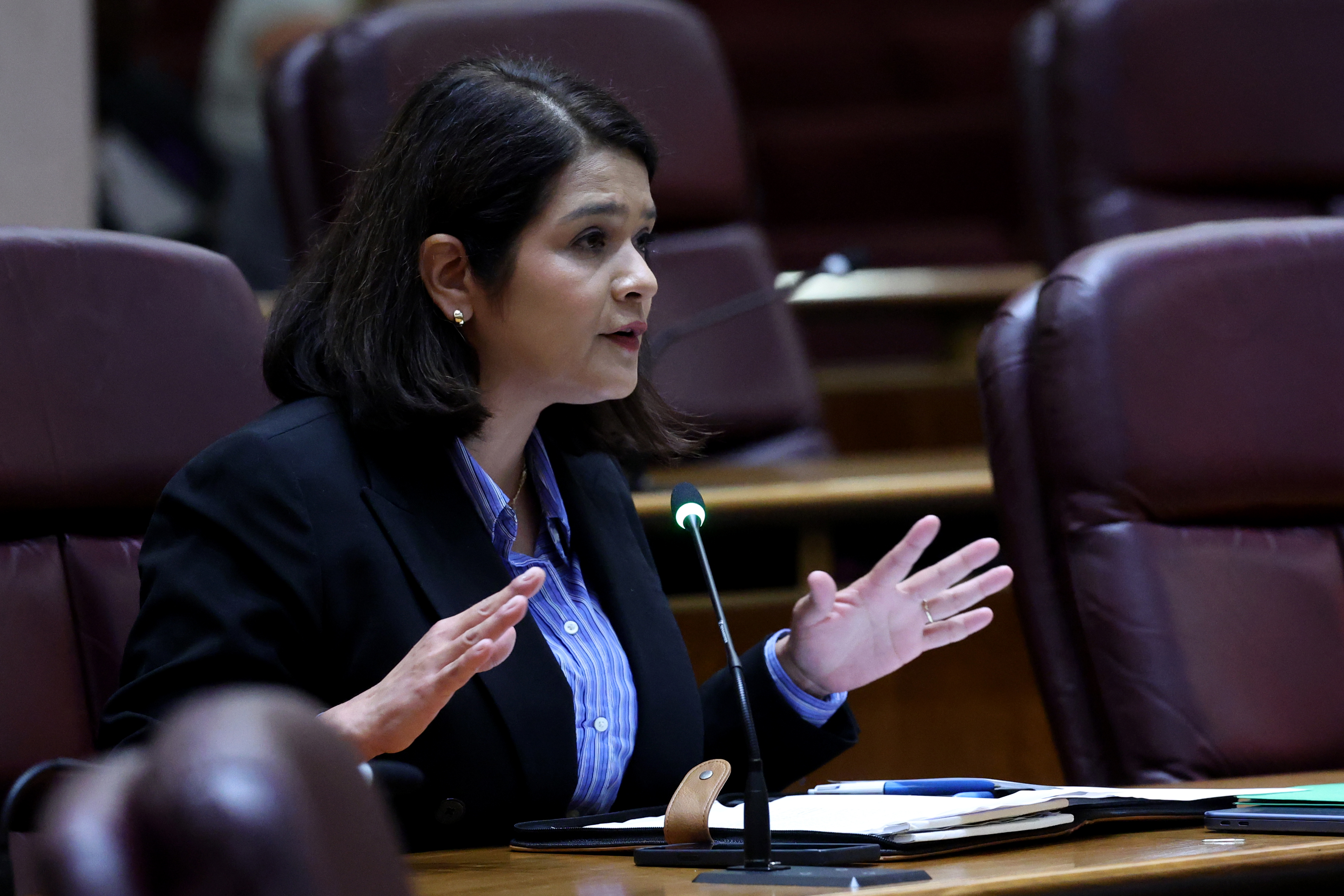
Chicago77 Charities, with help from the University of Chicago Crime Lab, Northwestern University, and other groups prepared the phase one report, which was released as part of a public hearing in the City Council Public Safety Committee.
“The system that women go into is unlike any other government system. There’s absolutely no one in charge, there’s no coordination, and you get bounced back and forth between different court divisions,” across the city, county and state, Chicago77 executive director Katie Dunne said. “And there’s policies and laws right now that impede data sharing between those agencies that limit any coordination. So truly, that lack of understanding of the system has created just a culture of confusion” for victims and public employees alike.
No one institution is responsible for outcomes, either. Victims might interact with a police department, sheriff or 911 operator; a state’s attorney, clerks and judges at the county courts.
Among the task force’s top recommendations are a better accounting of the scope of the problem.
The Chicago Fire Department, for example, doesn’t collect data on domestic-related calls. Information from the county’s circuit court, including the Office of the Chief Judge and the circuit court clerk, is exempt from the state’s open records laws. The task force’s request for voluntarily information remains “outstanding,” according to the report.
Attempts to make county courts subject to FOIA have been debated at length but not ultimately taken up. Circuit Court Clerk Mariyana Spyropoulos campaigned on changing state law to make courts subject to FOIA, but legislative proposals have not moved forward.
Chief Judge Charles Beach and Spyropoulos have both committed to voluntarily releasing more data.
Spyropoulos created an online records center for people to request court data or archived files and pledged to release things like disciplinary records for employees, probationary programs, and how the office collects fines and fees. She created a dashboard for domestic cases specifically, with broad tracking information about the number, location, and outcome of orders of protection.
But the task force said there is more to be done. Internal data that does exist often doesn’t match the information that other agencies maintain. Filing a protective order, for example, requires entering information into three separate data systems before a respondent can be served with the order.
Data is also sometimes entered manually, which can lead to mistakes. That inaccessibility hampers police agencies to enforce warrants and protective orders and “execute a comprehensive approach to confiscating illegal firearms,” according to the report.
The task force made other recommendations about reducing costs to victims, who largely represent themselves because they cannot afford private attorneys and face court-ordered charges for things like mental health evaluations for children, transcripts, and fees related to child guardians that investigate or advocate for victims’ children. It will begin the next phase of its work in the fall
Miller, the Democratic nominee for Illinois’ 2nd Congressional District, said during Thursday’s hearing she hoped pressure from both city and county officials might move the ball on transparency reforms.
“We are as unanimous as we can be as a political body,” Public Safety Committee chairman Brian Hopkins said, pledging to help push through jurisdictional obstacles that might stand in the way. “Literally, lives are at stake and we all know it.”