

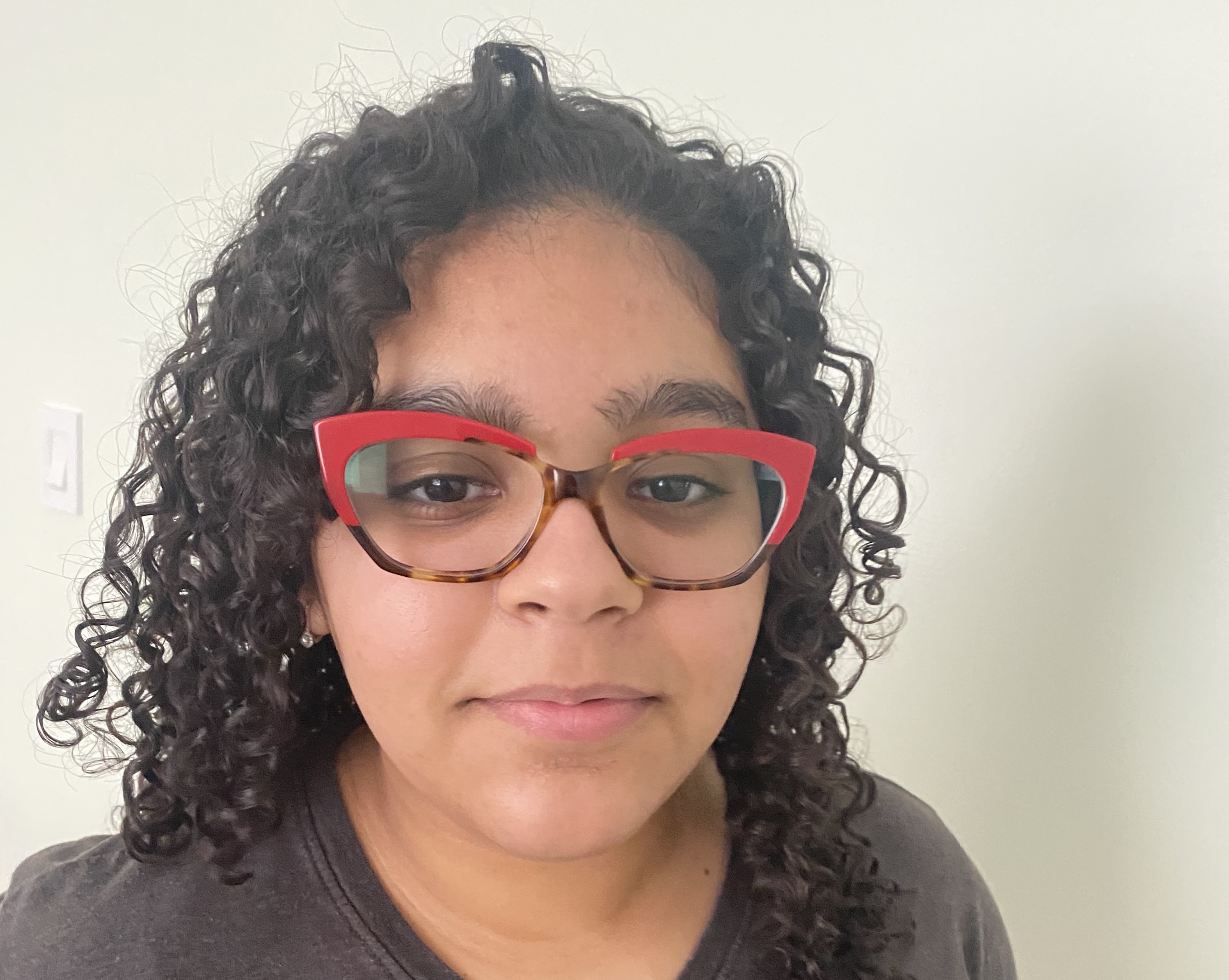

Isabella Taylor knows firsthand how confusing it can be to find the right candidates to vote for each election season, and she is working on a way to help get young voters more informed via a format most probably know well.
Her proposal to create a YouTube channel to educate young and first-time voters up to age 24, known as Democracy Simplified, led to her winning one of a handful of $5,000 Paul Simon Democracy Prizes awarded by the Paul Simon Public Policy Institute at Southern Illinois University Carbondale.
“Essentially the idea came to me when I was going to vote for the very first time in the (2026) Illinois primaries,” said Taylor, a Chicago resident and alum of Mother McAuley Liberal Arts High School in Chicago, who began studying political science at Moraine Valley Community College in Palos Hills.
“I have thought myself to be very politically aware. I read the news. I watch TV. I try to stay up to date on political stuff because it’s important,” she said. “I had some of the candidates I wanted to vote for, and I saw the ballot and thought, who are these people? What are some of these positions I’m voting for? I was so confused.
“When I left the voting booth, I didn’t feel like I was voting in my best interest because I didn’t know who I was filling the ballot out for,” she added. “During my high school years, we were told how the voting process went but we didn’t go in-depth on positions or people.”
Taylor hopes young people “who are so online” will view her YouTube channel.
“They can learn about the voting process, what they should expect. What resources and websites they can use to look up to see their closest voting booth or to figure out which candidates are going to be on the ballot for upcoming elections,” she explained. “That’s what I wanted to do so the next time someone my age, fresh out of high school, can go out to vote and can use that channel as a resource.”
She would like to share what the candidates support or don’t and what each position entails so young people “aren’t so blindsided when they go to vote.”
“I know a lot of people when they talk about low voting turnout, they talk about people living far away and not having access to transportation systems,” she said. “But there’s a percentage of people who don’t vote because they aren’t informed. I want to focus on that small group of people and reach out to them so they feel more confident in that voting process.”
When Taylor learned via email that she had won a Democracy Prize, she was “really surprised, especially nowadays with how competitive scholarships are. I didn’t think I’d be one of four people getting one.”
She said her mom was “really glad because she’s been telling me to apply to scholarships to see what happens. … She was very glad and happy for me.”
Her mom, Mireya Zepeda, said she really wanted Taylor to apply for the award. “I would always encourage her because if you can get money besides my pocket, that would be great. Not only that but you have to make them become resourceful,” she said.
“This is giving her the opportunity to believe in herself and to see what she’s capable of. I think it’s awesome,” Zepeda shared. “Not so much the money, which is always awesome, but gaining the capability. I think it’s a wonderful thing for students – for someone to believe in them to deliver.”
The prizes are open to current Illinois college or university students who “design and implement a project to revitalize democracy,” according to the website of the Paul Simon Public Policy Institute at Southern Illinois University Carbondale. “We accept proposals that are persuasive, imaginative, optimistic, and can plausibly be implemented within six months.”
Applicants submit a three- to five-minute video proposal and proposal outline. This year, the institute awarded four scholarships. Taylor’s video and those of the other three winners can be seen at paulsimoninstitute.siu.edu/student-opportunities/democracy-prize.php. In the fall, prize recipients will be invited to a celebratory reception to give a presentation on how they are implementing their proposals.
Taylor learned about the opportunity via her Comparative Government professor at Moraine Valley, Kevin Navratili. “He mentioned it in our class one day, and I was looking over it and thought it was a really good opportunity and wanted to try it out,” she said.
She’s been making some progress on her proposal, having already secured the name and learning how to upload a video on YouTube, which she’s never done before. Taylor shyly admitted that she didn’t realize when she applied that she would have to act on her proposal.
“It’s been such a learning process,” she said. “I’ve been spending time learning how to edit and how to record the audio and the small animation I have to do and what does the YouTube algorithm look for. All the things to have as many people look at the video as possible.”
She’s close to finishing the first video, which she hopes to post later this summer. “I just realized how complicated these videos are. I’ve been a pretty tech-savvy kid, but it gives me newfound appreciation watching other people’s videos now that I’ve been a bit more educated about them,” Taylor said.
Her first video is general, focusing on how to vote, but she plans to create one for the midterm election that offers an overview on the candidates. “Something short to get all their main points out. My whole thing was I would provide links in the description where people could learn more on the candidates and do a deep dive on them.”
She hopes Democracy Simplified gets a lot of attention. “I really want it to be as engaging as possible, especially for the age group I’m hitting – those high schoolers and people in their early 20 – so it will land on their algorithm and their For You page, and they watch it and feel engaged and get something out of it.”
In the fall, Taylor will transfer to the University of Illinois at Champaign-Urbana to continue majoring in political science before she earns a master’s degree and applies to law school to study international law. Something she doesn’t expect to change, however, is her stance on the importance of voting.
“I want people to know who they vote for affects them in the long run. Even if it’s in a small miniscule way, who they vote for affects their lives and the lives of those around them. I want them to know what exactly happens the moment they put their ballot in, the process, how they count the ballots,” she shared.
“It’s really important to know what issues these candidates are going to be working on if they’re elected. It may or may not affect these young voters, but even if they feel like it might not affect them, I want them to know it might affect their family members or neighbors. Even if they aren’t too interested and if the candidate is not going to be affecting their daily lives, I want them to show up for other people.”
Melinda Moore is a freelance reporter for the Daily Southtown.


