
The discussion on how to treat those with mental illness in our communities — specifically as it relates to 911 calls for mental health crises — never ends. The primary response in the city of Chicago is the Crisis Assistance Response and Engagement program.
CARE was born from the school of thought that the only way to effectively address mental health issues is to send clinicians out on calls rather than police officers. It is loosely based on programs such as Oregon’s Crisis Assistance Helping Out On The Streets, a much-lauded (and now mostly defunct) program that sent mental health workers instead of police officers to address low-level, nonviolent calls for service involving mental health issues.
This model sounds good and sells well at galas and fundraisers. But, after years of attempts throughout the country, the model has not worked. Whether it’s because of funding issues or execution, it has floundered.
Mental health has long been a critical concern for me, and in my 20 years as sheriff, I have made it my mission to expand mental health services in the jail and the community. This is because I, like many thoughtful people in the criminal justice system, recognize that treating mental health as a criminal issue only serves to flood our jails and ignores the underlying issues that, left unaddressed, will continue the cycle of law enforcement involvement in a health issue.
After years of groundbreaking mental health programming at the jail, I developed a plan to tackle the vexing issue of the tens of thousands of mental health calls presently directed to law enforcement through 911 calls. Frankly, I was tired of hearing utopian plans supported by neither data nor reality.
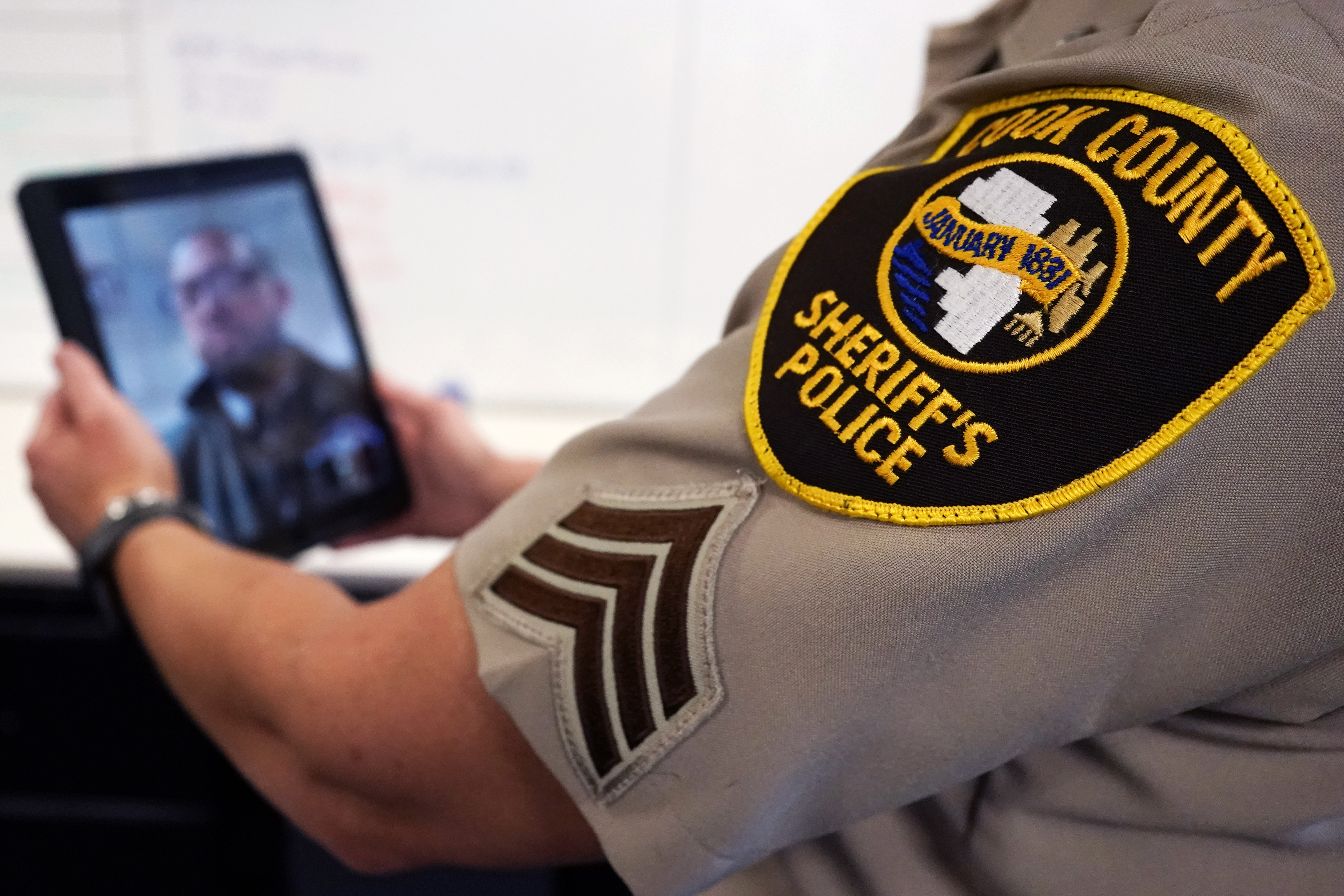
The system we developed is the Co-Responder Virtual Assistance Program (CVAP), which equips our police officers with low-cost electronic tablets that they use to instantly connect a person in crisis via video to one of our civilian mental health professionals 24 hours a day.
No waiting for the clinician to arrive. No worrying about their safety when they get there. Minimal cost, because we are using mental health professionals we already had in place. And the side benefit of using tablets is that we quickly discovered that talking on Zoom felt much less confrontational to people in crisis — especially to kids and teens, who sometimes find online interactions less threatening than in-person conversations.
All this with a staff of 21 and a total budget last year of less than $2.3 million. It should be noted that CVAP isn’t all these staff members do, either. They also run our Treatment Response Team, another program that works with those dealing with substance-use disorders.
Today, while the CARE program is floundering, CVAP continues to expand. Currently, 47 police departments — or more than one-third of local cities, towns and villages in Cook County — use our service, meaning that CVAP is available to a combined total of 770,000 residents. We’ve expanded CVAP’s use to virtually every part of the sheriff’s office. Our detectives use it. Deputies use it in our courthouses and on evictions. It’s available to officers who have to notify someone that their loved one died. CVAP staff are embedded in our dispatch center.
Most recently, our officers on mass transit have used it for individuals they encounter on CTA trains, buses and stations. In short, anytime someone could benefit from a mental health professional, they are just a Zoom session or phone call away.
Editorial: Chicago separated its mental health emergency response from public safety. Bad idea.
As for results, CVAP clinicians have provided immediate, virtual mental health co-responses to more than 1,400 police calls for service since they took their first call in December 2020. And CVAP staff have fielded another 6,100 calls from people looking for help for themselves or their loved ones. The program doesn’t just address the immediate crisis that precipitated the 911 call; it also treats every individual as a potential client for case management for their underlying issue. That’s why CVAP maintains an active client list of more than 500 people — many of whom first engaged with the program following a police response — that staff members regularly engage with to connect them with services, resources or just to see how they are doing.
The success of this program is demonstrated by the fact that, to our knowledge, there have been no use-of-force incidents on calls for service where police have used CVAP. Police officers like it because it’s an effective tool to safely de-escalate or prevent volatile interactions. Clients and their loved ones like it because they see we’re bringing help, not just handcuffs. And the model has garnered attention from other jurisdictions, including Broward County, Florida, and the city of Philadelphia, which have sent officials to learn how to adopt CVAP.
It’s a great model that every town or city in Cook County should adopt rather than throwing more money at unworkable models. The community does not need another great-sounding but impossible-to-implement program.
The community needs help now.
Thomas J. Dart is Cook County sheriff and a former Illinois prosecutor and state legislator.
Submit a letter, of no more than 400 words, to the editor here or email letters@chicagotribune.com.