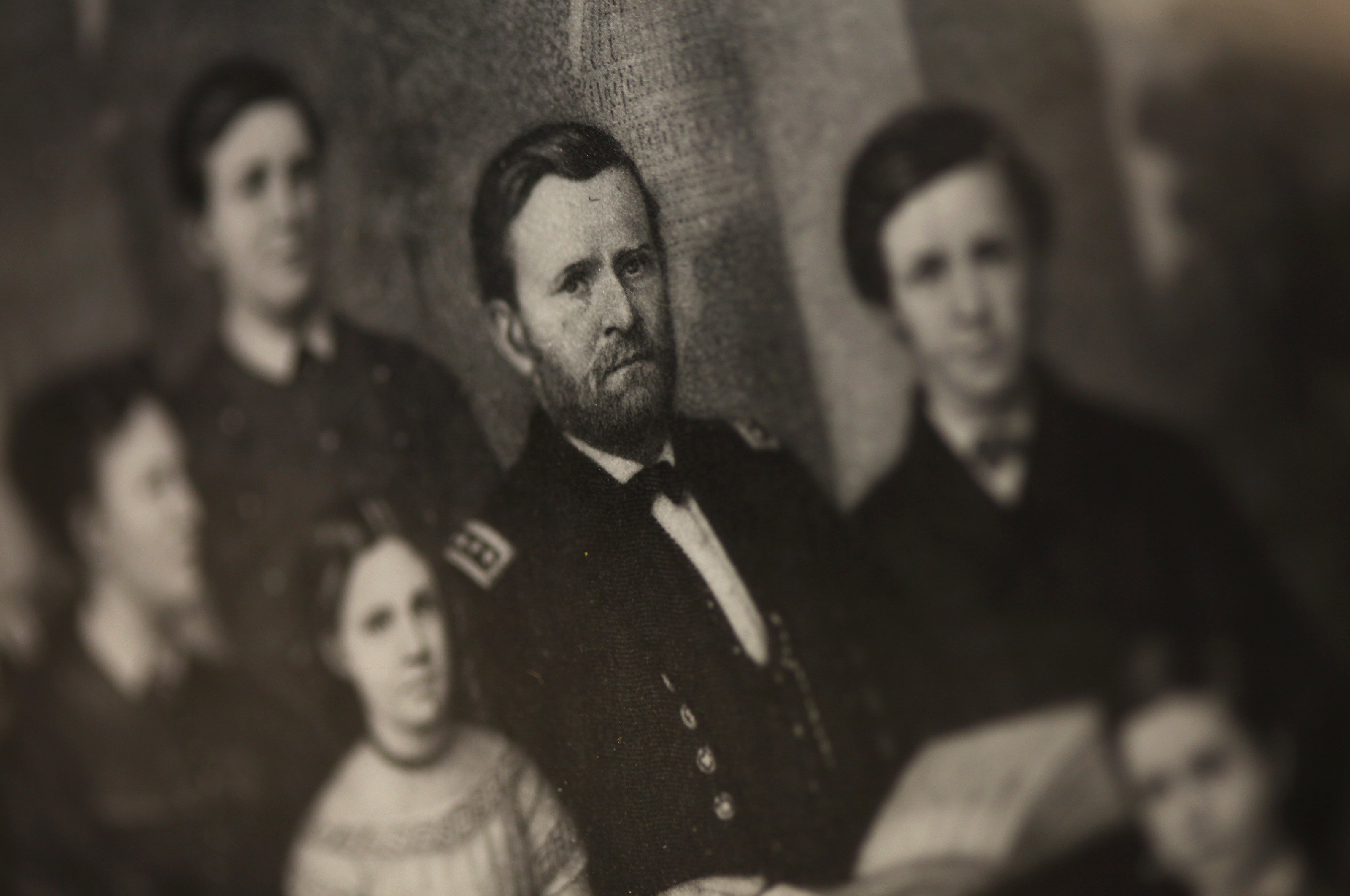

The list of Illinois’ most influential people impressively touches on nearly every aspect of American life, but I was surprised by one glaring omission — Ulysses S. Grant (“Meet the state’s most influential people, from architects to a pope and future presidents,” July 5).
It’s true that he was — like Presidents Abraham Lincoln and Barack Obama — not born and raised in Illinois. However, Galena was his home during his unlikely rise to prominence. He helped recruit some of the first regiments of Illinois volunteers for the Civil War in Mattoon, Belleville and Anna. A Galena paper gave him his first press exposure. And when Grant had the option of his first Civil War command being an Illinois or Ohio regiment, he led the Illinoisans.
While I would accept arguments that Grant isn’t truly an Illinoisan, I will not accept that he was not influential. As Lincoln dealt with inept, plodding generals in the war’s eastern theater, Grant was handing the Confederates loss after loss in the war’s western theater, ultimately securing the Mississippi River and likely tipping the war permanently in the Union’s favor. After his 1864 promotion to lieutenant general put him in charge of all Union armies, he finally coordinated previously disjointed military actions, bringing about a quicker end to America’s bloodiest war.
Grant’s influence did not end at military matters. Lincoln signed the Emancipation Proclamation, but Grant put it into practice. He worked out the details and provided resources for people formerly enslaved, and 179,000 Black troops would ultimately fight for the Union under his command. As commanding general, Grant oversaw Reconstruction, including his use of federal troops to protect Black people in the former Confederacy. As president, he supported the 15th Amendment to ensure its passage, appointed the first Black diplomat in American history and negotiated former Confederate states returning to the Union.
Love him or hate him, it’s hard to argue that the person who prosecuted the Union’s war against the Confederacy, executed the Emancipation Proclamation and reintegrated Confederate states was not influential.
— Alex Marianyi, Chicago
Why omit these celebrated people?
Regarding the “Illinois 250” series: Two Mayor Richard Daleys but no Harold Washington? Not a single labor leader in the nation’s strongest union town, even the storied Mother Jones?
I detect a hint of ideological bias.
— Merrill Goozner, Chicago
Illinoisans’ influence on medicine
Regarding the “Illinois 250” series: Somewhere in between our two presidents, the pope and Hugh Hefner, the Tribune might have included several influential medical people. For instance, Dr. Bernard Fantus in 1937 established the world’s first blood bank at Cook County Hospital, and Charles Brenton Huggins was awarded the Nobel Prize in Medicine in 1966 on how hormones influenced prostate function, which later led to hormone treatment for prostate cancer.
— Dr. Michael Ellman, Wilmette
A history lesson during vacation
The Sunday article (“Ghosts of Kaskaskia”) about Kaskaskia, Illinois’ first capital, brought to mind a family vacation in 1959. We headed south from Chicago for what would turn out to be an in-person history lesson. We made stops in Cahokia to see the oldest church in Illinois and the old courthouse, both built with vertical logs. We spent the night in Chester and then visited the home of Pierre Menard before driving past the correction center named for him. And then we visited Fort Kaskaskia where he is buried.
I remember looking down to the Mississippi River to an island my dad told us had been the first state capital. We were pretty impressed. And years later, I still am.
— Dorothy Evenhouse, Waukegan
Make Idaho stop the law
Complaints about bicycles blowing through stop signs, such as we saw in the July 5 letters, miss the point. Four-way stops are substantially less efficient for all traffic than two-way stops and are intended as traffic-calming measures to prevent reckless, high-speed driving on quiet boulevards. Bicycles have shorter stopping distances, unimpeded road vision and lower top speed than cars, making this sort of traffic-calming unnecessary for cyclists.
In fact, coming to a complete stop alongside car traffic introduces a new hazard. The mismatch in acceleration and speed between cars and bikes, and increased time at intersections, creates opportunities for collisions that do not exist for drivers alone.
I want to challenge the reader: Go to your nearest four-way stop on a quiet street and count how many drivers come to a complete stop. I can guarantee it is fewer than 1 in 5; these vehicles can do a great deal more damage than a 30-pound bicycle.
There is a solution that has been successfully implemented in cities around the world: the Idaho stop. This allows cyclists to treat stop signs as yield signs and no longer arbitrarily subjects them to traffic control measures designed for other types of vehicles.
This has proved to improve safety and efficiency where it has been adopted.
Let’s bring the Idaho stop to Illinois and put this talking point to bed.
— Derek Eller, Chicago
License plates for bicycles
I have read the opinions in letters on bicycle lanes that appear to be slanted favorably toward the wishes of all the bicycle owners and not to the impact that the lanes have on motorists and pedestrians. I agree that bicycle lanes are needed for safety reasons.
My question is: Why do the rest of us have to pay for this infrastructure of bicycle lanes? Why is this not being funded at least partially by owners of bicycles who use these lanes, through the purchase of bicycle license plates? And why are these bicycle lanes being put on busy streets where there is already congestion? Lastly, I would like to see the owners of bicycles be required to pass a rules-of-the-road test before a license is granted.
It has been my experience that bicycle owners do not obey the rules of the road that are required of motorists. I have seen cyclists go through stop signs and traffic lights, weave in and out of traffic, and ride on sidewalks, impeding the rights of pedestrians. Cyclists should be ticketed and fined for these violations, just like motorists. The only way that cyclists can be held accountable is through having license plates on their bicycles.
— Louise Rohr, Chicago
Submit a letter, of no more than 400 words, to the editor here or email letters@chicagotribune.com.