
When high school students are asked what artificial intelligence is doing to their education, the conversation moves quickly beyond cheating and into areas that should make every administrator, admissions officer, and faculty member sit up and pay attention.
Students are already using AI to write papers, solve math problems, summarize assigned reading, and put together presentations. They have enough experience to know which programs excel at research, handle quantitative work reliably, and produce writing unlikely to make teachers suspicious. It’s not uncommon for students to run an assignment through multiple AI systems before they submit it as a form of quality control. But students are less concerned about whether a teacher will catch them than they are about whether the work they are doing in high school and college will prepare them for a world that is changing faster than their schools can comprehend.
Schools seem to be caught between two eras. Teachers are still assigning essays, worksheets, and take-home projects that AI can complete in seconds but at the same time forbidding its use. And the enforcement of any anti-AI policy is inconsistent at best as most teachers cannot reliably detect it and the rules vary from one classroom to the next. Students must grasp the contradiction that while they are being prepared for careers in which employers will expect and reward AI proficiency, schools will frequently penalize them for acquiring it.
They also understand something that most adults, in particular university administrators, have not yet fully absorbed. Artificial intelligence is making ordinary schoolwork unconvincing as evidence of anything. A polished essay or completed math assignment is no longer evidence that a student understand the concepts or can write effectively. It’s a sign of a quiet crisis of confidence inside American high schools. Students are still competing for grades, class rank, and college admission, but they’re suspicious that that those achievements are being devalued by students who are gaming the system.
It’s a breakdown in the basic premise that grades measure something real.
Students are worried about what selective institutions will do when nearly every applicant submits excellent essays, curated activity lists, and professional-looking applications, all of which AI can now produce for anyone. While AI can make an average student sound thoughtful, original, and genuinely mature, are admissions offices prepared to separate actual ability from a professional presentation?
Students are giving more thought to what college is actually worth once you get there. The students are I have spoken with are not rejecting higher education — they still desire the intellectual challenge, friendships, independence, and professional credentials that a rigorous college education can offer — but they wonder about cost, time, and employment more than any previous generation. They want to know if a four-year degree will still reliably lead to a good job by the time they finish it, and whether a major will still exist as entire fields may be restructured by AI before graduation arrives. For example, computer science is supposed to be indispensable, but AI systems are already writing competitive code. In business, finance, law, or engineering, they’re hearing that entry-level positions in all of those fields may be among the first to vanish.
The traditional formula working diligently to earn strong grades and attend the most selective college possible befoe entering a profession isn’t as reliable as it was even a decade ago.
Students’ most persistent fear is that AI may eliminate not just jobs but the entry-level positions where young professionals have historically learned on the job. While companies will always need experienced lawyers, engineers, accountants, and programmers , it’s harder to see how a 22-year-old acquires the experience to become one if AI is performing most of the work that beginners used to accomplish.
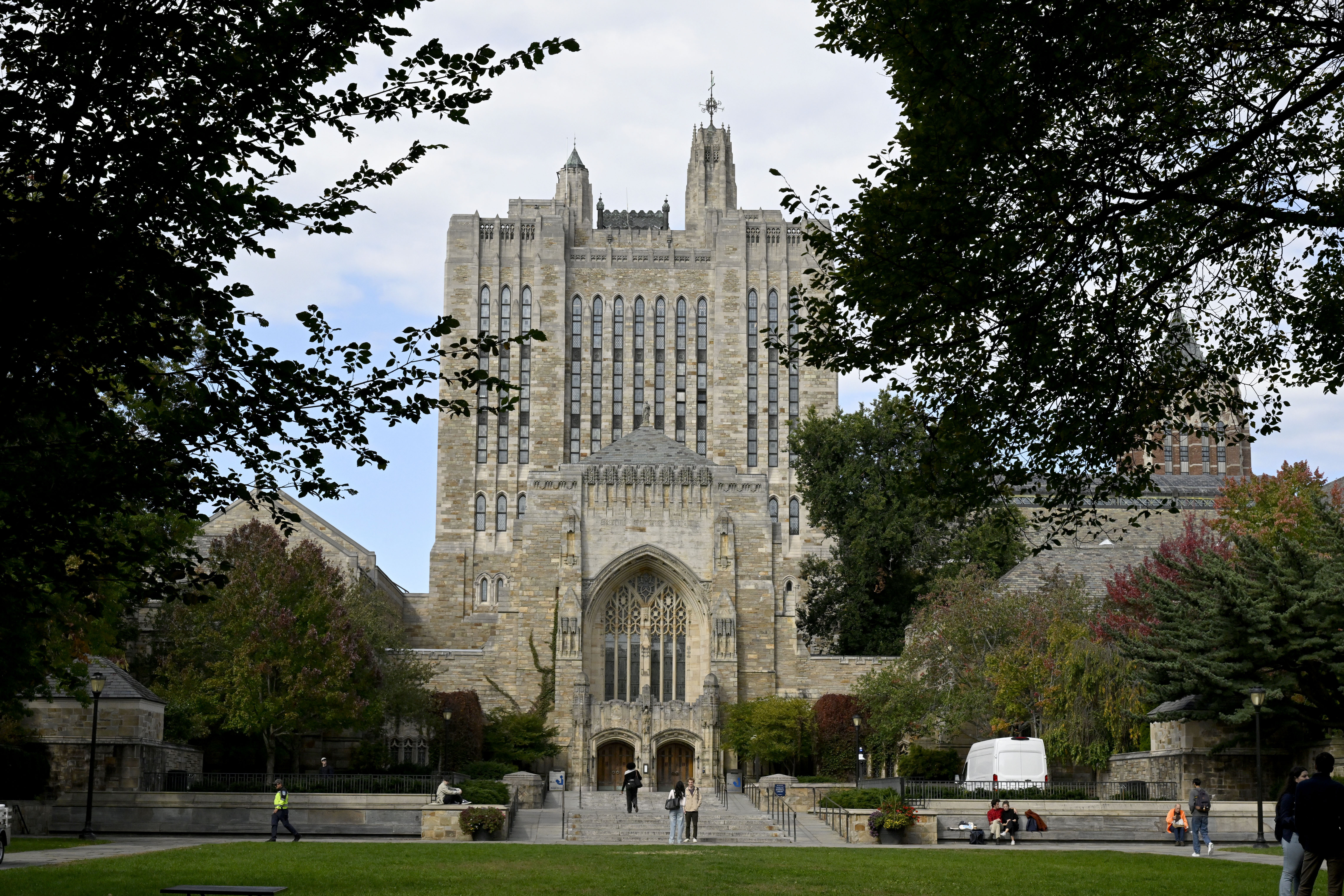
Yale University recently published a report on public trust in higher education, and its findings on grade inflation attracted considerable attention. While in 1963, only 10 percent of grades awarded at Yale College were an A or A-minus, by the 2022–23 academic year that figure had climbed to 79 percent. The report recommends that Yale restore common grading standards and put class percentiles on transcripts, which would make more informative to employers and graduate schools.
While these are sensible reforms as far as they go, students’ questions suggest that Yale is diagnosing the wrong disease. Perhaps the central question is no longer whether an A is too easy to earn, but whether the assignment itself measures anything worth knowing. AI is challenging the structure that underpins a grade, and ultimately the logic of the four-year degree as a credential that certifies competence.
It’s not so radical to say that a different kind of education may be required. While learning mathematics, science, history, and serious analytical writing is still valuable to learn, schools must place far greater weight on work that actually reveals the student’s own mind, such as supervised examinations, Socratic oral questioning, and laboratory work. For example, a history student should be able to construct and defend an argument from memory, and an engineering student should be able to build something, explain the principles behind it, and explain why it failed the first time.
Students should have the goal of leaving high school and college with genuine evidence of competence rather than a transcript of grades attached to work that may not have required much thinking at all. The rigid uniformity of academic timelines should be reconsidered as students may be ready to advance faster than the calendar currently permits, while others need more time to achieve genuine mastery before moving on.
Yale should get credit for acknowledging that its grading system has lost credibility, and its proposed reforms are worth pursuing. But adjusting the average grade from an A to a B doesn’t address the questions that students are actually asking about which abilities will remain valuable, which will be difficult to automate, and whether a college education will prepare them for jobs that still exist on the day they graduate.
Adults are still debating whether students should use AI at all, but students have already moved past that question.
Gerald Bradshaw is an international college admissions consultant with Bradshaw College Consulting in Crown Point.