
Illinois American Water customers shared their hardships dealing with rising utility costs Tuesday as the Illinois Commerce Commission decides whether to grant the water company a rate increase.
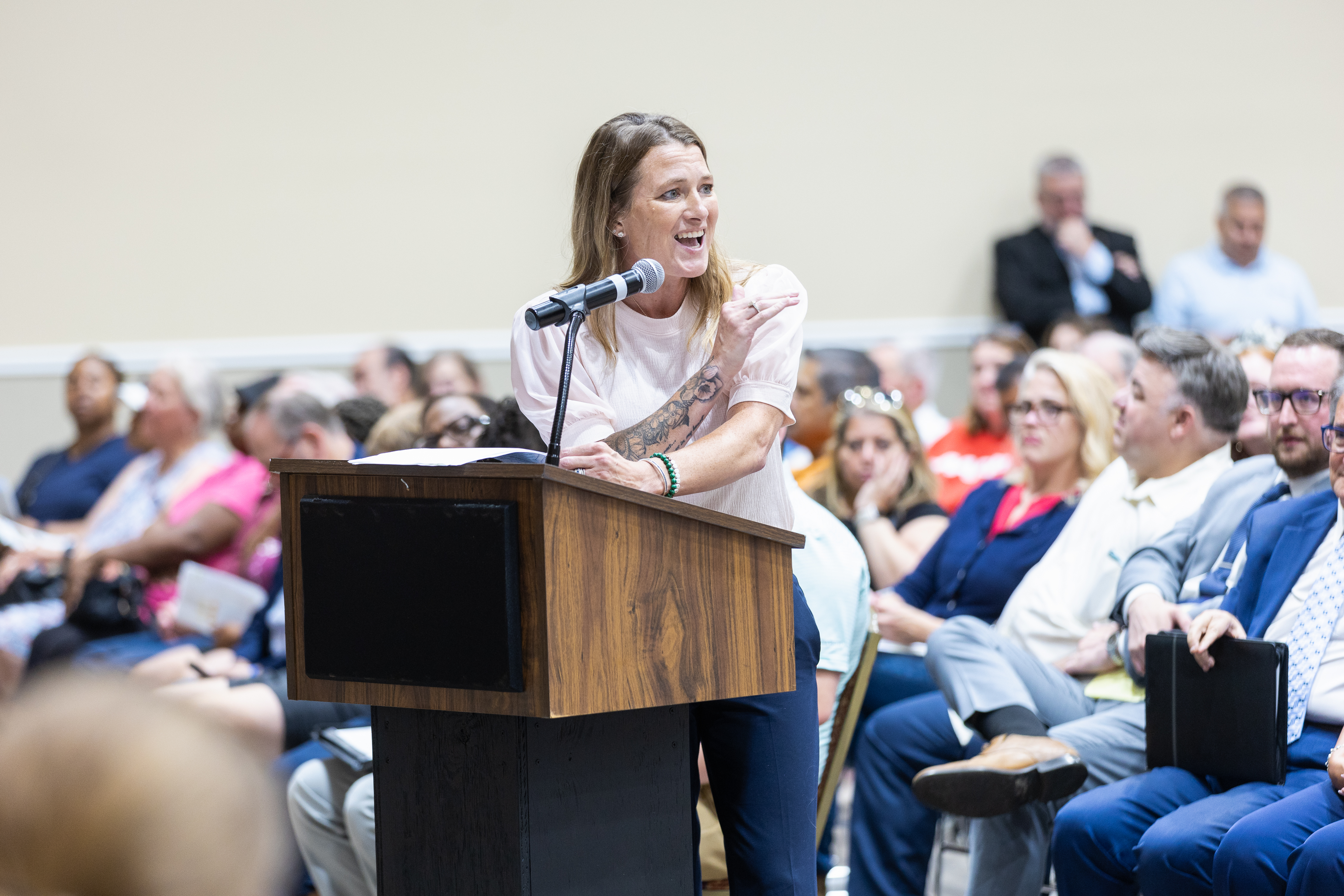
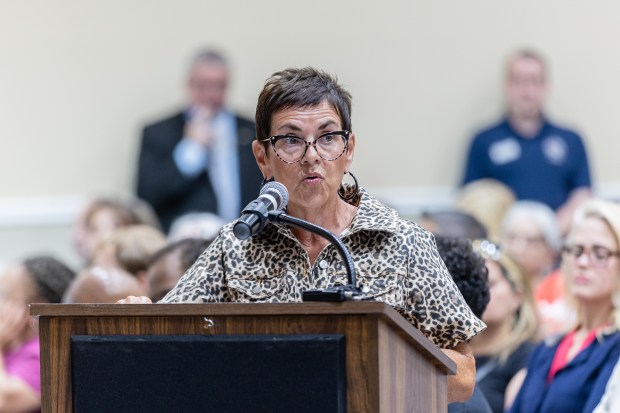
Bolingbrook resident Pat Smith said she bathes twice a week and washes her hair once a week to conserve water. Dishes are rinsed and reused. Clothes are worn multiple times before being laundered.
Flora Lambert, who received a monthly water bill for $285, said showers and cooking have been reduced. She chastised the company for making her family limit their bathroom use so they won’t have to flush their toilets.
Some homeowners said they shouldn’t be forced to choose between paying their water bill or buying groceries or medicine. Senior citizens said a significant portion of their Social Security checks are spent on water. Others said the company is making its profits off those who can least afford another rate increase.
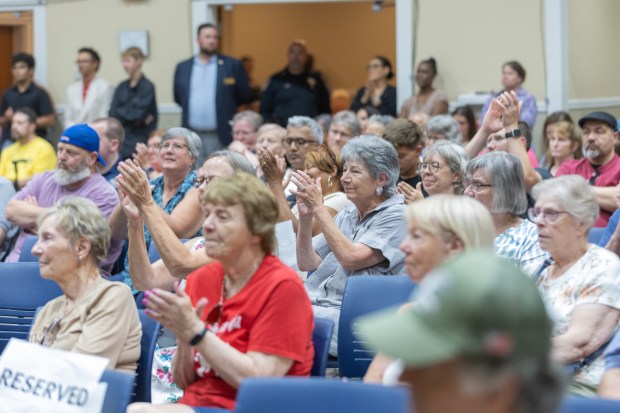
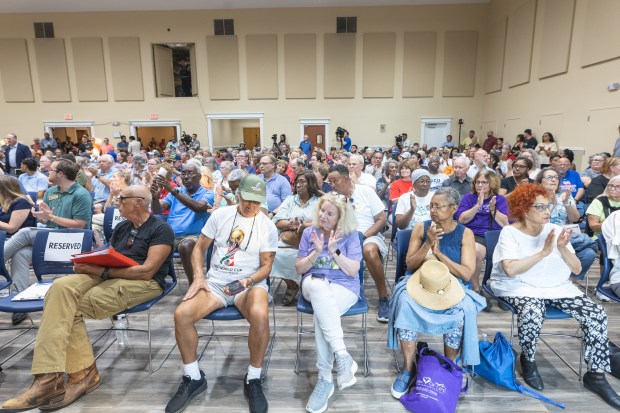
About 660 people attended a public forum Tuesday in Bolingbrook to protest Illinois American Water’s proposed rate increase.
The Illinois Commerce Commission is expected to issue its decision on the utility company’s request by Dec. 18. The commission is also accepting written comments from affected customers via its website, www.icc.illinois.gov, or by calling its consumer services division at 800-524-0795.
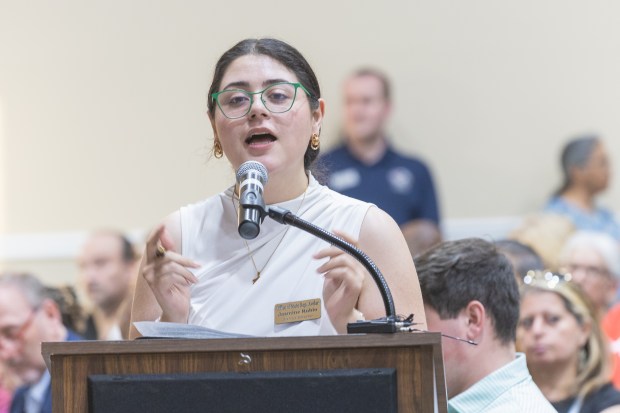
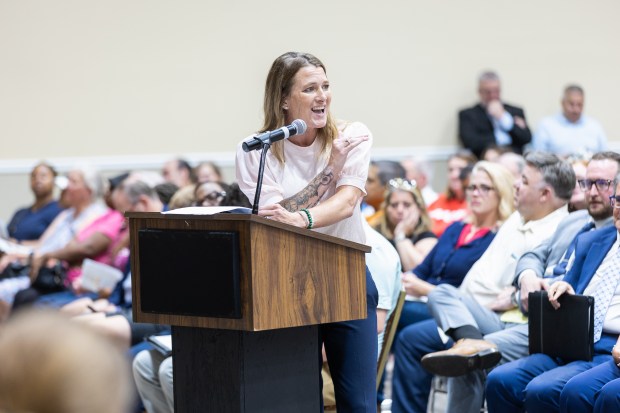
Illinois American Water customers living in Bolingbrook, Lisle and Homer Glen as well as state legislators and municipal officials spoke for about 2 1/2 hours urging the ICC to deny the rate increase. Another public forum may be scheduled because time expired before all of the people who signed up to speak had a chance. Some people attended from as far away as Peoria and Winnebago County.
Illinois American Water President Rebecca Losli said the company is investing in its infrastructure to improve service for its 1.3 million customers throughout 177 communities.
The company has invested $2 billion in water and wastewater improvements since 2025, Losli said. Tap water is held to the industry’s highest standards and is tested so it meets or surpasses state and federal drinking water regulations, she said.
The company’s new rates would support about $577 million in water and wastewater system improvements through December 2027, including replacing 42 miles of aging water and sewer mains, removing lead service lines and addressing emerging chemical contaminants such as per- and polyfluoroalkyl substances, or PFAS.
Ignoring the critical needs would be a disservice, Losli said.
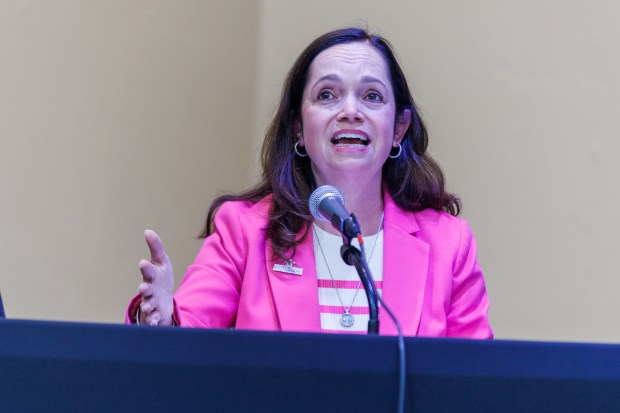
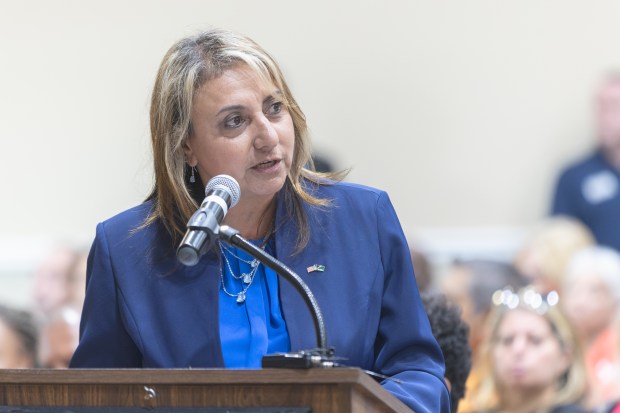
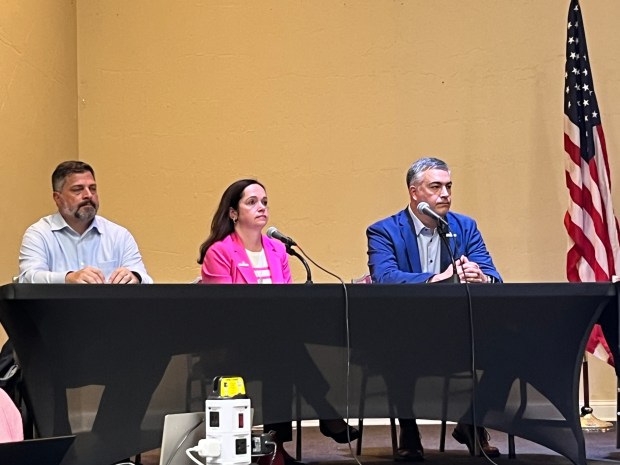
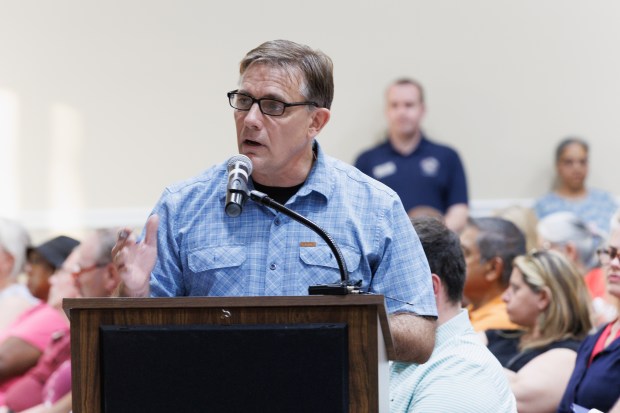
Illinois American Water officials said their rate request is $129 million over two years, though the Citizens Utility Board, a consumer watchdog organization, has put the figure as high as $142 million.
Under the utility’s proposal, the typical residential water customer using 3,500 gallons of water would see an increase of $14 per month, depending on the service area. Typical customers served by sanitary wastewater systems using 3,500 gallons of water would see an increase of about $28 per month.
Water customers, however, said enough is enough.
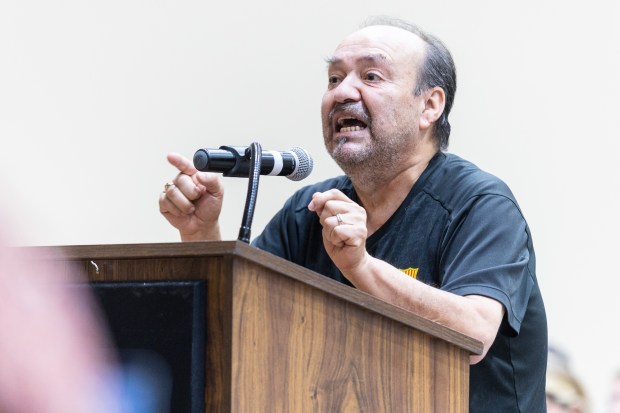
James Stewart, a Bolingbrook resident, said three years ago his monthly water bill was $177 for using 6,200 gallons of water. This year, his bill is $172 for using just 3,700 gallons.
“Something about the numbers here just don’t make sense, and it’s not fair,” Stewart said.
Bolingbrook Mayor Mary Alexander-Basta said households in her town cannot absorb another rate increase.
“For too long, utility companies have come before the Illinois Commerce Commission asking working people to pay more while they continue to make massive profits,” Alexander-Basta said. “That is not fairness. That is not accountability. And it is not sustainable.
“No one should ever have to choose between paying a water bill, buying groceries, filling a prescription or keeping a roof over their head,” she said.
State Rep. Natalie Manley, D-Joliet, said it’s “unsanitary, undignified and unacceptable” to make people choose between paying their bills or flushing their toilets or taking a shower.
About 9,000 of the 15,000 students in Valley View School District 365U, which serves Bolingbrook and Romeoville, meet the income guidelines to qualify for the free or reduced lunch program, said school board President Steven Quigley. Illinois American Water’s rate increase would greatly affect those families, he said.
Lisle Mayor Mary Jo Mullen said the 600 homes on Illinois American Water pay four times what residents on the municipal system pay.
“There is no equity in paying four times what their neighbors pay,” Mullen said.
Homer Glen Mayor Christina Neitzke-Troike said on the hottest day of the year, she should be able to play in a sprinkler with her children, but she can’t afford to turn a sprinkler on.
The Illinois Commerce Commission’s mission is to balance the interest of consumers and utilities to ensure adequate, efficient, reliable, safe and least-cost public utility service, Neitzke-Troike said.
“The ICC has an important responsibility not only to ensure utilities remain financially healthy but also to protect the public from unjust and unreasonable rate increases,” she said. “I respectfully ask the commission to carefully scrutinize this request, require the highest level of justification for every proposed increase and consider real financial impacts.”
Neitzke-Troike told Illinois American Water that Homer Glen has established a water task force it nicknamed WTF, referring to an expletive acronym used to express outrage or disbelief.
Illinois American Water has among the most frustrated customers in the state, said Jim Chilsen, director of communications for the Citizens Utility Board, a nonprofit utility watchdog group.
This would be the fourth rate hike in a decade for Illinois American, the state’s largest investor-owned water and wastewater utility, he said. The utility has received $230 million in rate hikes over the last decade including $110 million in 2024, $85 million in 2022 and $35 million in 2016.
Meanwhile, the utility’s parent, American Water, has brought in more than $1 billion in profits in each of the last two years, Chilsen said.
“Illinois American has been a rate hike machine,” Chilsen said.
Nancy Mizura, a volunteer at the DuPage Township Food Pantry, said it’s unfair for the utility to continue to ask for more money.
“Do you know how many people go through (the pantry) every single day because they cannot afford food?” she said. “They have to choose food over water, medicine over water, electricity over water. It’s unfair. They cannot continue to make profits off of us.”
Al Hollenbeck, the volunteer state president with the AARP, said seniors want to age in place in their homes and communities, but the rising costs of utilities makes it difficult, especially for those on a fixed income.
Hollenbeck said if the rate increase is approved, Illinois American Water customers in the area will pay close to $300 a month for service. Naperville customers, who don’t rely on Illinois American Water, pay about $150 a month for a similar usage, he said.
“We have to make noise,” Hollenbeck said. “We have to communicate to the commerce commission this is not acceptable.”
Michelle Mullins is a freelance reporter for the Daily Southtown.