
Recent news coverage of the proposed Harlem Irving Companies redevelopment on Bryn Mawr Avenue in Edgewater has largely framed the discussion as though preserving one historic building could prevent 95 new apartments from being built. While that may reflect the developer’s position, it overlooks a much more important story and one that will shape the future of Edgewater for decades.
The public hearing before the Commission on Chicago Landmarks was never a referendum on whether new housing should be built. It was a hearing to determine whether 1114 West Bryn Mawr, known as the Fisher Building, meets the city’s criteria as a contributing building within the proposed city landmark Bryn Mawr Historic District. That distinction matters because Chicago’s landmark ordinance exists to protect buildings that contribute to the architectural and historic significance of landmark districts. The commission in its subsequent meeting on July 9 voted unanimously to approve the district as a city landmark, and it voted that the Fisher Building is an important contributing building and should not be demolished. This is great news, but the debate continues as this moves to the Committee on Zoning, Landmarks and Buildings, then the City Council for final review and approval.
The Edgewater Historical Society’s Bryn Mawr Historic District Advocacy Task Force, formed to help revitalize Bryn Mawr Avenue, strongly supports new development. We also strongly support preserving the historic buildings that make Bryn Mawr Avenue one of Chicago’s most distinctive commercial corridors.
These are not conflicting goals.
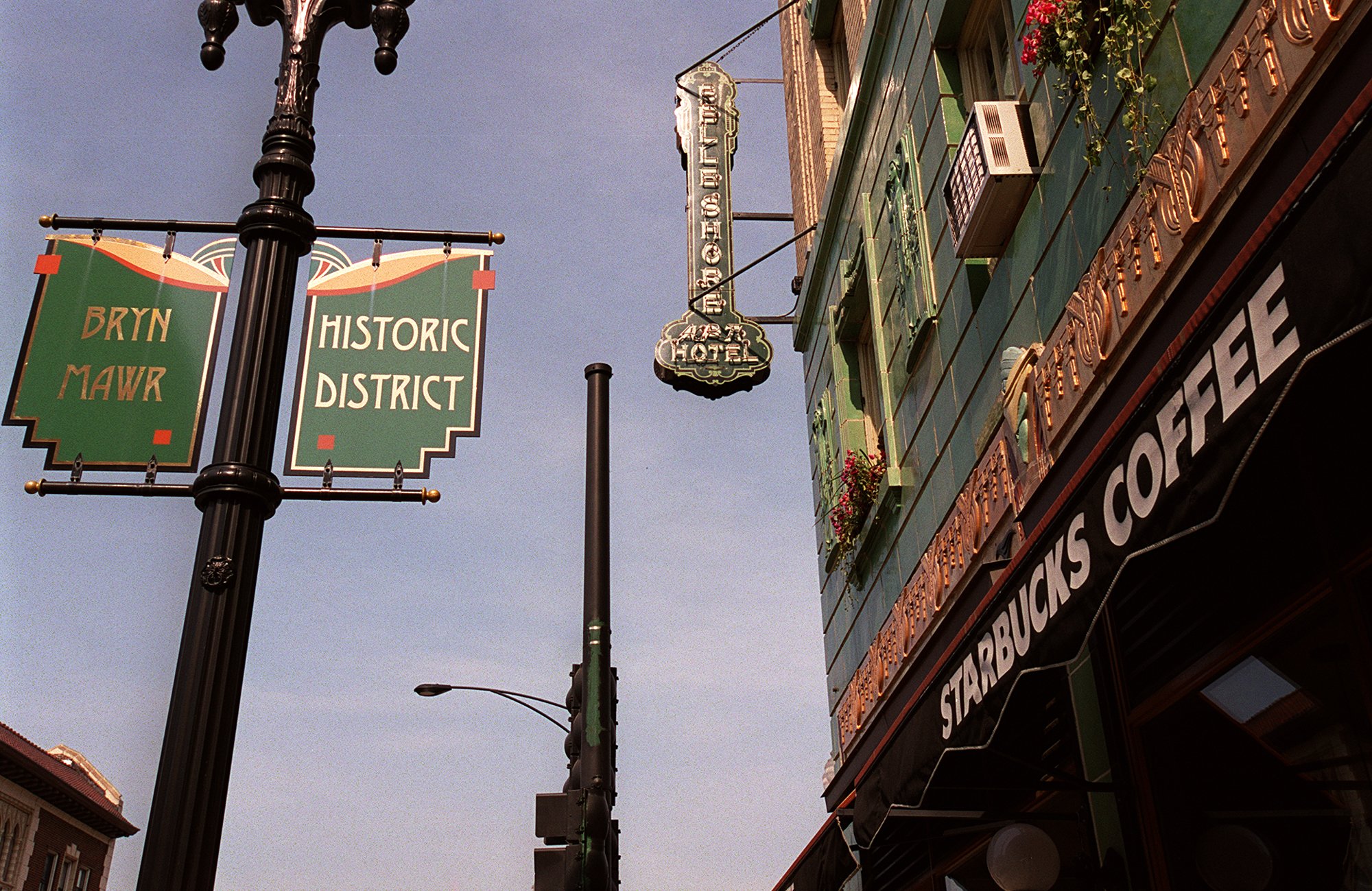
The Bryn Mawr Historic District has been listed on the National Register of Historic Places since 1995, and this spring, it received preliminary approval for designation as a Chicago Landmark District. For years, residents, business owners, preservation advocates and community leaders have worked toward revitalizing the district, not by freezing it in time, but by encouraging investment that respects its architectural character while bringing new life to the neighborhood.
That has always been our vision.
During the recent hearing, the Department of Planning and Development presented the architectural, historical and cultural basis for landmark designation and explained why it concluded that the Fisher Building retains the integrity required of a contributing historic structure. Residents and neighborhood organizations also spoke in strong support of preserving the building because they believe it remains an important part of Bryn Mawr’s historic identity.
Those voices deserve to be part of the conversation.
It is also important to recognize that this landmark designation did not emerge overnight. Community organizations have advocated for years to protect and revitalize the district. We are aware that members of the Bryn Mawr Alliance, a task force established by Ald. Leni Manaa-Hoppenworth, 48th, met with the Harlem Irving development team a year ago and communicated the community’s desire to preserve the Fisher Building. We are also aware that the building is listed on the National Register, which, with further research, would describe the protections in the U.S. secretary of the interior’s Standards for the Treatment of Historic Properties. The city also notified property owners as the landmark designation process moved forward, giving owners the opportunity to adapt pending projects before seeking final approvals.
None of this should be interpreted as opposition to development.

Across Chicago, historic buildings have been successfully incorporated into larger redevelopment projects while adding substantial new housing. Adaptive reuse and contextual infill development have strengthened neighborhoods by preserving what is irreplaceable while allowing contemporary architecture to occupy sites that do not contain protected historic resources.
That same opportunity exists on Bryn Mawr Avenue.
The proposed development can still move forward while incorporating the Fisher Building and achieving nearly all, if not all, of its residential goals. Preserving one contributing building should not be viewed as an obstacle. It is an opportunity to create a project that is more distinctive, more valuable and more connected to the neighborhood it serves.
The future of Bryn Mawr extends well beyond this one project. CTA-owned redevelopment sites, additional private investment and new housing proposals will continue to reshape the district. As that happens, new buildings should respect the scale, rhythm and character of the avenue. They should be constructed with enduring materials such as brick, limestone, terracotta, steel and glass storefronts. Contemporary architecture need not imitate history, but it should aspire to the same level of craftsmanship, permanence and civic pride that made Bryn Mawr worthy of preservation in the first place.
Edgewater welcomes investment. We welcome new neighbors. We welcome new housing.
What we ask is simple: Preserve the buildings that tell our story, and build the next generation of great architecture alongside them.
That is not an argument against development.
It is an argument for building a Bryn Mawr that future generations will be proud to inherit.
Todd Baisch and Genell Scheurell are co-chairs of the EHS Bryn Mawr Historic District Advocacy Task Force. Baisch is a local architect and long-term resident of Edgewater who has lived in or near the Bryn Mawr Historic District for over 37 years. Scheurell is a historic preservationist who has worked for the National Trust for Historic Preservation, and lives in the Bryn Mawr Historic District.
Submit a letter, of no more than 400 words, to the editor here or email letters@chicagotribune.com.