
Back in 2021 during the COVID-19 pandemic, like everyone else, I knew that we were living through an extraordinary moment in history. It felt like our world had been turned upside down, and it was hard to imagine what would come next.
In the midst of that uncertainty, a friend and I began wondering: What if young people across Chicago could document their experiences in their own words and preserve them for the future?
We ended up launching a citywide initiative, through which thousands of young people contributed letters, artwork, photographs and reflections that captured their lives during the pandemic and their hopes for the future. That initiative eventually grew into Living Record, the organization I now lead.
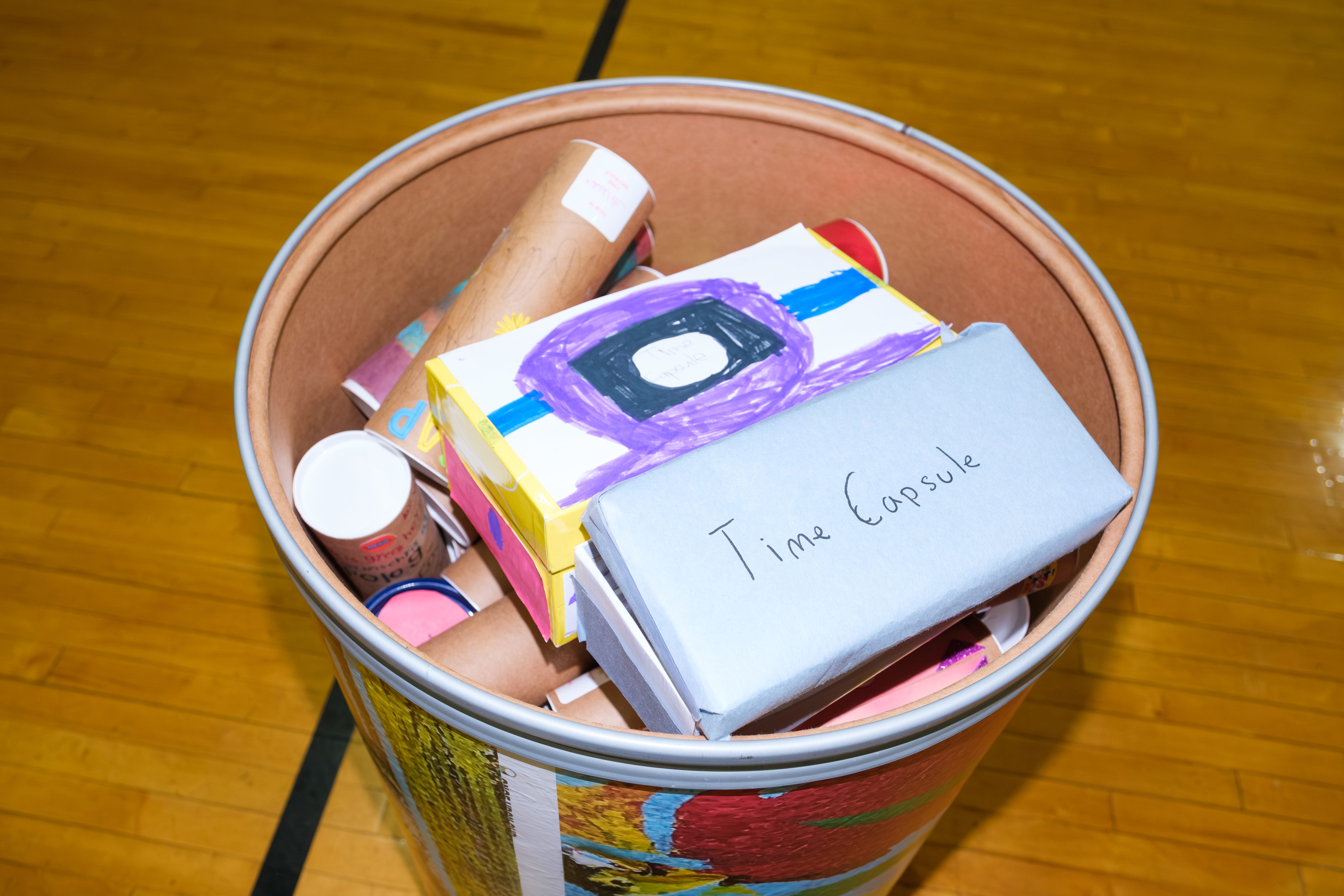
Now, five years later, we’ve begun reopening these time capsules. Across the city, people of all ages have been exploring their contributions from a period that felt overwhelming and uncertain.
For the children creating those capsules in 2021, the pandemic and the challenges it created were often all-encompassing. Some of the most fundamental joys and routines of life were gone, and it wasn’t clear when they would return. In the time capsules, kids wrote about missing their friends and grandparents. They wished they could go back to soccer practice. They shared their disappointment about missing birthday parties and other milestones.
As we’ve begun reopening these capsules, what has surprised me most is not what those young people wrote then, but how many young people today respond.
As they explore the artifacts from the 2021 capsules, I’ve heard comments such as: “Wow, those kids were so sad. I wasn’t that sad.” Some students are surprised by how the writers focused on simple things they now take for granted: seeing friends, going to a restaurant, giving a loved one a hug. Many students today recall the pandemic as a time filled by moments at home with family, going to school in their pajamas or having a break from some of the social pressures of school. They feel disconnected from the loneliness, isolation and anxiety described in the letters they are reading.
That difference in perspective is striking. We now know something the kids who contributed to time capsules back then did not: Many of the hardest challenges of that period would eventually pass. New challenges emerged, of course, but so did new opportunities, relationships and experiences that they could not yet envision.
This experience has been a powerful reminder that time changes not only our circumstances, but also our perspective.
The pandemic may have been unusual, but I don’t think this lesson is unique to the pandemic.

Today, one of the things I hear most often is a broader sense of pessimism about our current moment and the future. Political division, economic uncertainty, social isolation, distrust in institutions, fears of the impact of technology — the list of concerns goes on. Earlier this year, Gallup released a poll showing optimism in America has hit record lows.
Yet, what reopening the time capsules has shown me is that we shouldn’t assume today’s challenges are permanent. Five years can change more than we think.
Reopening the pandemic time capsules has made me curious about what the next five years will hold. What parts of today’s challenges will feel distant? How will we remember things differently than we’ve experienced them today? What will seem obvious in hindsight?
That question is what motivated Living Record’s latest collaboration with the Chicago Public Library at the Obama Presidential Center. As we celebrate this new civic space and the nation’s 250th anniversary, we’re inviting visitors to consider not only life in America today, but also the future they hope to help create.
Their responses will be preserved in a new time capsule that will be reopened five years from now. Just as today’s students have been able to revisit the hopes, fears and assumptions of young people living through the pandemic, future us will have the opportunity to look back on this moment with the benefit of hindsight.
I don’t know what people will think when they reopen this new capsule in five years. I don’t know which of today’s challenges will feel resolved, which will remain, or what new opportunities and obstacles will emerge in the meantime.
What I do know is that the people reopening it five years from now will know something we don’t: what happens next.
Stacey Gillett is co-founder and executive director of Living Record, a Chicago nonprofit that helps people connect the past, present and future through art, storytelling and time capsule experiences.
Submit a letter, of no more than 400 words, to the editor here or email letters@chicagotribune.com.