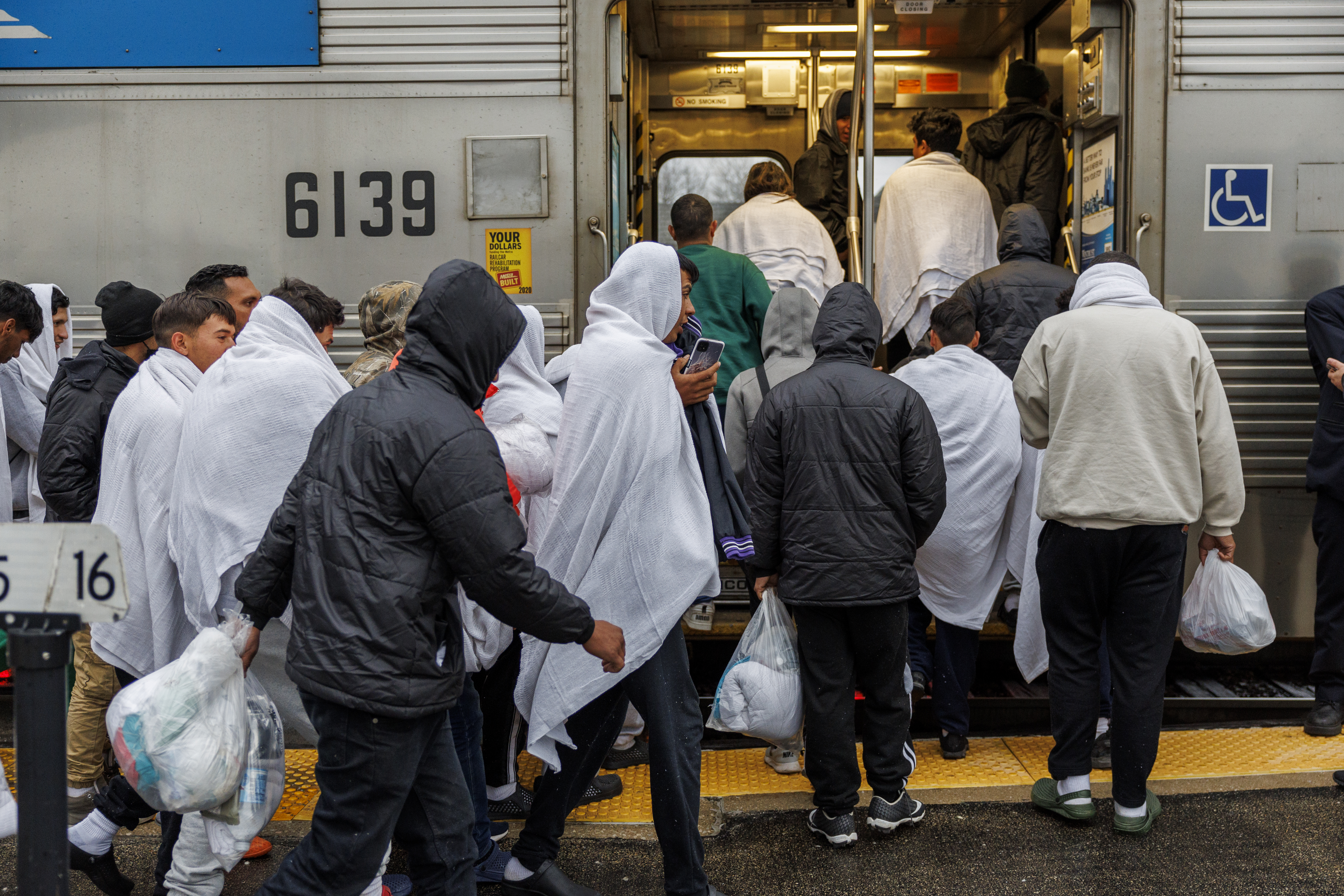

An audit of Chicago’s migrant response found no major issues with how City Hall spent more than $630 million to house and feed the asylum seekers, according to a report released Wednesday by the Office of Inspector General.
Spanning August 2022 to the end of 2024, the review saw the city’s top watchdog analyze receipts on public spending for the at least 46,282 migrants, mostly from Venezuela, who were bused to Chicago by Republican-led states. That crisis ultimately cost $639,654,965, though most of the money did not come from the city budget.
It also became a lightning rod for criticism during the first half of Mayor Brandon Johnson’s term, with both conservatives and Black aldermen attacking the heavy spending as evidence of misplaced priorities that left longtime Chicagoans shortchanged. Other mishaps included a controversial migrant base camp idea that the Johnson administration abandoned in late 2023 after an environmental review flagged issues with the plot of land in Brighton Park.
“The City accurately and transparently reported spending,” wrote newly appointed Inspector General David Glockner. “OIG found that the City’s publicly reported cost dashboard was generally complete. … Finally, while City departments told OIG that the mission increased their workloads and impacted their facilities, they also characterized the additional work as part of their normal duties in responding to emergency events and providing assistance to people in need.”
The review looked at receipts from city government accounts only, not direct spending from its nonprofit and private vendors. The inspector general did pull a sample of “both randomly selected and targeted invoices” to find the city’s public dashboard of migrant spending left off $50,916, per the report.
Those 100 receipts were for services described as “small supply purchases, children’s enrichment activities, and the retention of legal counsel related to new arrivals staying in the airports,” the inspector general wrote. Overall, 88 of those sampled invoices followed procurement rules while the other 12 — $79,736, or 0.39% of the reviewed spending — had issues such as including an invoice for “Covid-19 cleanings” at libraries that should not have been tallied as migrant spending.
There were also 11 direct voucher payments that “did not accurately identify the nature of the spending,” including marking a purchase for tables and chairs as a “festival” expense, per the report.
In total, Chicago housed migrants across 38 shelters, including Chicago police stations and the airports, in a system that peaked in January 2024 at more than 15,000, per the report.
The inspector general found the city “experienced data challenges” around public reporting at the time. Of the 51,648 people logged in the migrant census during that duration, “underlying records only substantiate the arrival of 46,282,” but the city has since adjusted the total to account for that discrepancy of 5,000, the report says.
Glockner assumed his role this May after his predecessor, Deborah Witzburg, who clashed with the Johnson administration, stepped down. His Wednesday report says the migrant spending audit was in progress as of this February.
In total, Chicago spent $269.1 million of its Corporate Fund on the migrant mission, or about 42% of the total. Another 29% came from federal grants, 23% from the state and 6% from Cook County.
By far the top vendor was Favorite Healthcare Staffing, which received $400 million for helping run the migrant shelter system after piggybacking off an existing contract with the state during the COVID-19 pandemic. After that were Equitable Social Solutions and Open Kitchens, vendors that provided shelter and meals, respectively.
The Tribune in 2023 reported on Favorite Staffing’s staggering use of overtime by hundreds of workers, logging at times 84-hour workweeks that were paid at a 50% premium.