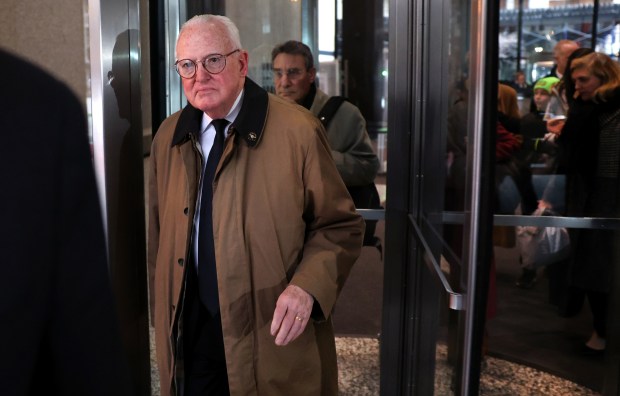










Powerful Chicago Ald. Ed Burke had just finished pitching his private law firm to the developers of the Old Post Office in October 2016 when he asked his assistant to bring in some pamphlets and business cards.
Unbeknownst to Burke, his colleague, then-Ald. Daniel Solis had a hidden video camera pointing right at him as Burke wrote something down on the back of the Klafter & Burke materials and slid it over Harry Skydell and his son, who had flown in from New York to meet Burke face to face.
“Between Danny and I there aren’t many people around town we don’t know,” Burke said on the recording, which was played for jurors Wednesday at Burke’s corruption trial. Skydell thanked Burke and remarked about his connections, saying, “I’d be surprised if you don’t know somebody here. If you don’t know somebody, he’s a nobody.”
Burke then launched into a tale about the origin of the most Chicago of political phrases: “We don’t want nobody nobody sent.”
As they got up to leave, Burke said, “Go Cubs!” a reference to Game 2 of the 2016 World Series, which was being played that night.
The video of the Oct. 27, 2016, meeting in Solis’ City Hall office is one of the most crucial pieces of evidence in the sprawling racketeering indictment against Burke, which accuses the longtime Finance Committee chairman of using the powers of his elected office to pressure Skydell and other developers into hiring his law firm to do property tax appeals.
In the meeting, Burke seemed the consummate salesman, smoothly touting his longevity, knowledge and deep relationships that could help Skydell with thorny issues the ambitious $600 million renovation plan had already run into with Amtrak, which owns the train tracks that run under the Post Office into busy Union Station.
“As far as Amtrak is concerned, put it in the back of your mind,” Burke said on the video, which was taken by Solis using a tiny hidden camera that alternately pointed at the wall and Burke’s hands.
Burke assured Skydell that a good friend of his, Jeff Moreland, was on the Amtrak board, remarking “we made his daughter a judge here in Cook County.”
That recording was followed by others Wednesday that showed Burke over and over tying the hiring of Burke’s law firm by Skydell’s company, 601W, to any official action he might take on their behalf, be it helping with Amtrak or another issue that arose with the city Water Department.
“You know, if we’re not signed up, I’m not going to do any lifting for this guy,” Burke said with a shrug on one video recorded by Solis in January 2017. “I haven’t heard a word.”
When Solis reiterated the developers would need help with “a lot of other stuff,” Burke was caught on camera offering a half-smirk.
“So far we got no — the cash register has not, uh, rung yet,” he said.
The trial, now in its third week of testimony, saw some late-breaking drama Wednesday evening, when Burke’s attorneys — outside the presence of the jury — revealed they intend to ask for a mistrial over a comment by a witness that Burke was corrupt.
“A developer hiring an alderman to do property tax work, I thought, was symbolic of the Chicago Way of doing business,” Amtrak executive Ray Lang said in an effort to explain an email he’d written to colleagues about Burke.
When Assistant U.S. Attorney Diane MacArthur asked Lang what he meant by that, Lang blurted out, “I thought it was very corrupt.”
Burke’s attorney, Chris Gair, jumped up and loudly objected, and U.S. District Judge Virginia Kendall ordered jurors to disregard that comment.
But after the jury was excused for the day, an infuriated Gair asked the judge to declare a mistrial, saying Lang at one point had been specifically instructed not to use the word “corrupt.”
Kendall told attorneys to submit written arguments for or against a mistrial, and said she would decide Thursday morning how to go forward. And Lang, whose testimony is expected to resume Thursday, “has a strong will to say what he feels,” Kendall noted. “So I’ll definitely rein that in.”
Burke, 79, who served 54 years as alderman before leaving the City Council in May, is charged with 14 counts including racketeering, federal program bribery, attempted extortion, conspiracy to commit extortion and using interstate commerce to facilitate an unlawful activity.
Also on trial are Burke’s longtime ward aide, Peter Andrews Jr., 73, and Charles Cui, 52, a Lake Forest real estate developer, but neither of them is charged as part of the Old Post Office scheme.
Prosecutors on Wednesday called a series of witnesses who testified the Old Post Office project ran into significant bureaucratic hurdles, especially from Amtrak, which runs trains underneath the building.
Burke in late 2016 set up a meeting with Lang, who at the time was Amtrak’s senior director of state and local government affairs. But in an undercover video played for the jury, he made clear to Solis the day after that anything he had done to smooth over problems with Amtrak was “just trying to get the background here.”
“I’m not hired to represent them … if indeed I get hired, then it’s a different story,” he told Solis in the December 2016 meeting. “Right now it’s pro bono publico.”
Solis, who by that point had been acting as an FBI mole for months, told Burke he wanted to be invited to any further meetings, prompting Burke, a noted history buff, to reference the musical “Hamilton.”
“There’s a song in there, ‘I want to be in the room,'” he told Solis. “It’s as true today as it was in 1776.”
The Old Post Office developers have other properties in Chicago too, Burke went on to note, but they were using a different law firm for their tax work.
“You know as well as I do, Jews are Jews, and they’ll deal with Jews to the exclusion of everybody else,” Burke said in a matter-of-fact tone, looking unwittingly right into Solis’ camera. “Unless — unless there’s a reason for them to use a Christian.”
Lang testified that after he met with Burke, he and the agency began a push to make things easier for the Post Office developers. Permits were processed more quickly, fees were waived, and Lang started doing “a lot of things that were generally outside my daily job description.”
But Skydell and his firm still did not hire Burke, and on further recordings, the alderman was clearly rankled.
“I don’t think you or I should be, you know, getting involved unless we know that we’re — er, I’m — representing them,” he told Solis on a January 2017 phone call played in court Wednesday.
Prosecutors also played a lengthy video recording made by Solis the following month, when he and Burke went on a tour of the Old Post Office renovation and walked through the underground train tunnel as Lang explained “air rights” and other complex issues.
During the short car ride from City Hall, Solis told Burke: “Anyway Ed, I talked to Harry Skydell. … He’s definitely interested in giving you those, that law work.”
“Oh good,” Burke replied.
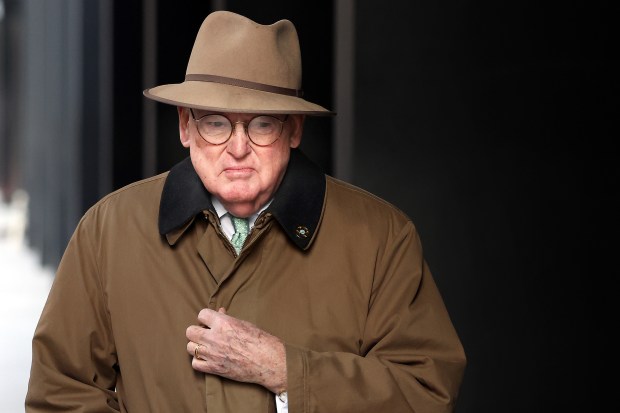
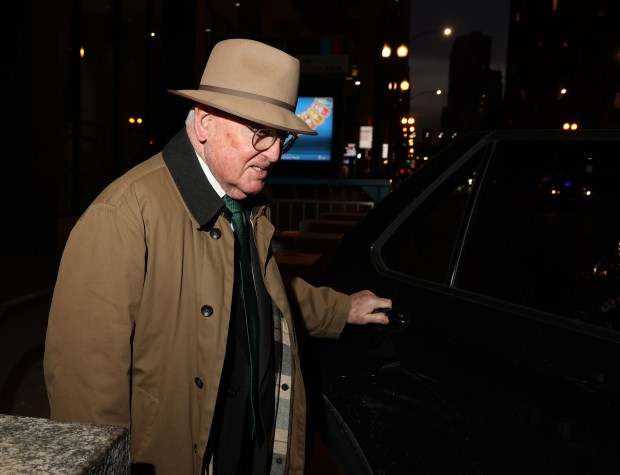
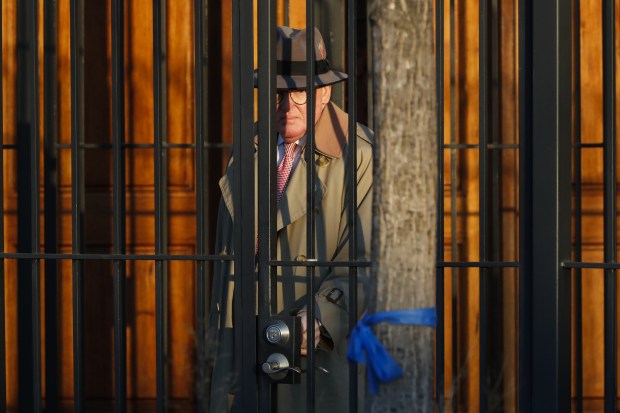
Burke, wearing his trademark black fedora, hardly spoke during the tour, which was punctuated by the song “California Dreamin'” by The Mamas and the Papas playing softly in the background.
Back in Burke’s office, Solis remarked it “was a good tour.”
“I think I got a better sense of what’s going on over there. … I’m gonna brag about it to Harry Skydell,” Solis said. He then brought up whether Burke thought he’d eventually get Skydell’s tax business.
“Well they need somebody and we’re a good as anybody,” Burke said.
Prosecutors have alleged that while Skydell never did hire Burke’s firm to do tax appeals for the Post Office project, he did give Klafter & Burke work on other properties.
Burke’s attorneys, meanwhile, have repeatedly noted that the FBI instructed Solis to give Burke false information in order to see how Burke would respond and to guide the topic of conversation back to the prospect of winning tax business for his firm.
In opening statements, Burke’s attorneys repeatedly claimed the alleged Old Post Office scheme only came about because Solis was eager to save his skin and pressured the developers to give Burke their business.
Even the in-person meeting that Solis set up between Burke and Skydell was at the behest of the FBI, the defense said.
That was evident in the first meeting with Skydell and his son in Solis’ office. Before Burke came into the room, Solis referred to Burke as “the senior alderman in the city of Chicago,” and told the Skydells that while Burke wanted to meet with them “about tax work,” they shouldn’t feel pressured to hire him.
“I don’t want you to feel obligated or anything,” Solis said.
When Burke came in, he apologized for being late. “I had a doctor’s appointment, you know they keep you waiting.”
“Don’t they know who you are?” Solis joked.
Skydell asked how long Burke has been alderman.
“Only 47 years,” he said. “But who’s counting?”
“Well, we’d love to present our firm to you. We do almost exclusively ad valorem taxation. Property tax work,” Burke told Skydell, launching into his sales pitch.
The recording seemed to show Burke was impressing his audience.
“It’s a pleasure to deal with people who are so dedicated to the city and have been here for so long; almost half a century. It’s unbelievable,” Skydell said at one point in the conversation. “So, ah, we should continue many more years in good health, and we should be able to try to do some business together.”
After Skydell and his son shake hands and leave, Burke and Solis continued to talk about Burke paying Solis for bringing him law business, possibly by funneling a percentage to another attorney, such as their mutual friend Brian Hynes. Burke insisted that such an arrangement would be legal.
Solis ticked off some of the other major developments in his ward, including high-rises and other megadeals some by Chicago-based Curt Bailey.
“If you can tee him up you can be our consultant,” Burke said excitedly. “Hey, you’re not gonna get in any trouble, and I’m certainly not gonna got in any trouble at this stage of the game.”
Witnesses earlier Wednesday testified that pressure from Burke — as well as from then-Mayor Rahm Emanuel — helped speed along the problem-solving process for another Old Post Office issue. The dilapidated building had no running water, and developers were running into roadblocks from the city.
Burke made it known that he wanted the issue resolved, and then-water Commissioner Barrett Murphy testified that the intimidation inherent in Burke’s power meant “you wanted to be as responsive as possible to any requests he may have had.”
“Being head of the Finance Committee, he had ultimate control over the city’s finances and budgets,” Murphy testified. “And every year we had to go before the City Council with our budget, and if Ald. Burke asked you questions it could be terrifying.”
On cross-examination, Burke’s attorneys pointed out that the Old Post Office project had support from just about every sector of city government, since the city was eager to get the property taxes and economic development that would follow from a busy new office building.
Murphy also acknowledged under questioning by the defense that he and Burke were friendly with each other, and that, as history buffs, they sometimes chatted about history together.
“Did he give you any of his books that he’d written about Chicago history?” Gair asked. When Murphy responded he hadn’t, Gair shot back “Oh, well, you’re probably the only one, then.”
The judge sustained an objection from prosecutors, albeit with a smile on her face.
mcrepeau@chicagotribune.com
rlong@chicagotribune.com