After six months of emphasizing the carrot in its new immigration policy, the U.S. Immigration and Naturalization Service has begun to unveil the stick. Up to this point, the INS has stressed the opportunity for illegal immigrants to become legal residents of the United States under the provisions of the Immigration Reform and Control Act of 1986. That approach has fallen far short of its goal, with substantially fewer illegal residents signing up for amnesty than anticipated.
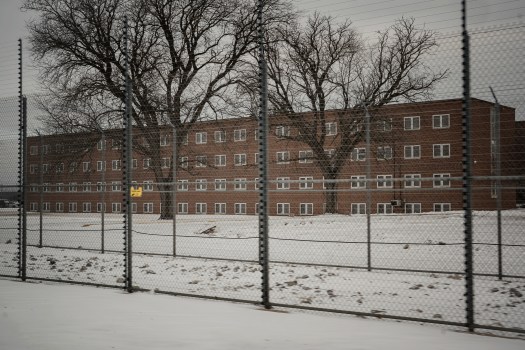
Speaking volumes about the new, tough approach is a new federal lockup in suburban Broadview that opened for business Oct. 19 in an industrial park near Int. Hwy. 290. The facility is designed to hold up to 200 people rounded up in raids on area businesses. The facility also takes, upon their release from police custody, foreign nationals who have committed felonies.
During the last two weeks, at least 25 people arrested in such raids have been photographed and fingerprinted and then shuttled from Broadview to O`Hare International Airport, where INS agents have placed them on commercial flights back to their countries of origin, said Roger Piper, assistant district director for detention and deportation.
Deportation proceedings have been started against another 50 illegal workers who did not leave voluntarily and requested hearings before immigration judges downtown, he said.
The Broadview facility has no overnight accommodations.
Those who must be held overnight are taken to the Metropolitan Correctional Center, a federal maximum-security prison in the Loop.
Piper said he hopes that next fiscal year the federal government will approve funding for a 300-bed annex in Broadview so the detainees can remain in one place.
”We`re very proud of this,” Piper said during a tour of the site, where detainees are kept in large, glassed-in rooms equipped with indestructible plastic chairs, stainless steel toilets and telephones.
Although the facility was on the drawing board for five years, its opening at the midpoint of the yearlong legalization program points clearly to what the immigration service intends to do with illegal residents who break the law by working without papers, trafficking in fraudulent documents or committing felonies.
In addition, there has been a doubling of the INS enforcement budget, and the INS Chicago district, which oversees Illinois, Wisconsin and Indiana, plans to add 50 agents to its present 90 within the next six months, Assistant District Director Brian Perryman said.
Further, a telephone hot line for reporting illegal workers has been put into place.
While acknowledging the stepped-up enforcement effort, INS officials insist that those arrested and eligible to apply for legalization are given opportunities to do so. The immigration service also has maintained that information contained in rejected applications will not be used against the immigrants for deportation.
But Carlos Arango, executive director of the Midwest Coalition in Defense of Immigrants, said he is concerned that apprehended immigrants will not know how to get legal assistance. ”The INS puts pressure (on apprehended immigrants) to sign voluntary departures,” he said. The immigration service, he charged, ”is going to to try to push people out.”
In Chicago and throughout the nation, employers who knowingly hire illegal workers will be ”audited” by the expanded force of special agents, and repeat offenders will be warned and fined with increasing severity while their employees are taken to places such as Broadview.
To make such employees easier to find, the law also requires all employers to keep records of the immigration status of each new employee hired after Nov. 6, 1986. These records, called I-9s, must remain on file for three years and must be made available for inspection by INS agents upon request. Employers who do not maintain these records or who are found by other means to be hiring illegal workers are subject to warnings, and repeat offenders may be fined and eventually jailed by the INS.
Few employer fines have been levied across the nation, and in the Chicago area no employers have been fined since employer sanction enforcement was stepped up earlier this fall, Perryman said. But about 40 local employers have been issued citations, he said. Most of these operate in fields that traditionally have relied on immigrant labor: construction, hotels and restaurants, light manufacturing and agriculture.
”Our whole intent was and is to get 100 percent compliance from employers,” Perryman said. ”Most employers, we believe, are not going to get past citations. They`re going to clean their act up.”
While the law offers to some illegals an opportunity to become legal U.S. residents, observers of immigration reform question how many more people will seize that opportunity given the enhanced enforcement capability of the INS.
Critics are concerned that the opening of the detention center, coupled with a legalization program perceived by immigrants as costly, burdensome and likely to separate families, will keep immigrants from applying. A new shadow society will develop, they say.
”I think people who don`t apply will more than likely go underground again, even further than they were before,” said Mary Lou Gonzalez, president of the United Neighborhood Organization. ”They`re just not going to come forward.”
But Perryman said he disagrees, contending that the combination of increased employer sanctions and the imminent end of the legalization period should drive more people toward applying. ”We would like not to have a huge crunch in the end, but maybe that`s how it`ll work,” he said.
Beginning last May 5, those who could prove they had lived illegally in the United States since Jan. 1, 1982, were eligible to apply for temporary legal status. They have one year to do so. Applicants must not have left the U.S. for more than 45 days at a time in that period, engaged in criminal activity or grown to depend on government assistance such as Aid to Families with Dependent Children. Those who do not apply for temporary legal residence before next May 4, or who do not qualify for legalization, will be subject to deportation.
Slightly more than 50,000 applications have been filed at four Chicago-area legalization offices and in an INS mobile office that has traveled Downstate, Perryman said. The INS initially had projected 200,000 to 300,000 applications from the Chicago area, but it has revised that figure downward to 120,000 by May 4.
During the second half of the legalization program, the Chicago district hopes to open a fifth permanent office in Belleville for easier access by farmworkers and other illegals living Downstate, he said.