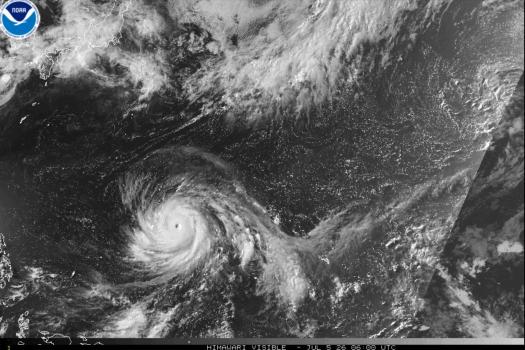
The hurricane howled through Long Beach last week on emotional overdrive, its very human parts driven, inspired, enhanced by the memory of their teammate`s recent death. On Friday, in their first game since Hank Gathers crumbled in their midst March 4, they hit New Mexico State with 111 points and won by 19, and on Sunday, against Michigan`s defending national champs, they exploded for a record-setting 149 in a surrealistic 34-point victory.
That word, surrealistic, is chosen here intentionally, for its definition (fantastic effects produced by unnatural combinations) echoes the feelings of those who viewed this storm. ”Loyola is on a crusade,” Wolverine coach Steve Fisher said after the Lions of Loyola Marymount swept his team away.
”It`s almost eerie,” said Arizona`s Lute Olson, whose team also played in Long Beach. ”It`s obvious they`re on a mission. I don`t know if I`ve ever seen a college team play better than Loyola this weekend. The way they`re playing right now, I don`t know if the Lakers could match up.”
”I`ve allowed them to let the natural emotion and energy unravel,” said Paul Westhead, who coaches the hurricane. ”Our guys were so relaxed (Sunday) that numberwise there was no limit. (The 149) could have been more.”
– On Friday in Oakland, in a West Region semifinal against Alabama, the emotions promise to stir again, and again Loyola will unfurl what often has been called the offense of the `90s. It has averaged, over the past three seasons, 110, 112 and 124 points a game, and along the way has produced some statistics that border the mythical.
It has followed an opponent`s score with one of its own in just two seconds. It has allowed the Lions to put up a shot (on average) every seven seconds over the course of a full season. It has posted 36 points in a game`s first five minutes, which is a 288-point pace (though that night they slowed and only defeated Azuza Pacific 164-138). It has led to an intrasquad game with the final score of 172-148, and-just last Sunday-produced that performance that disintegrated pages of the NCAA tournament record book.
There were 11 threes for Lion guard Jeff Fryer, and 21 for the team as a whole. There were 40 threes attempted by the Lions themselves, and 53 by them and Michigan. The 45-second clock? ”The four-to-five second clock” is what Westhead calls it.
”Twenty seconds to us is a lifetime if the other team has the ball,” he says. ”See, I`ve decided not to follow the advice of Ben Franklin, who said, `Don`t put all thy eggs in one basket.` Instead, I`m following the advice of Mark Twain, who said, `Put all your eggs in one basket and watch that basket.` ”
Westhead, consistently curious and always willing to learn, was attracted to this basket back in 1975. That year a coach named Sonny Allen used it to guide Old Dominion to a Division II title, and later, at a clinic, Westhead`s interest was piqued further while listening to Allen describe his system`s basic principles.
The student afterward asked the lecturer to expand on the subject, and when Allen told him there was nothing more to it, Westhead asked, ”If it`s so easy, why doesn`t everybody do it?”
”Because,” said Allen, ”you have to be a little bit crazy to do it.”
”And I am,” admits Westhead, ”a little bit crazy.”
He was crazy enough to take the system back to La Salle, where he was coaching then, and to use it in what was then called the Big 5 (a consortium of five Philadelphia colleges renowned for its excellent coaches). There, one evening, an opponent rushed off to a six-point lead, and with seven minutes still remaining in the first half, began to stall.
Westhead, badly wanting the ball, sent one of his defenders to their offensive end in hopes of enticing that opponent to shoot. When that failed, he sent another, and when even that did not achieve the desired result, he sent a third. Only then, and with a three-man advantage, did the opponent finally take a shot.
His belief in high-octane offense accompanied him to his next coaching stops with the Lakers and the Bulls, yet it was not until the 1987-88 season that it fully exploded onto the landscape. The two seasons previous, Westhead`s first at Loyola, his teams had averaged 80 and 85 points a game, but still, frustratingly, opponents had been able to blunt his Lions by taking their own sweet time before shooting.
He, too, had contributed to slowdowns by sometimes playing a traditional, energy-conserving zone defense, but now, finally, he realized just how he could assure the frenzied pace he favored. ”I found,” he remembers, ”that the button that makes the running game absolutely work is pressure full-court defense.
”If we let an opponent do what it wanted, it could neutralize our running game, but with pressure, we could almost guarantee the game would be at our pace. It wouldn`t guarantee a win, but when you play the way you want to play, good things usually happen. The only variable was whether the players could sustain the pressure. That was a real high-risk factor, a risk factor Lloyd`s of London wouldn`t insure. We needed players willing to push themselves to the point of exhaustion.”
To prepare them, to push that point as high as possible, he installed a training program as radical as the scheme he had conceived. It was a traditional distance runner`s program, not a basketball player`s, but there his Lions were, on a track and running intervals. Some days they went down and up the ladder, pushing themselves through two 440s, four 220s, eight 110s, four 220s and two 440s. Other days there were eight 440s and 12 220s, and on the worst days, they attacked a sand dune at nearby Manhattan Beach that rose straight up for 150 yards. ”The only hill I`ve seen like it,” says Westhead, ”is the one Walter Payton ran (during his off-season training).”
This was needed, necessary, for Westhead`s new scheme was frenetic enough to test even a distance runner`s threshold of exhaustion. His defense would try first to deny totally the inbounds pass. If that failed, it would double- team or run-and-jump at the man with the ball. If that failed and the ball reached the forecourt, it would harass the passer and overplay all his possible receivers.
If the opponent scored, the offense then would rush to its end in less than two seconds and attempt to shoot in less than 10-all while following a prescribed pattern. The center would inbound to the point, and then race to set up in the high post. The wings, the three-point specialists, already would be installed on either side of the circle, stretching the opponent`s defense. The power forward, the final man to attack, would trail the point in a sprint up the court.
This all meant, quite simply, that the Lions never would rest, and they rarely did during the system`s debut season. They did begin slowly, going 3-3, but then they rushed to 25 straight victories before being stopped by North Carolina in the second round of the NCAA tourney. Last year, Arkansas stopped them in the opening round, but this year, fueled by the emotion and memory of Gathers` death, they have blown into the regional semis and a country`s consciousness.
”Our offense,” says Fryer, ”is like playing in heaven.”
”It,” adds guard Bo Kimble, ”takes the fat out of basketball. It`s the way the game should be played.”
”Someone`s always trying to mess with the game,” concludes Westhead, Dr. Frankenstein incarnate. ”That`s our trick. That`s our trick, and it`s hard to achieve. But once we get it going, watch out. Then we`re really playing a different game.”