What’s in a name?
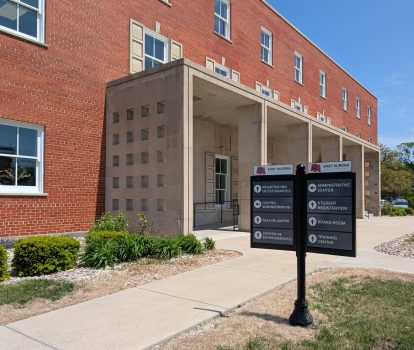
That’s exactly what First Chicago NBD Corp., parent company of the First National Bank of Chicago, NBD Bank and American National Bank, wants to find out.
First Chicago has told employees that it hired a research firm to determine the value of the three names used for its banks.
It’s an important question. On Oct. 1, the nation’s multistate bank holding companies will be permitted to merge their charters. But doing that will require some, like First Chicago, to come up with one name for all its banks.
It’s been rumored for months that First Chicago wants to dump its First Chicago moniker in favor of something that doesn’t tie it to a specific area, such as NBD Bank or American National.
It’s such an important issue to the bank that it told employees that if they’re one of the 1,000 people contacted, researchers will arrange to interview them at home or some other location to ensure their privacy.
Influence: State Sen. Jesus Garcia (D-Chicago) says he has no illusions about the clout of the state’s banks after his second run-in in as many years over pro-consumer legislation that would limit surcharges that banks can charge non-customers for using their automated teller machines.
For the second year, his legislation died in committee.
“Surprise, surprise,” said Garcia, who said he and supporters didn’t even bother calling the legislation for a vote after polling committee members and finding Republicans solidly opposed.
“The charges don’t make any sense,” said Garcia, who plans to keep tilting at this windmill until some kind of legislation is enacted to control the charges.
“This is something that has to be dealt with,” he said, noting that he is a customer of St. Paul Federal Bank for Savings, which in January became the largest ATM network operator to impose a surcharge on non-customers using a St. Paul ATM.
Legislation is pending in Springfield and Washington that would require ATM operators to disclose any surcharges and allow a user to cancel the transaction without charge.
Looking into Chatham: The Federal Reserve Bank of Chicago wants to know a lot more about the residents and businesses in Chicago’s Chatham neighborhood.
The Fed says it wants to know the sources of capital, the barriers to use of traditional financial institutions and informal sources of credit for residents and businesses.
It’s an important issue because Chicago’s biggest banks long have been accused of avoiding the city’s African-American neighborhoods, and the Federal Reserve Board has been pressuring banks to expand their services in minority communities.
Chatham, located roughly between 79th and 91st streets on both sides of the Dan Ryan Expressway, is a predominantly African-American neighborhood with relatively high average incomes and home values.
The bank has hired the Metro Chicago Information Center to interview 220 households and 230 businesses for the study.
Housing help: The Chicago Public Library and Fannie Mae, the nation’s largest source of funds for home mortgages, are working together to provide more information about homeownership to Chicago’s residents.
Library patrons who use the library system’s free Internet access service will find a hyperlink from the library’s home page to Fannie Mae’s home ownership Web site (http://www.HomePath. com).
In addition, the library is installing Fannie Mae’s Desktop Home Counselor software at selected branches to help library personnel work with patrons considering buying a home.
The effort is part of Fannie Mae’s seven-year program to provide homeownership opportunities to 125,000 Chicago families.
———-
The insider notebooks appear each day in the Business section. In addition to Inside Finance, the topics are technology (Monday), Chicago’s markets (Tuesday), the workplace (Wednesday), manufacturing (Thursday), travel (Friday) and retailing (Saturday).