
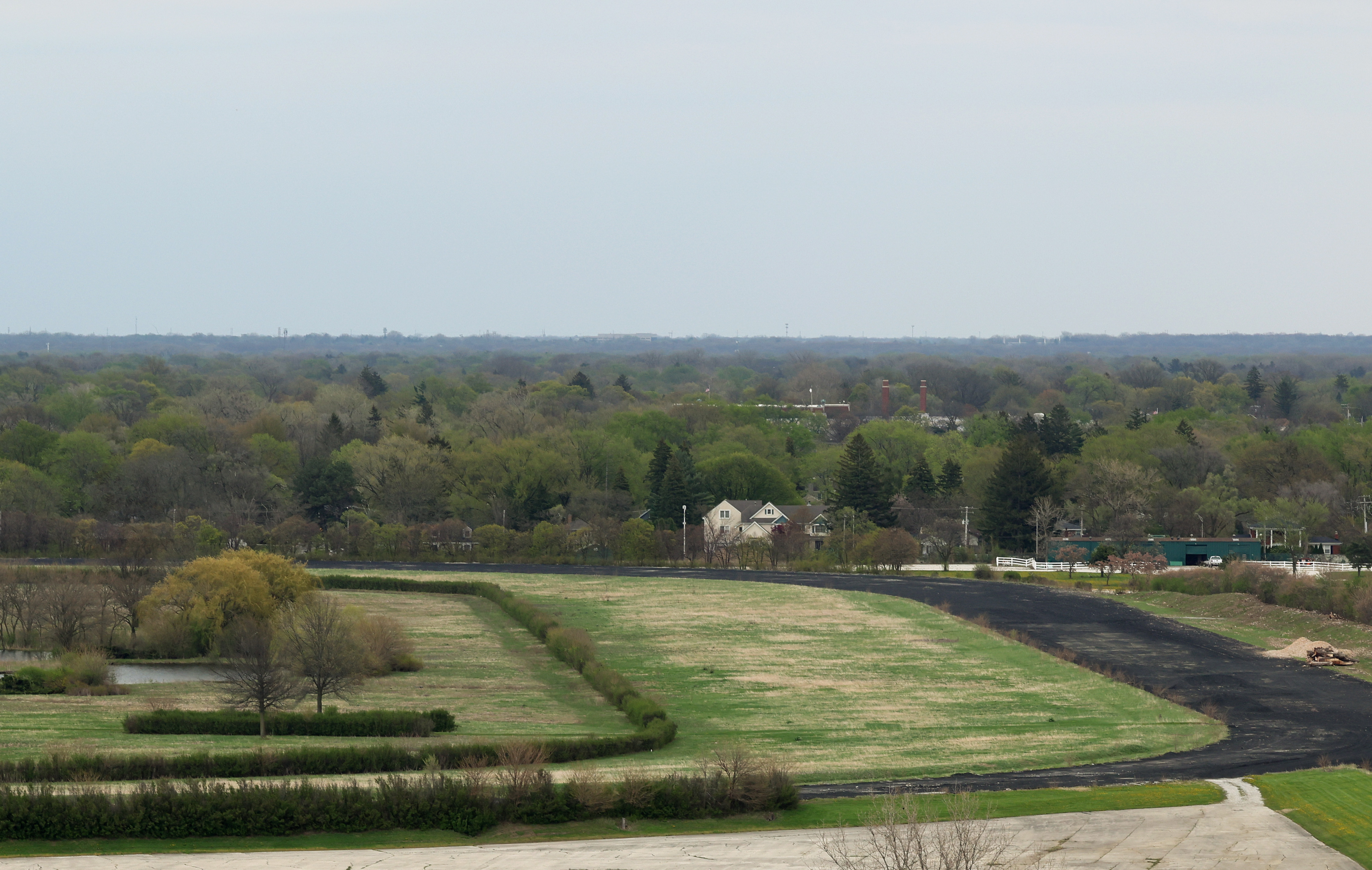

SPRINGFIELD — The Chicago Bears’ three-year search to find a new home has reached another unexpected turn as a key Illinois lawmaker spearheading negotiations on legislation that could spur the Bears to play their home games in suburban Arlington Heights says he’s facing fresh opposition from colleagues who believe the team has expressed newfound openness to building a stadium in Chicago.
Democratic state Sen. Bill Cunningham of Chicago said in an interview that he and colleagues recently learned the Bears had quietly expressed willingness to revisit a lakefront stadium site in talks with Mayor Brandon Johnson’s office.
The prospect of a new Bears stadium in Chicago conflicts with what Gov. JB Pritzker, the Bears and NFL Commissioner Roger Goodell have said for months — that the team is considering only two sites: Arlington Heights and Hammond, Indiana. The main person who has pushed back against that premise has been Johnson, who earlier this month, during his visit to Springfield, insisted it was still possible to keep the Bears in Chicago.
While it seemed at the time that Johnson was doing what he could to simply stall legislation that could help the Bears move to Arlington Heights, Cunningham’s comments suggest the mayor’s last-minute maneuver came after conversations with team leaders.
“By virtue of the fact that the Bears did outreach to the city as of late April, that has given credence to the mayor’s claim that a lakefront site is still viable,” Cunningham said. “That has helped him to convince Chicago legislators to move slowly, to give the city a chance to better develop a new lakefront plan, and to not support the Arlington Heights site.”
On Thursday, a Johnson spokesperson confirmed there were “several” meetings in April between the Bears’ counsel and management and the city’s corporation counsel regarding terms for a new lakefront stadium in the city, and that “the City remains open to conversations with all stakeholders.” The spokesperson said when the mayor visited Springfield earlier this month and was asked by lawmakers about his discussions with the Bears, “he answered transparently.”
But the Bears have pushed back against the latest turn, saying in a statement that the team is only considering the two sites.
“The team has been clear with the city of Chicago and state leaders there are only two viable stadium locations under consideration, Arlington Heights and Hammond, and a decision is expected between the two later this spring or early summer,” the team said in the statement.
The back-and-forth has created only the latest roadblock in the Bears stadium saga as Illinois lawmakers race to meet a May 31 deadline to finalize a legislative package that would offer the team infrastructure funding and property tax certainty to build a new stadium complex on the site of the former Arlington International Racecourse, which the team purchased in early 2023.
Since that purchase, the Bears, led by team president and CEO Kevin Warren, have routinely sought to leverage their position as he tries to hammer out the best deal for the team and its ownership.
In 2024, Warren and Johnson jointly announced a plan in which the Bears sought a subsidy of up to $2.5 billion to build a new stadium on the Chicago lakefront. But Pritzker and other state leaders shot down the idea, saying they didn’t want to subsidize a private enterprise.
Then, in late 2025, the Bears expressed interest in moving across the border to Indiana, a move Indiana Gov. Mike Braun and Hoosier lawmakers embraced as they approved a series of measures, though a stadium deal still remains far from certain.
Now the charter NFL franchise appears to be once again leveraging the idea of a Chicago stadium, a development that Johnson has run with, as any move by the team outside the city limits — to Arlington Heights or Hammond — would be a political loss for him as he faces reelection in 2027.
Since Johnson’s visit to Springfield this month, he and Pritzker have been bickering over the stadium, with the governor noting that there is no concrete plan for a new football stadium in Chicago, as he said on Wednesday in recent talks with Goodell.
“There is no concrete plan from the city on the table right now,” Cunningham said. “But by virtue of the fact that the Bears reached out to the city in recent weeks to talk about the lakefront, they have breathed life into the mayor’s efforts.”
On Thursday, Johnson doubled down, saying of the 2024 deal, “Chicagoans never got an opportunity from Springfield, and I believe that is unjust and it’s not fair.”
“Chicago is the best location for the Bears. The Bears believe that as well. The only reason why the Bears pivoted (was) because Springfield shut the door before we even had a chance to have a robust conversation,” the mayor said. “Springfield has a responsibility, I believe in this moment, to treat Chicago justly.”
In the ongoing Illinois legislative efforts, the Bears are seeking some $855 million in infrastructure funding, as well as certainty over how much the team would have to pay in property taxes for the next 40 years for building on the Arlington Heights site. Lawmakers are trying to balance those concerns as the public has pushed back about giving away benefits to a multibillion-dollar sports franchise.
On April 22, a bill passed the House 78-32, with 10 Republicans joining the Democratic supermajority in support, intended to help with the Bears’ move to Arlington Heights. But the Senate, since then, has suggested that the House bill needs work and has been negotiating details for an amendment or a new bill.
What to know about the Chicago Bears’ possible move from Soldier Field
Cunningham said other obstacles he’s running into with the current negotiations include some lawmakers not being comfortable with allowing the special payments over the 40-year period for the Bears and how that would affect other taxpayers. Also, the Bears haven’t come up with a study to show how traffic would be affected around the Arlington Heights site, he said.
“The Bears have made a request for a substantial financial commitment from the state to fund infrastructure that would involve roads, bridges around the Arlington Heights site. We would not do that without a traffic study that would direct how those dollars should be spent,” Cunningham said. “So the fact that that is not in place yet is an obstacle from the point of view of the state, trying to develop a capital budget. It’s also created turbulence in the northwest suburbs, where we’ve been hearing from the mayors of towns that border Arlington Heights that they have not been consulted. That they have deep concerns about the effects of increased traffic on their town.”
As far as whether the General Assembly would be able to iron out a deal for the Bears by May 31, Cunningham said he and his colleagues are “going to keep working through this.”
On Thursday, state Sen. Elgie Sims, a Democrat from Chicago’s South Side, said he’d like to see the Bears stay in Chicago but “if they’re not going to be in Chicago, then we’re focused on making sure that we got the best deal for the state of Illinois.”
Before a private meeting on Thursday with other senators, state Sen. Robert Martwick, a Democrat from Chicago’s Northwest Side, said Warren will “push the levers he needs to push” but insisted the Bears must work better with Illinois lawmakers.
“Hopefully we can get to a deal, but there needs to be a lot more work done by the Chicago Bears to make a case for something,” he said. “Right now, there’s too much that’s in the ether.”
Martwick said the Bears are thinking like a business that wants to make their business “as valuable as possible and as profitable as possible.” And while he said he doesn’t begrudge them for that, “I don’t think that the burden to taxpayers, the challenges of what happens to Soldier Field, are first and foremost in their mind, nor should it be.”
State Sen. Robert Peters, a Chicago Democrat whose district encompasses Soldier Field, expressed frustration at Warren and how, despite his success in helping the Minnesota Vikings secure a new stadium, “he is now being known for this three-year cluster mess of the Bears stadium deal, and his approach to it.”
“We have come to this place where it’s an easy narrative about the governor versus the mayor. And I don’t think that’s the right narrative. The main narrative is that the Bears have been totally inept in this entire process,” he said Thursday.
“None of us want to have our heart broken seeing the team we love move,” Peters said. “What we also don’t want to see is the team we love bamboozle us.”
Chicago Tribune’s Caroline Kubzansky contributed.


