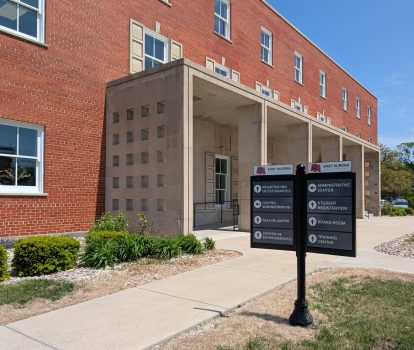
In a drab concrete building just off the road to Sheremetyevo Airport lies a huge trove of European history.
The archive includes papers seized by the Soviet army from the Nazis, who looted Europe’s capitals during World War II. Among the papers are everything from the French government’s most private memorabilia to documents captured from the Nazis themselves.
Now, the fate of these archives and the “trophy art” looted by the Nazis has become the focus of a white-hot political debate, with nationalists demanding that Russia keep the material for itself.
After months of hand-wringing over NATO expansion, the issue has emerged as one of Russia’s most vexing foreign policy quandaries.
With European countries demanding the return of their property, Russian President Boris Yeltsin arrived in Germany on Wednesday for talks Thursday with German Chancellor Helmut Kohl.
Just before he left Moscow, Yeltsin suggested that he would defy parliament and make a symbolic restitution of several items to Kohl.
Although much of the attention has focused on the stolen art, officials at the archive near the Moscow airport said their files had a lasting importance to the nations from which they were taken.
“The historical significance is gigantic,” said Mansur M. Mukhamedzhanov, the chief archivist of the document collection. “It is like an excursion to the capitals of Western Europe. Just sitting here, you can have a complete picture of the economic situation, diplomacy and culture in these countries during the first half of the century.”
Nationalists in Russia’s raucous parliament appear less interested in strengthening ties with Germany than in trying to even the score for the Soviet property and lives lost in World War II.
“They annihilated 26 million Russian citizens, and we have to pay them?” Vladimir Zhirinovksy, the Russian ultranationalist leader, exclaimed Wednesday. “Poor Germans! They are scoundrels, fascists.”
The issue has a long and tangled history. During World War II, Germany seized government archives, paintings, books and other works of art throughout occupied Europe. The Soviet Union brought much of the treasure home at the end of the war, justifying the seizure as a form of war reparations.
“The Russians lost so many of their cultural monuments during the war and had so many people killed that they felt they had a right to take German property,” said Elizabeth Simpson, an associate professor at Bard College’s Graduate Center for Studies in the Decorative Arts and the editor of “The Spoils of War,” a comprehensive study of the seizure of the “trophy art.”
But the Russian move, she said, was never sanctioned by the Allied authorities and violated international law.
For decades Russia’s possession of much of the cache was a closely held secret. After the collapse of the Soviet Union, Russia become more open about its collection.
That did not mean Moscow was prepared to return the treasure. In fact, some of Russia’s finest museums still are brimming with the looted art.
The Pushkin State Museum in Moscow has proudly displayed Priam’s Treasure from ancient Troy.
Recovered by German archeologist Heinrich Schliemann in 1873, it was stored in the Prussian State Museum before World War II.
The Pushkin museum and the Hermitage in St. Petersburg are rich in trophy art. Indeed, the list of captured paintings amounts to a who’s who of Old Masters, Impressionists and other great Western artists.
There are works by Rembrandt, Duerer, Matisse, Cezanne, Van Gogh, Goya, Renior and Daumier. The Russians also acquired a Gutenberg Bible.
The upper house of parliament is likely to vote on the issue in May, Yeltsin has vowed to appeal to the Constitutional Court if he loses.