Slow and stately, the helicopter lowered from the hot sky, hovering above the cricket stadium and blinding the crowd in a confetti shower of grit and grass and twigs and orange dust.
“Long live Pakistan!” cried a voice from a loudspeaker.
The president was in civilian clothes as he alighted from his helicopter, a change from the commando fatigues in which he opened his campaign a week ago to remain in unelected power for five more years.
On Saturday, in a long-tailed turban and bright orange shawl, he was a man of the people, humble and straight-talking.
“I am with you,” he told the crowd of farmers, laborers, factory workers and their bosses. “I am the people. I am the poor.”
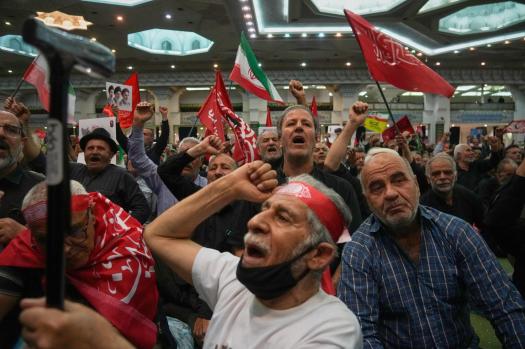
Actually it did not really matter which guise he chose. The 6,000 people here already knew how they would vote, just as they knew that it was their day’s assignment to board a company truck to join the rally.
“Since the government is holding the referendum, the public has to cast its votes and vote yes,” said Nasrullah, 36, a clerk. “Musharraf is our president, so we’ll vote yes.”
Muhammad Usman, 20, a laborer at a sugar mill, said he was being paid his normal day’s wage of about 40 cents to attend the rally. “I don’t know what the referendum is all about,” he said, but added, “Yes, I’ll vote for Musharraf.”
Musharraf, who seized power in a non-violent coup in 1999, has set a yes-or-no referendum on his continued presidency for April 30.
His policies, he said, are to combat corruption, improve living standards and ensure “genuine democracy” by instituting top-down controls on government leaders and members of parliament.
“I could simply issue an ordinance to endorse my continuing in power,” he said Saturday, as the wind roared through his microphone. “But I didn’t take that path. Instead I come to you to seek your support because you are my real power. If a leader comes to the people and asks for their support, what can be more democratic than that?”
Listening in the crowd was Raheen Meman, a farm overseer, who said he and his employees would all vote yes. “We are with our mayor, and our mayor is with Musharraf,” he said.
Asked whether he thought a yes vote would bring a better life, he said: “That’s what they tell us. They say, `If you vote for Musharraf, it will change your life and the life of the region.'”
One week ago, Pakistan instituted daylight time for the first time, a notion that seemed to charm Shamrad Shirazi, a Muslim cleric, who saw a yes vote for Musharraf as an affirmation of Pakistani ties to the U.S..
“We’re following America now!” he said. “America has moved its clocks forward one hour, so we’ve moved our clocks forward too.”