
Chicago Public Schools leaders unveiled a proposed budget Wednesday with layoffs of 760 teachers and 801 school-based support staff, along with five furlough days, to help close a $732 million deficit.
Some of the layoffs are the result of the district reducing its student-to-teacher allocation ratio by one, a cost-saving measure first outlined in May. The rest are part of the district’s annual budgeting process, where school leaders reevaluate staffing based on shifting student needs.
This year is one of the district’s toughest budget seasons in a decade. CPS leaders say they’ve tried to shield classrooms from direct cuts, but three consecutive years of trimming central office and department budgets have made that harder. The district laid off 162 central office and citywide workers Friday before releasing the $9.88 billion spending plan this week.
If more money doesn’t materialize from the city or the state, CPS will convert five paid professional development days into furlough days next winter. All are non-attendance days, which means they won’t affect students’ instructional time.

“The budget we present today is balanced, but getting there was not easy, and some difficult decisions were made,” CPS CEO Macquline King said in a news briefing Wednesday.
The perennially cash-strapped district last resorted to the tactic in 2017. Each furlough day saves the district $17 million, but reviving the practice would likely inflame tensions with the Chicago Teachers Union and other labor groups.
Most teachers get 208 paid days per year, with 10 paid professional development days, per the CTU — cutting 5 days from that schedule would amount to nearly 2% of their salary, eating into their guaranteed annual raises.

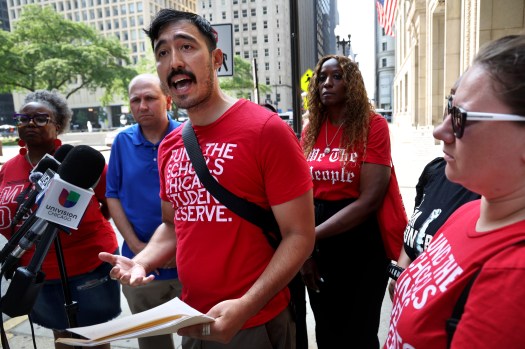
“Students have had to learn in overcrowded classes, practice under unpaid coaches, and be counseled by caseworkers with loads beyond compare all year, and now CPS thinks they can plan a week of furloughs and tell the staff who serve them they don’t have a job? Please,” CTU President Stacy Davis Gates said in a statement Wednesday.
CPS leaders are also weighing a mid-year spending freeze as a fallback if additional revenue fails to come through. The freeze wouldn’t take effect until January and could include measures such as leaving vacant central office positions unfilled or cutting travel costs, officials said.
“Furlough days and spending freezes are far from ideal, and we hope not to have to follow through with such drastic steps,” King said.
In May, CPS also announced it would cut funding for assistant principals at campuses with fewer than 250 students, but ultimately, more than two-thirds of schools were able to keep the position by tapping into other funds in their budgets.
Billions of dollars in long-term debt, aging buildings and rising operating costs have strained the district’s finances. At the same time, CPS is funded at just 73% of what Illinois deems “adequate” under the state’s funding formula. But beyond property tax increases, which are capped under state law, the district has few levers to increase its revenue.
“We’ve made our every effort to reduce the costs that are furthest from the classroom … We’re really turning over every rock in this area,” said Emila Zoko, the district’s acting chief budget officer.
Despite the layoffs, overall school-level funding has grown by $143 million, the district said, driven largely by rising special education costs. The number of students with disabilities has climbed by 8% since before the pandemic, while state and federal funding has remained flat. CPS leaders are adding more than 900 special education teachers and classroom assistants.
District officials also noted that, in previous years, roughly 75% of laid-off teachers have been rehired elsewhere in the district.
The cuts, officials said, are still expected to reduce the district’s structural deficit by $300 million. CPS carries more than $9 billion in outstanding debt and spends more than $900 million — or about 9% of its budget — on debt repayment.
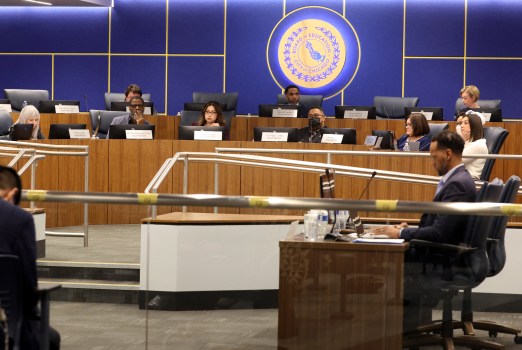
District leaders are asking the school board to pass the budget July 30, a month before the state-mandated deadline — partly to secure short-term loans to cover operational costs. The district’s cash flow naturally fluctuates depending on the timing of revenue, but repeated delays in Cook County property taxes have worsened the problem. CPS will hit its borrowing limit for its previous fiscal year in August, so banks won’t approve new tax anticipation notes, or TANs, until the next budget is passed, officials said.
Last year, the school board passed a $10.25 billion budget at the end of August after protracted debate. A simple majority, or 11 out of 21 members, is needed for approval.
The budget also banks on $200 million from tax-increment financing districts, or TIF — special taxing zones aimed at spurring redevelopment by pooling increases in property tax revenue within a designated area. When city leaders declare a surplus, that pooled money is returned proportionally to the taxing districts, with roughly half going to CPS.
Last year, the school district received a $522 million windfall when aldermen passed a budget with a $1 billion TIF surplus. But because City Hall doesn’t finalize its TIF surplus until later in the year, district officials don’t know exactly how much they’ll receive when building the budget.
For CPS to receive $200 million from TIF, City Hall would need to declare a surplus of roughly $400 million. That’s a lower assumption than recent years, and likely an underestimate, according to Danny Vesecky, a policy and research associate at the Civic Federation.
“CPS was very clear that they want (furlough days) to be last resort, and practically speaking, I think basically means that they are they’re hoping for a much larger TIF surplus to offset or fully eliminate those costs,” Vesecky said.
Mayor Brandon Johnson, a former CTU organizer and a close ally of the union, decried the cuts in a press conference Monday, calling it “a disappointment.”
“This idea or notion that the way to balance budgets is off the backs of working people and at the expense of our students, that’s not sustainable,” Johnson said.
Notably, the budget does not include a disputed $175 million pension reimbursement to the city for non-teaching staff. Johnson’s 2026 budget doesn’t count on CPS making the payment. Johnson and his predecessor, former Mayor Lori Lightfoot, argued that CPS should be responsible, though the payment is technically the city’s legal obligation.
More than half of the fund’s beneficiaries, called the Municipal Employees’ Annuity and Benefit Fund, are current or former CPS employees. The back-and-forth between City Hall and district officials is part of what led to the firing without cause of former CPS CEO Pedro Martinez in 2024. Last year, the district ultimately agreed to make the reimbursement, contingent on extra TIF surplus funding from the city.
Tribune reporters Alice Yin and Kate Perez contributed.