The Los Angeles River, lampooned as the “world’s largest storm drain” because it is lined with concrete and resembles a deserted freeway most of the year, is now a raging force, flush from the second-wettest rain season in 128 years of record-keeping.
“It’s beginning to look more like the river it once was,” said Shelly Backlar while strolling along one of the few stretches where the river bottom has soil that supports cottonwoods, willows and foliage for ducks. She’s executive director of Friends of the Los Angeles River, a watchdog group.
Like other activists seeking to regain some natural character for the river, Backlar looks upon the churning rapids and sees hope for transforming a symbol of Los Angeles’ worst urban excesses into an attractive landmark for residents and tourists.
It’s an extraordinary season for L.A.’s signature river.
Its ebb and flow through this semiarid city are roughly akin to the world’s desert rivers like the Nile–and unlike the continuously coursing waters of the Chicago River.
Savior from flooding
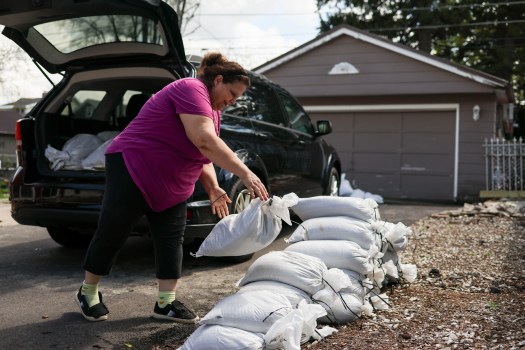
No one is laughing now at the fenced no-man’s land. The river is savior and workhorse this rain season, carrying storm water–which otherwise would be exacerbating flooding of homes and businesses–52 miles to the Pacific Ocean. In fact, that’s why the riverbed was paved starting in the 1930s, to ensure flood control as a growing metropolitan area took shape.
Rainfall is measured from July 1 to June 30, but winter and spring months mark the rain season’s more active periods. With less than three months to go, many expect this season will be the wettest ever; late March storms pushed rainfall totals to the No. 2 rank.
Heroic for the moment, the waterway is also enjoying its best opportunity in recent memory to undergo a major rebirth like those that cities such as Chicago, San Antonio and Denver have given their rivers, officials say.
Several local and state initiatives are under way to revitalize a river that once sustained Indians and later European settlers and provided the city’s drinking water until 1913. That year, the Los Angeles Aqueduct was completed, an event memorialized in the movie “Chinatown.”
Perhaps the most notable initiative is the Los Angeles City Council’s effort to create a 20-year master plan to rehabilitate the city’s 32-mile segment of the river. City Hall is seeking consultants to prepare such a plan for $2.8 million and is scheduled to announce the winning team early next month.
Pride in the river
The proposals seek a grand vision for the riverfront that would lead to restaurants, cafes, parks, housing, stores and “pride in the Los Angeles River,” according to city documents.
The eventual design will likely call for billions of dollars in improvements, money that is yet to be secured, officials said.
Challenges for the designers include what to do with the old rail yards, warehouses and other industrial facilities that line much of the river’s edge, depriving many residents of views of and physical access to the banks, city documents said.
“We’re finally paying attention to the city’s back yard,” said council member Ed Reyes, who remembers playing in the river as a child from 1969 to 1971–until he realized how polluted the water was.
“It’s always been in an area that wasn’t part of the sexy beach scene and wasn’t part of the icon of Disneyland. At the same time it was part of what brought the city life at the beginning. From a romantic point of view and historical point of view, I thought it was time we recognized the river,” said Reyes, chairman of the city’s ad hoc river committee.
Also, voters last fall overwhelmingly approved a $500 million storm-water bond to keep pollutants from reaching the river and eventually the Pacific. Activists on a bond oversight panel are considering ways to create parks and green areas to filter runoff to the river and its banks, often strewn with trash and plastic grocery bags that hang like baby ghosts in low tree limbs.
Already, the state has committed to spending $60 million to convert two former rail yards into riverfront parks: Taylor Yard just north of Dodger Stadium and the Cornfield in Chinatown.
“All these things coming together, it’s the perfect storm,” said Jose Sigala, an activist on the oversight committee.
An encouraging sign
For many activists, the city’s master plan marks the most encouraging sign for the river since the sons of Frederick Law Olmsted, the architect who designed New York City’s Central Park and the Chicago suburb of Riverside, pictured green areas and ponds along the river in the 1930s. That plan never materialized due to a development rush.
The confluence of current initiatives is considered unusual because Angelenos are largely regarded as having given up on their riparian heritage.
In the 1980s, a state legislator even called for turning the river into a freeway–perhaps not too absurd a suggestion considering filmmakers use the ditch for chase scenes, including one with Arnold Schwarzenegger in a “Terminator” movie. The concrete creates a flat bottom and there is a mere trickle in a center gutter for most of the year.
“The difficulty for making people care for the river is that it has so little water in it” most of the time, said Blake Gumprecht, assistant professor of geography and American studies at the University of New Hampshire who wrote “The Los Angeles River: Its Life, Death, and Possible Rebirth” in 1999.
“Even at its worst, people can look at the Chicago River and still think it’s a river. If you look at the L.A. River, what do you see? You see concrete, graffiti, and broken glass,” said Gumprecht, a former Los Angeles resident.
Restoration ideas differ
Not everyone agrees on how the river should be restored.
During a recent tour near Taylor Yard where ground was broken for a 40-acre state park in January, Melanie Winter described herself as a “river evangelist” who has been fighting for eight years to see most of the rail yard’s 247 acres converted into park or riverbank habitat.
As founder and director of The River Project, devoted mostly to saving the Los Angeles River, Winter, 47, says she’s patient enough to wait for the day when all of the concrete banks are removed and replaced with water-loving willow trees embedded in rocks.
Back at City Hall, Councilman Reyes wants inflatable rubber dams along the river’s downtown segment to create a pond for year-round recreation and tourism–much like how Tempe, Ariz., uses such dams in Rio Salado to create the 2-mile-long Tempe Town Lake.
While portions of the riverbank offer pedestrian and bicycling paths, some residents would like to see more such amenities, including Lou San Luis, who was wearing a straw hat and using a bamboo walking stick recently as he strode the water’s edge at the Glendale Narrows north of the Dodgers’ field.
“Compared to the road, the river–there’s a different atmosphere. There’s water, green, and ducks, and it’s fun. Since I’ve retired, this is my therapy,” said San Luis, 73, carrying bread to feed the ducks.
———-
mjmartinez@tribune.com