* SEC’s Fort Worth office leading probe
* Company says board never reviewed McClendon loans
* Program to give CEO well stakes to end in 2015
* Shares down 2.1 pct
By Ernest Scheyder and Matt Daily
NEW YORK, April 26 (Reuters) – The U.S. Securities and
Exchange Commission has opened an informal inquiry into
Chesapeake Energy Corp’s controversial program that
granted Chief Executive Aubrey McClendon a share in each of the
natural gas producer’s wells, a source familiar with the matter
said on Thursday.
That inquiry, being led by the SEC’s office in Fort Worth,
Texas, comes after Reuters reported about loans McClendon had
obtained on those wells that raised concerns about a potential
conflict of interest by the company’s CEO.
Chesapeake said in a statement earlier on Thursday that its
directors had never reviewed or approved McClendon’s mortgages
on stakes in those wells, reversing its assertions that its
board of directors was “fully aware” of McClendon’s financing
transactions around the well ownership stakes.
“The Board of Directors did not review, approve or have
knowledge of the specific transactions engaged in by Mr.
McClendon or the terms of those transactions,” the company said.
Reuters reported on April 18 that McClendon, who founded the
company, had borrowed as much as $1.1 billion against his 2.5
percent interest in wells that he received under the company’s
“Founder Well Participation Program.”
The loans, taken out over the past three years, were
previously undisclosed to shareholders, analysts and academics
said, raising concerns that McClendon’s personal financial deals
could compromise his fiduciary duty to Chesapeake.
The company also said on Thursday that it would end that
program in 2015, when the shareholder approval of the program
that started in 2005 expires.
An informal inquiry is the first step taken by the SEC
before it launches any full investigation into potential
wrongdoing by a company.
One major shareholder questioned whether the company’s new
statements had been prompted by the SEC probe.
“It seems somewhat coincidental that the board has acted
this way today, and the SEC announces its inquiry. You wonder if
they didn’t have the news,” said David Dreman, chairman of
Dreman Value Management LLP, which owns about 1 million
Chesapeake shares.
Board members contacted by Reuters either declined to
comment or were not immediately available to respond.
FULLY OR GENERALLY
Critics of the company have long complained the company’s
board acted a little more than a rubber stamp for McClendon, one
of the energy industry’s most visible leaders.
McClendon founded Chesapeake in 1989 and quickly built the
company into one of the nation’s fastest-growing producers of
natural gas. It is now the second-largest U.S. natural gas
producer behind Exxon Mobil Corp.
Chesapeake said “the statement last week that ‘the Board of
Directors is fully aware of the existence of Mr. McClendon’s
financing transactions’ was intended to convey the fact that the
Board of Directors is generally aware” that McClendon had used
the well ownership stakes as security for the loans.
One analyst said Chesapeake’s new statement did not provide
any reassurance that it was addressing the issues.
“How can this make me more comfortable?” said Phil Weiss, an
analyst with Argus Research. “Either you’re fully aware, or
you’re not. ‘Fully’ and ‘generally’ are two entirely different
words.”
But an investor said the move was a step in the right
direction, and that it showed the company was listening to
shareholders’ complaints.
“It’s basic due diligence that sadly wasn’t being done
before,” said Jake Dollarhide, chief executive of Longbow Asset
Management in Tulsa, Oklahoma, which owns Chesapeake shares. “It
shows the free reign that McClendon had.”
McClendon disclosed additional information about his
ownership stakes in the wells, and the board is reviewing the
CEO’s financing arrangements.
The Oklahoma City, Oklahoma-based company has been at the
leading edge of the shale gas industry and holds vast acreage in
the fields discovered in recent years that are expected to yield
decades of fuel for the United States.
But the steep jump in natural gas output has sent prices for
the fuel plummeting to their lowest level in decade, squeezing
profits and pressuring share prices for Chesapeake and many of
its peers.
Debt rating firm Fitch Ratings said on Thursday it had
revised its outlook to “stable” from “positive” for Chesapeake,
which has $13 billion in rated securities, largely because of
the low natural gas prices.
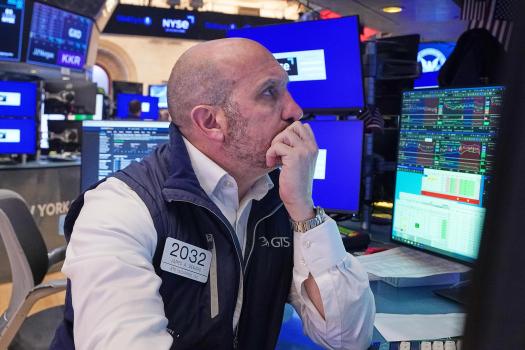
Chesapeake shares were down 2.1 percent to $17.74 in early
afternoon trading on the New York Stock Exchange.