* Officials say no threat to humans
* Meat would not enter food chain
* Major foreign buyers say will continue to import
* Chicago live cattle futures edge back after plunge
By Charlie Dunmore and Theopolis Waters
BRUSSELS/CHICAGO, April 26 (Reuters) – Major export markets
for U.S. beef from Canada to Japan stayed open after the United
States reported its first case of mad cow disease in six years
amid assurances that rigorous surveillance had safeguarded the
food system.
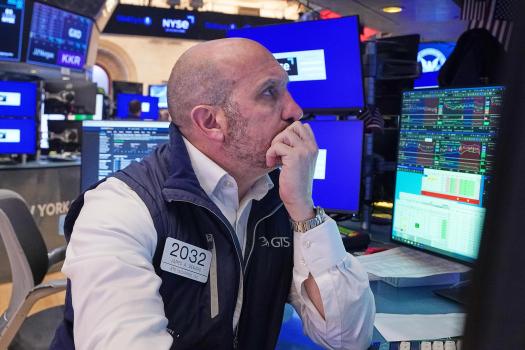
U.S. live cattle futures were higher on Wednesday, but only
recovered about half of what they lost on Tuesday when the
market posted its biggest drop in seven months.
U.S. authorities quickly told consumers and importers around
the world there was no danger that meat from the infected
California dairy cow would enter the food chain. The cow tested
positive for bovine spongiform encephalopathy (BSE), commonly
called mad cow disease.
Mexico, South Korea, Japan, Canada and the European Union
said they would continue to import U.S. beef, although two major
South Korean retailers halted sales and Indonesia, a small
buyer, suspended shipments.
In 2011, Canada, Japan, Mexico and South Korea combined took
65 percent, or 1.82 billion lbs, of U.S. beef exports.
“This finding will not affect trade between the U.S. and
Canada,” the Canadian Food Inspection Agency said in a statement
on Wednesday. “Both countries have implemented science-based
measures to protect animal and human health.”
Japan’s Chief Cabinet Secretary Osamu Fujimura said the new
case of Bovine Spongiform Encephalopathy (BSE) reported on
Tuesday should have no bearing on the Trans-Pacific Partnership
(TPP) talks.
Japan already only allows imports of U.S. and Canadian beef
from cattle aged 20 months or less.
USDA CONTACTING TRADING PARTNERS
U.S. Secretary of Agriculture Tom Vilsack said the positive
response from trade partners was a sign of confidence in the
preventative measures taken by the United States and that he was
not concerned about potential a cut off in imports.
“I’m sending out a letter to 20 major trading partners today
to reassure that the products they’re buying are safe,” Vilsack
told Reuters Insider.
Benchmark June live cattle futures on the Chicago Mercantile
Exchange were recovered about half of what they lost on
Tuesday when the market fell the 3-cent daily trading limit.
Shares were little changed on Wednesday in leading U.S. beef
producers Tyson Foods Inc and JBS-USA
Samples from the infected cow have been sent to laboratories
in Canada and Britain for final confirmation, Paris-based World
Organization for Animal Health (OIE) said in a statement, adding
that the case was unlikely to affect the current USDA
“controlled risk” categorisation for mad cow disease.
“According to USDA statements, the steps taken so far are
consistent with OIE standards,” it added.
Russia’s health watchdog said it could consider restrictions
on U.S. imports but that it was waiting for more information on
the outbreak and the planned U.S. response before taking a
decision.
Korean retailer Lotte Mart, a unit of Lotte Shopping Co.
, said it had suspended sales due to what it said was
“customer concerns”, as did Home Plus, a unit of Britain’s Tesco
PLC.
Indonesian Vice Agriculture Minister Rusman Heriawan told
Reuters that Southeast Asia’s largest economy would suspend
imports of U.S. beef from Thursday. The country only accounted
for 0.6 percent of U.S. beef exports worth $17 million in 2011,
mostly used in hotels and high-end restaurants.
Vietnam, which suspended U.S. beef imports between December
2003 and September 2011, said it had not changed its policy on
U.S. beef in response to the latest news.
BEEF EXPORTS HIT AFTER 2003 CASE
Three previous cases of mad cow disease were confirmed in
the Unites States between 2003 and 2006. Memories were still
sharp of the first case in 2003, which caused a $3 billion drop
in U.S. exports. It took until 2011 before those exports fully
recovered.
Experts said the latest case was “atypical”, meaning it was
a rare occurrence in which a cow contracts the disease
spontaneously, rather than through the feed supply.
They said the dairy cow had not been eaten by other animals
and there was no risk of the disease being spread and estimated
the chance of an animal spontaneously contracting the disease at
about one in a million.
There are nearly 91 million cattle and calves in the United
States, according to a USDA report released in January, of which
about a third are beef cows and 9.2 million are milk cows. Mad
Cow generally occurs in animals that are several years old, and
beef cattle are generally slaughtered at 18 months.
COW’S HISTORY BEING TRACED
The USDA is still tracing the exact life of the infected
animal, and the carcass of the cow is under quarantine and will
be destroyed.
The cow was found at a rendering plant, which processes
diseased or sick animals into mainly non-edible products for use
in such things as soap or glue.
In the U.S. domestic market, companies are still smarting
from the fallout over a ground beef filler that critics called
“pink slime”, made from scraps of beef sprayed with ammonia gas
to kill bacteria. The product was pulled from grocery store
shelves and forced one producer to idle several factories and
another to file for bankruptcy.