* August trade data indicates Dubai is transhipment point
* Iran may want to avoid publicity of direct shipments
* Gold flows may help it get around banking sanctions
* Shipments hand-carried through Istanbul airports
* Identity of firms handling business remains unclear
By Humeyra Pamuk
DUBAI/ISTANBUL, Oct 23 (Reuters) – To see one of Iran’s
financial lifelines at work, pay a visit to Istanbul’s Ataturk
International Airport and find a gate for a flight to Dubai.
Couriers carrying millions of dollars worth of gold bullion
in their luggage have been flying from Istanbul to Dubai, where
the gold is shipped on to Iran, according to industry sources
with knowledge of the business.
The sums involved are enormous. Official Turkish trade data
suggests nearly $2 billion worth of gold was sent to Dubai on
behalf of Iranian buyers in August. The shipments help Tehran
manage its finances in the face of Western financial sanctions.
The sanctions, imposed over Iran’s disputed nuclear
programme, have largely frozen it out of the global banking
system, making it hard for it to conduct international money
transfers. By using physical gold, Iran can continue to move its
wealth across borders.
“Every currency in the world has an identity, but gold means
value without identity. The value is absolute wherever you go,”
said a trader in Dubai with knowledge of the gold trade between
Turkey and Iran.
The identity of the ultimate destination of the gold in Iran
is not known. But the scale of the operation through Dubai and
its sudden growth suggest the Iranian government plays a role.
The Dubai trader and other sources familiar with the
business spoke to Reuters on condition of anonymity, because of
the political and commercial sensitivity of the matter.
Iran sells oil and gas to Turkey, with payments made to
state Iranian institutions. U.S. and European banking sanctions
ban payments in U.S. dollars or euros so Iran gets paid in
Turkish lira. Lira are of limited value for buying goods on
international markets but ideal for a gold buying spree in
Turkey.
ROUTING VIA DUBAI
In March this year, as the banking sanctions began to bite,
Tehran sharply increased its purchases of gold bullion from
Turkey, according to the Turkish government’s trade data.
Direct gold exports to Iran from Turkey, long a major
consumer and stockpiler of gold, hit $1.8 billion in July –
equivalent to over a fifth of Turkey’s entire trade deficit in
that month.
In August, however, a sudden plunge in Turkey’s direct gold
exports to Iran coincided with a leap in its sales of the
precious metal to the UAE.
Turkey exported a total $2.3 billion worth of gold in
August, of which $2.1 billion was gold bullion. Just over $1.9
billion, about 36 tonnes, was sent to the UAE, latest available
data from Turkey’s Statistics Office shows. In July Turkey
exported only $7 million of gold to the UAE.
At the same time Turkey’s direct gold exports to Iran, which
had been fluctuating between $1.2 billion and about $1.8 billion
each month since April, slumped to just $180 million in August.
The Dubai-based trader said that from August, direct
shipments to Iran were largely replaced by indirect ones through
Dubai, apparently because Tehran wanted to avoid publicity.
“The trade from Turkey directly to Iran has stopped because
there was just too much publicity around it,” said the trader.
Dealers, jewellers and analysts in Dubai said they had not
noticed any large, sudden increase of supply in the local gold
market during August. They said that suggested the increased
shipments to the UAE were sent straight on to Iran.
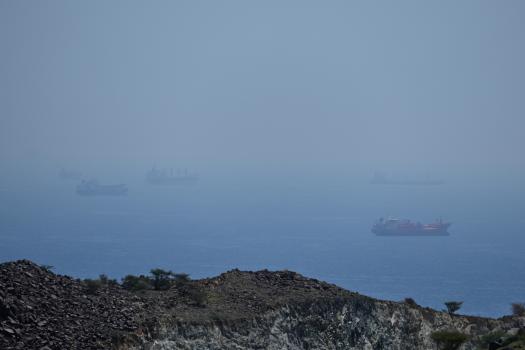
It is not clear how the gold is moved from Dubai to Iran,
but there is substantial trade between the two economies, much
of it conducted by wooden dhows and other ships crossing the
Gulf, a distance of only about 150 kilometres (100 miles) at its
narrowest point.
A trader in Turkey said Tehran had shifted to indirect
imports because the direct shipments were widely reported in
Turkish and international media earlier this year. “Now on paper
it looks like the gold is going to Dubai, not to Iran,” he said.
Iranian gold buyers may want to conceal their Turkish gold
deliveries for fear of attracting attention from the United
States, which is pressing countries around the world to shrink
their economic ties with Iran.
The buyers may also want to make their purchases less
vulnerable to any possible interference by Turkey’s government.
Turkey’s close relationship with Iran has begun to sour as the
two states find themselves on opposite sides of the civil war in
Syria, with Turkey advocating the departure of President Bashar
al-Assad and Iran remaining Assad’s staunchest regional ally.
PASSENGER LOUNGE
There is no suggestion that the gold trade means Dubai is
violating international sanctions against Iran. United Nations
sanctions ban shipments of nuclear-related materials to Iran and
freeze the assets of some Iranian individuals and companies, but
they do not prohibit most forms of trade.
The UAE has not yet released its trade data for August.
Officials at the Dubai customs authority could not be reached
for comment despite repeated attempts to contact them.
Turkish trade data confirms the gold is being transported to
Dubai by air. According to the data, $1.45 billion of Turkey’s
total gold exports in August were shipped through the customs
office at Ataturk airport’s passenger lounge. Almost all of the
rest, $800 million, were shipped from Istanbul’s smaller Sabiha
Gokcen airport.
Turkey’s total exports of all goods to the UAE totalled $2.2
billion in August. Of that amount, $1.19 billion were registered
at the Ataturk passenger lounge, while $776 million were
registered at Sabiha Gokcen.
A customs broker who does business at Ataturk said couriers
were boarding Turkish Airlines and Emirates flights to Dubai at
the airport, carrying the metal in their hand luggage to avoid
the risk of it getting lost or stolen.
The maximum amount of gold bullion which a passenger is
allowed to take is 50 kilogrammes (110 pounds), he said. This
suggests that during the month of August, as many as several
hundred courier trips may have taken gold to Dubai on Iran’s
behalf.
“It is all legal, they declare it, they give their tax
number and it is all registered so there is nothing illegal
about this,” the broker said.
“At the moment there’s quite a lot of traffic to Dubai.
During September and October we have also been seeing this.”
The trade data shows almost $1.4 billion worth of Turkey’s
August exports to the UAE came from a company or companies with
a tax number registered in the coastal city of Izmir, Turkey’s
third biggest. Customs officials at Ataturk declined a Reuters
request to provide documents identifying the exporters, saying
the information was confidential.
The identity of the companies handling the business could
not be confirmed. Traders said that because of the risk of
attracting unwelcome attention from U.S. authorities, only a few
companies were likely to be willing to get involved.
(Additional reporting by Behiye Selin Taner in Istabul, editing
by Andrew Torchia, Simon Robinson, Richard Mably)