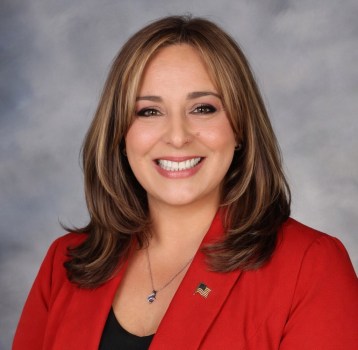
(Alison Frankel writes the On the Case blog for Thomson Reuters
News & Insight
. The views expressed
are her own.)
By Alison Frankel
NEW YORK, Oct 24 (Reuters) – What a complaint U.S. Attorney
Preet Bharara filed against Countrywide and Bank of America
on Wednesday!
Earlier this month, when the New York Attorney General filed
accusations of securitization fraud against JPMorgan Chase
, I said we should put aside cynicism about the AG’s
copycat allegations and be grateful that, at last, a government
official was demanding accountability for systemic corruption in
the mortgage-bundling business. The new complaint against BofA
demands no such nose-holding: It asserts powerfully detailed —
and original — accusations of billion-dollar fraud in the way
Countrywide approved mortgages destined for purchase by Fannie
Mae and Freddie Mac, and in Countrywide’s and BofA’s subsequent
(alleged) refusal to repurchase defective loans.
To be sure, the U.S. Attorney had help from a
whistle-blower, a former Countrywide Home Loans executive vice
president named Edward O’Donnell. O’Donnell filed a relatively
bare-bones False Claims Act complaint last February. As always
in FCA cases, the complaint was sealed as the Justice Department
checked out the allegations and deliberated whether to intervene
in the case. Those deliberations can take years, but not in this
case, when the government is under intense pressure to make good
on promises of fighting mortgage fraudsters. Eight months after
O’Donnell initiated his action in federal court in Manhattan,
the U.S. Attorney’s office intervened, making the suit public.
The result is a complaint that features inside allegations
from O’Donnell about Countrywide’s so-called “Hustle” program to
funnel increasingly deficient loans to Fannie Mae and Freddie
Mac alongside inside information that government investigators
presumably obtained from Fannie and Freddie officials. The
combination makes for a compelling case that Countrywide
systemically deceived the government-sponsored entities about
the loans it was selling them, then refused to live up to
contractual obligations to repurchase deficient loans. (As
Reuters reported Monday, Bank of America said accusations that
it failed to repurchase loans are “absolutely false.”)
The U.S. Attorney’s allegations go much deeper than
O’Donnell’s initial suit, which suggests that the government has
been busily investigating in the months since O’Donnell
initiated the case. According to the complaint filed Wednesday,
in 2007 — with fewer MBS sponsors in the market for the
subprime loans that had been Countrywide’s specialty — the bank
was increasingly desperate to sell supposedly better-quality
mortgages to Fannie Mae and Freddie Mac. To speed up the process
of approving loans, Countrywide’s Full Spectrum Lending unit
instituted “the Hustle” (or HSSL, for High Speed Swim Lane)
program, which stripped away underwriter review for loans that
were deemed acceptable by the bank’s automated mortgage review
system. But that automated system, according to the complaint,
depended on information supplied by the borrower and input by a
loan processor. There were few to no controls in the Hustle
approval process; according to the feds, even loans in which the
borrower’s income wasn’t independently verified went unreviewed
by underwriters.
Countrywide assured Fannie and Freddie that it had tightened
its underwriting standards, but at the same time, the complaint
asserts, it changed its bonus system to reward loan-level
employees based only on the volume of mortgages they wrote, not
on the quality of the loans. The result, according to the
complaint, was that loan processors were induced to feed false
information into the automated mortgage review system. The U.S.
Attorney claims that processors would keep changing information
until the system approved a loan and it could be fed into the
High Speed Swim Lane.
The complaint names names (though not as defendants). The
whistle-blower O’Donnell warned two high-ranking Full Spectrum
Lending officials, President Greg Lumsden and COO Rebecca
Mairone, that the Hustle program added multiple layers of risk
to the mortgages Countrywide was selling to Fannie and Freddie.
According to the complaint, Mairone permitted O’Donnell to
oversee a quality check of Hustle loans by underwriters (but
only as the loans were simultaneously being processed).
O’Donnell found a “staggering” rate of defects in the approved
loans.
Countrywide, however, hid its 40 percent defect rate from
Fannie and Freddie, according to the U.S. Attorney. The
complaint quotes former officials saying that they were not
informed of the rate, and, if they had been, would have
immediately begun asking questions about Countrywide’s
processes.
Instead, Fannie and Freddie began demanding that Countrywide
buy back loans that went into default, asserting after the fact
that Countrywide had breached representations and warranties
about the quality of the mortgages. And according to the
complaint, Countrywide and its acquirer, Bank of America,
“thwarted” the repurchase process, refusing to buy back
obviously deficient loans. The result, according to the
complaint, is that Fannie and Freddie, their shareholders and
the U.S. government were defrauded to the tune of $1 billion.
It’s exceedingly rare for defendants to go to trial in False
Claims cases in which the government has elected to intervene,
and the whistle-blower O’Donnell, who is represented by lawyers
at The Wasinger Law Group, will recover a percentage of whatever
the government ends up collecting in the case.
Bank of America, you may recall, has already settled one
billion-dollar False Claims Act case, in which the U.S. Attorney
in Brooklyn claimed the bank deceived the Federal Housing
Administration about the quality of mortgages that FHA insured.
But in my estimation, the new suit could have far more serious
implications for BofA. There are two primary reasons: BofA’s
long-running tussle with Fannie Mae over put-backs; and the U.S.
Attorney’s analysis of BofA’s successor liability for
Countrywide.
Bank of America, according to its third-quarter earnings
presentation to analysts, is facing more than $12 billion in
outstanding repurchase claims from Fannie and Freddie (the vast
majority of claims are from Fannie, since BofA settled future
claims with Freddie in 2011). It’s not clear from the
presentation how many of those billions of dollars in claims
derive from loans originated after the Hustle program began. But
Bank of America has to be worried about prosecutors in Manhattan
developing a record that supports Fannie Mae’s assertions of
deficient underwriting. It’s a lot harder to argue that Fannie
isn’t entitled to put-backs in the face of evidence that
Countrywide lied about the loans.
BofA has also argued in all of the put-back cases against
Countrywide that it is not liable for Countrywide’s breaches.
That assumption limited its proposed settlement with private
investors in Countrywide mortgage-backed securities, since what
remains of Countrywide has less than $5 billion in assets.
BofA’s pursuers, particularly the bond insurers, are eager to
pierce what they regard as a tissue-paper division between
Countrywide and BofA in order to foist Countrywide’s liabilities
onto its parent. The U.S. Attorney’s office sides squarely with
BofA’s foes, making precisely the same arguments for BofA’s
successor liability as MBIA’s lawyers at Quinn, Emanuel,
Urquhart & Sullivan made in a summary judgment brief they filed
earlier this month in MBIA’s fraud and put-back case in New York
State Supreme Court.
And here’s one other nagging concern for BofA: The U.S.
Attorney’s suit is before District Judge Jed Rakoff, who’s known
for pushing cases along at a speedy clip. He’s also quite
familiar with MBS put-back litigation, since he’s in the midst
of a bench trial of Assured Guaranty’s claims against Flagstar
Bank. How willing is BofA to bet on its defense in Rakoff’s
court, when his rulings could resound so loudly in other cases?
(Reporting by Alison Frankel; Editing by Eddie Evans)