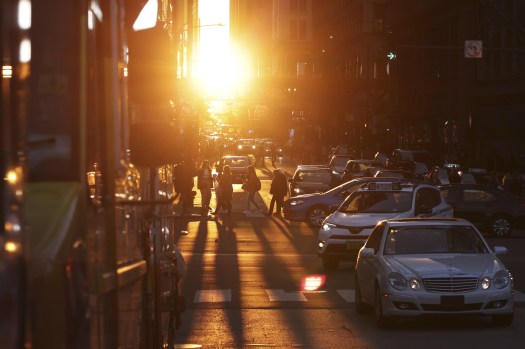
* More than half of all NYC, NJ service stations shut down
* Long lines form at gasoline stations across region
* First day of commuting for many without mass transit
* Fuel also needed for generators in homes, businesses
(Adds mass EPA waiver details)
By David Sheppard and Edward McAllister
NEW YORK Oct 31 (Reuters) – Drivers and homeowners scrambled
to secure fuel for their cars and generators in the U.S.
Northeast on Wednesday as storm-hit gasoline stations started to
run dry.
More than half of all gasoline service stations in the New
York City area and New Jersey were shut because of depleted fuel
supplies and power outages, frustrating attempts to restore
normal life, industry officials said.
Reports of long lines, dark stations and empty tanks
circulated across the region. Some station owners were unable to
pump fuel due to a lack of power, while others quickly ran their
tanks dry because of increased demand and logistical problems in
delivering fresh supplies.
The lack of working gasoline stations is likely to compound
travel problems in the region, with the New York City subway
system down until at least Thursday and overland rail and bus
services severely disrupted.
Homeowners and businesses relying on back-up generators
during the power cuts, including many Wall Street banks in lower
Manhattan, may also run short of fuel.
“I don’t have any lights and need this gasoline for my
generator,” said Abdul Rahim Anwar at a Getty service station in
Gowanus, Brooklyn, as he put two full jerry cans into his trunk.
Tempers flared as a queue of at least 30 cars spilled down
the street, with drivers blaring horns, shouting and getting out
of their cars. Pump attendant Nadim Amid said the station had
already run out of regular gasoline and only had a tiny amount
of super unleaded and diesel left.
One driver, a doctor who asked not to be named, said she
had driven all the way across New York City from New Jersey,
where half of all businesses and homes are still without power.
More than 80 percent of filling stations in the state were
unable to sell gasoline as of Wednesday morning, said Sal
Risalvato, head of the New Jersey Gasoline, Convenience,
Automotive Association.
“It’s going to be an ugly few days until we can see both
power and supplies restored,” Risalvato said.
Gasoline stations on New York’s Long Island and the city
borough of Staten Island also reported shortages, while lengthy
lines were seen in the borough of Queens. Commuters may see
higher prices at the pumps in the coming days, though oil
traders said that with so many people unable to buy gasoline it
may eventually lead to a surplus in the region.
The U.S. Environmental Protection Agency temporarily waived
clean gasoline requirements for 16 states on the eastern
seaboard through Nov. 20 in a bid to help ease the supply
crunch.
GAS BUT NO POWER, POWER BUT NO GAS
Kevin Beyer, president of the Long Island Gasoline Retailers
Association in Smithtown, New York, estimated that less than
half of all stations were able to sell fuel Wednesday morning.
“I have gas in the ground but no power. For many others
they’re facing the opposite problem, with power but no gasoline.
For the few stations that are lucky enough to have both they’ve
got huge lines out front,” Beyer said.
“With the kind of demand they’re seeing they’re likely to
run out of gasoline within the next 24 hours.”
Beyer estimated it could take until the end of next week to
get all fuel stations operating again.
New York State and New Jersey fuel retailers sell a combined
average of 26 million gallons (620,000 barrels) of gasoline a
day, according to the U.S. Energy Information Administration.
The problem is not a severe shortage of gasoline in the
Northeast, but widespread power outages and the storm-related
logistical problems of getting the fuel from refineries and
terminals to those who need it.
Jenn Hibbs, an account director at marketing firm
Marden-Kane Inc in Garden City, Long Island, said there was only
one gasoline station open within 10 miles (16 km) of her house.
Friends were sharing tips on Facebook about where they could get
fuel, but two lines for gas leading to the service station were
both over half a mile long.
“It’s making people think about whether they can get to
work, whether they have enough gas in the tank to get there and
back,” Hibbs said.
A line of cars at a gas station on Route 1 and 9 South in
Linden, New Jersey, at one point stretched at least two miles.
PRICES SPIKE
On the New York Mercantile Exchange, oil traders bid up
benchmark gasoline future contracts for November delivery, which
expire on Wednesday, by as much as 20 cents a gallon during the
trading session, before they fell back to settle just 3 cents
higher at $2.76.
In Connecticut, the Gasoline & Automotive Service Dealers Of
America said around 15 percent of gasoline stations were shut
and warned drivers could see higher prices in the coming days.
Four of the region’s six oil refineries were back to full
production or increasing run rates on Wednesday. The
second-largest – the Bayway plant in New Jersey – was still idle
after flooding damage that traders fear could delay its return
to full service. Key import terminals were also shut.
“Most of the problems are at the service station level with
power and transportation to the stations,” said Ralph
Bombardiere, head of the New York State Association of Service
Stations and Repair Shops.
Gasoline inventories in the Mid-Atlantic region were 16
percent below last year’s level before the storm, but were
enough to cover almost 23 days of total demand.
Power is slowly being restored. The Department of Energy
said on Wednesday afternoon that 51 percent of homes and
businesses in New Jersey were still without power. That was down
from around 65 percent on Tuesday.
(Additional reporting by Robert Gibbons, Matthew Robinson,
Janet McGurty and Edward McAllister; Editing by Claudia Parsons,
Grant McCool, Dan Grebler and Tim Dobbyn)