

This will not be the first time I deny the “Good Old Days” mindset, and it won’t be the last, since nostalgia-as-commerce has been profitable since at least “American Graffiti” and “Happy Days” exploited the Baby Boom’s yearning for the 1950s.
Ah, the 1950s. Howdy Doody and Elvis and poodle skirts and the Brooklyn Dodgers. And also the Peterson-Schuessler murders and Gov. Orval Faubus and Charles Starkweather and Emmitt Till, just to mention a few things we knew about only because they weren’t completely swept under the rug.
Those of us born in the 1960s are also guilty of cockeyed nostalgia for an alleged Better America. But let me use myself as an example: I was born during the summer of Richard Speck and nearly a full year before Loving v. Virginia.
John Wayne Gacy was most active during my elementary school years of the 1970s — that great decade when “kids played outside until the street lights came on.” High school and college years in the 1980s brought us a stream of events like the Beirut barracks bombing and the Achille Lauro and TWA Flight 847, all of which will come as a surprise to everyone who thinks terrorism arrived with the new century.
I could go on — and on and on — but I hope the point is made: No matter how old you are, the world was not categorically better when you were a kid, and that world would include America. You can cherry-pick all the cool things about your childhood you want, but it won’t erase, say, Joseph McCarthy.
And with that we pivot to a caveat: When it comes to our national political climate, these truly are not the good old days. In many, many if not all ways in the political arena, things really were better when you were a kid.
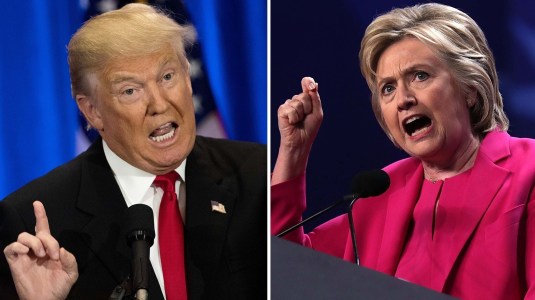
Americans just endured two weeks in which the reigning political parties staged their made-for-cable conventions/infomercials, and more than one observer has noted with accuracy that both involved a lot of shouting. While there were certainly lucid moments, we essentially saw Republicans screaming about their conception of Hillary Clinton and Democratic speakers vying for attention while the hardest-core supporters of Bernie Sanders worked through their outrage.
From Cleveland, we watched Rudolph Giuliani and Chris Christie and Donald Trump whip their choir into a frenzied mass of fear, anger and Dollar General headgear.
From Philadelphia, we saw the Democratic nominee for vice president do an imitation of Donald Trump that wouldn’t have been out of place on “The Gong Show.” And it would have quickly gotten him gonged by Rip Taylor.
Sorry, that was a possibly rose-colored glance back to 1976. As long as we’re flashing back that far, let me share with you one of my earliest tutorials in American politics: The Rumble in Philadelphia, as the first debate between incumbent Republican Gerald Ford and Democratic challenger Jimmy Carter was absolutely not known at the time.
I remember sitting myself down at the ripe age of 10 to watch the debate because I wanted to feel like a grown up. What I subsequently felt was sleepy. Moderator Edwin Newman asked perfectly appropriate and boring questions, Carter and Ford provided library-voice answers and humans capable of intelligent thought had material to study.
By stark contrast, the 2016 Republican-candidate debates featured not only kindergarten-level name calling but remarks about the size of … hands. Any 10-year-olds tuning in across the nation were given a much more entertaining and depraved initiation.
But maybe I’m picking on 2016 a little too harshly. Maybe what we’re seeing is the natural result of catch-phrase politics demonstrated in televised debates by everyone from Ronald “There You Go Again” Reagan in 1980 to Walter “Where’s The Beef?” Mondale in 1984. Lloyd Bentsen certainly locked up Rhode Island for Michael Dukakis with “You’re No Jack Kennedy.”
And a common argument among those who enjoy political theatre is that, hey, Andrew Jackson once shot a rival who insulted his wife and Abraham Lincoln was called a baboon. Two thoughts on that: A) People also used chamber pots during our nation’s formative years, and we’re supposed to be a species capable of growth; and B) Stephen A. Douglas didn’t have Twitter.
Looking at the overall evidence, I’m sticking by my original thought: The modern-day culture of extremism and personal destruction in our politics has brought us to a shameful low point in history. Now that the major-party candidates are in place, we have nowhere to go but down between here and November.
Twitter @NewsSunDanMoran


