

Though some folks complain about the snow and cold, here in northern Illinois only in winter can we see signs of animals that visited the yard overnight, and unusual birds that will be gone come spring.
On a recent snowy, winter day, I settled inside my cozy home and looked out the window to see what nature had brought overnight.

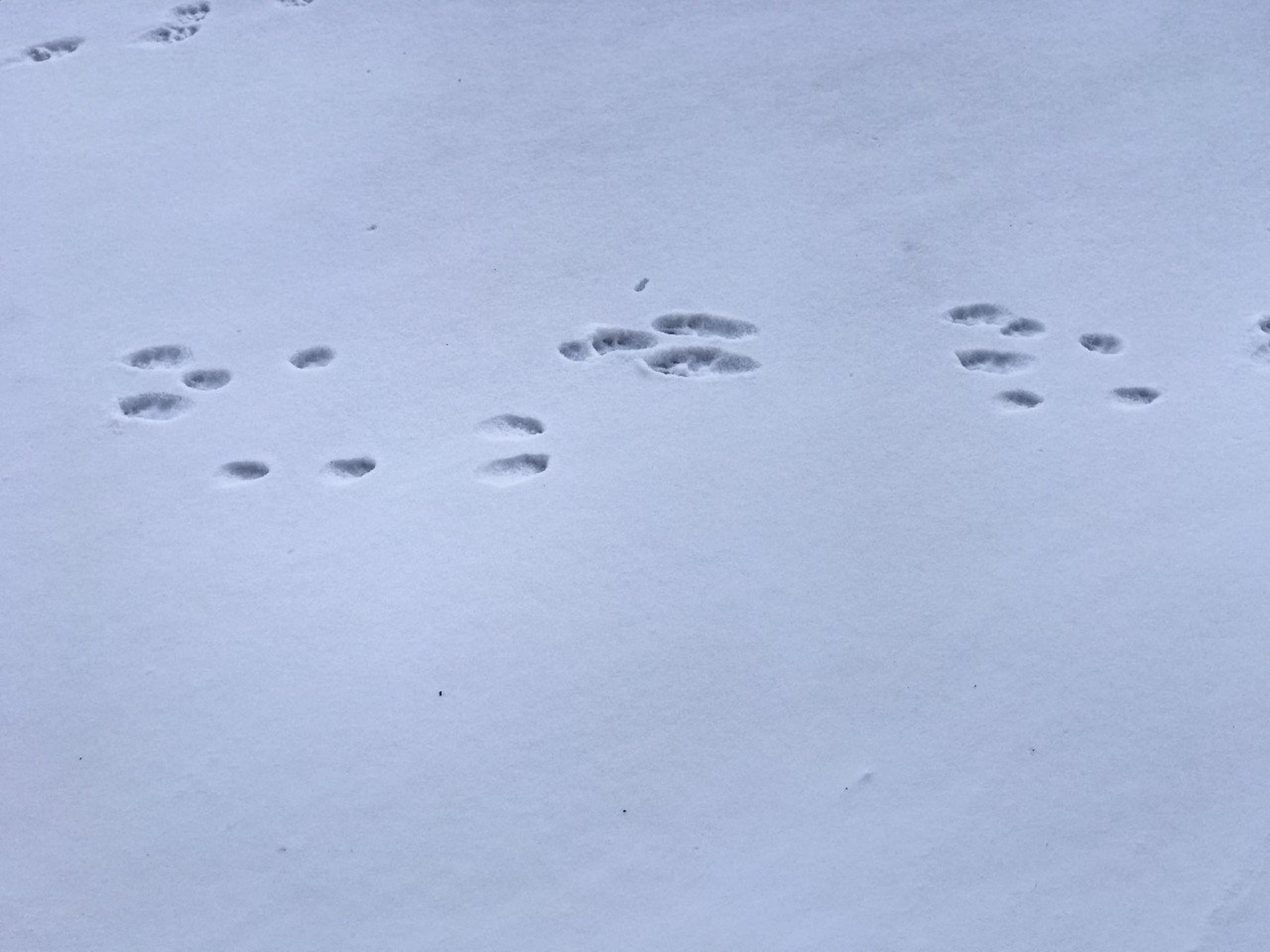
A soft, 2-inch snow had fallen, and rabbit tracks were visible on the driveway. While I was sleeping, these hardy animals were bouncing around outdoors. Rabbits do not hibernate, and they can find food in winter, including twigs, branches and buds. You might notice some rabbit tracks leading to a small shrub, and then leading away toward some other possible food source.
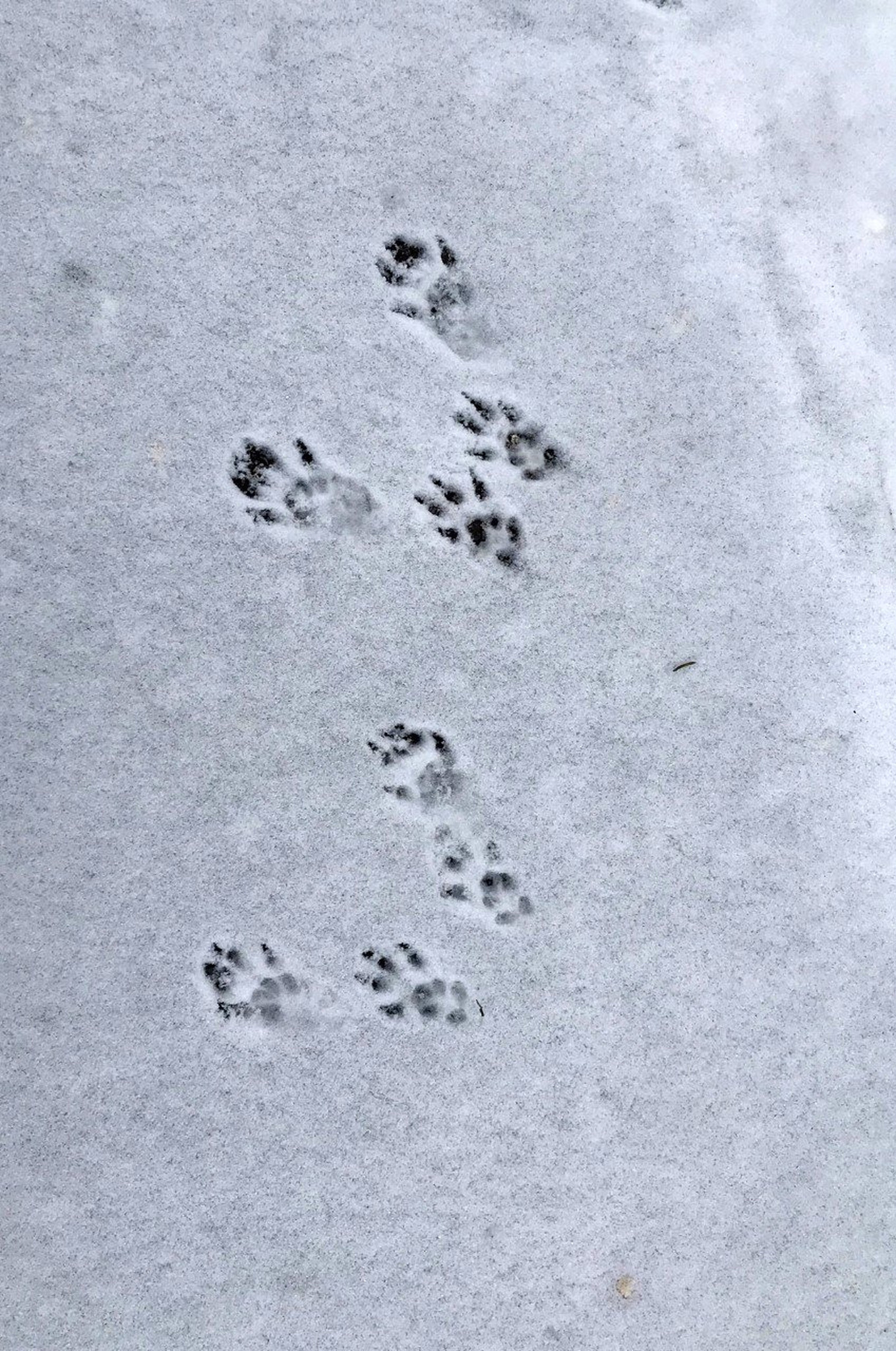
Squirrel tracks, as common or more so than rabbit tracks, lead to big trees where they run up the trunk and into their winter roosting spot, a large conglomeration of dried leaves they created in fall.
You can identify rabbit and squirrel tracks by their large hind feet, which are actually in front of their smaller front feet. The rabbit’s front feet are placed one in front of the other, but a squirrel’s front feet are side by side. You can also sometimes see long, skinny toes on squirrel tracks, but because rabbits have fur on their feet, toe marks in the snow are not very pronounced.
Birds leave their tracks in the snow as well. On a recent winter walk, I discovered many Canada geese tracks. The tracks are large, with three toes and webbing in between. They led right to a pond they have been keeping unfrozen by spending all day there. Small songbirds leave three, pencil-thin facing toes and one back facing toe in the snow.
Count results
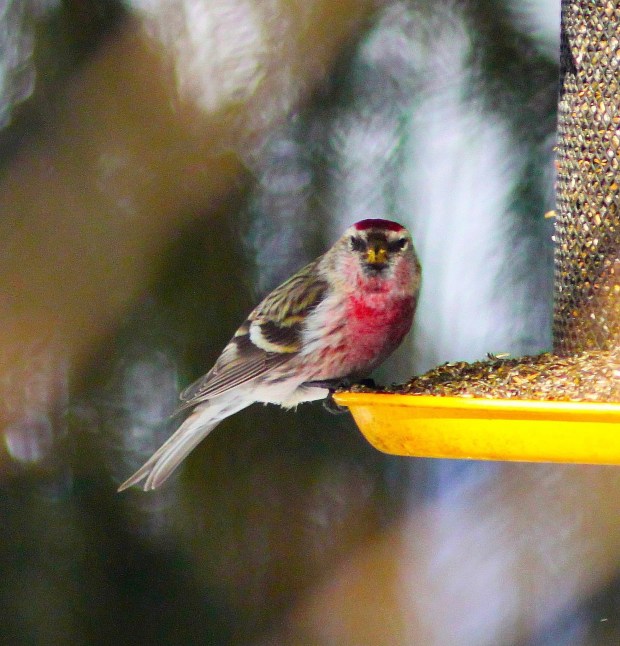
Last Friday began the four-day annual Great Backyard Bird Count, which I decided to tally indoors. From my window, I counted juncos as well as 17 other species of birds, totaling nearly 200 individuals. The most exciting species was a common redpoll, though they’re not common at all in northern Illinois.
Two of them landed on a maple tree and drank snow, while two more were feasting on thistle seeds. They eat the catkins, seeds and buds of alder and birch tree in winter. They also visit thistle feeders.
Redpolls have small, round, red forehead patch, a black throat and streaked back. Males show a rosy wash on the breasts.
Redpolls are an irruptive species, meaning sometimes they leave their far northern tundra homes in winter if food is scarce. Other times, if there’s enough food, they don’t fly south. We don’t see them every year in our backyard in winter — so it’s cause for celebration when we do.

Four redpolls, a male and three females, visited the yard for three days, including one of the bird count days, and then were gone. But the goldfinches, pine siskins, American tree sparrows and dark-eyed juncos are still here — and also got counted during the Great Backyard Bird Count.
While tallying the birds, I watched delicate flakes fall sometimes lightly touching on the backs of feathered creatures. The birds flitted here and there, jockeying for a space on the feeder. A male and female red-breasted nuthatch spent nearly all day taking turns at the peanut feeder, with an occasional white-breasted nuthatch or downy woodpecker landing in for a meal. A chickadee pounded a sunflower seed on a snow-covered branch to get at the protein inside.
Though we cannot see the splendid array of floral blooms in winter as we do in spring, we can enjoy the color of birds that complement the white snow. There’s the red of a cardinal, the blue colors of the nuthatches and the soft yellow beneath the chin of an American goldfinch that was just starting to get its full bright gold colors back for spring.
Another winter delight was seeing goldfinches and tree sparrows pulling seeds out of dried capsules still clinging to rose of Sharon shrubs. I’ve seen hummingbirds drink the nectar from the blossoms in summer, and now I was pleased to see this plant providing food for winter birds.
The snow this past week or so has been perfect for birds to drink. Goldfinches and tree sparrows inserted their tiny beaks into a fresh layer of snow, then lifted their heads to secure the moisture.
One of my readers pointed out that providing water for birds is necessary in winter, and he is certainly correct. That’s why some people put out heated bird baths in their yards.
Luckily this year, at least for now, the birds and other creatures like rabbits seem to have natural water available as light snows have recently fallen almost daily.
Sure, spring is coming. But looking for animal tracks and winter avian species helps me live in the moment. And there are many wonderful natural moments to be experienced on a cold, snowy February day.
Sheryl DeVore has worked as a full-time and freelance reporter, editor and photographer for the Chicago Tribune and its subsidiaries. She’s the author of several books on nature and the environment. Send story ideas and thoughts to sheryldevorewriter@gmail.com