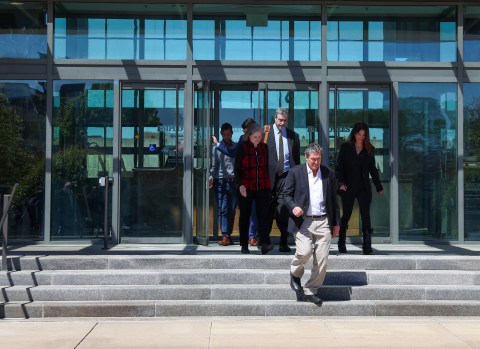
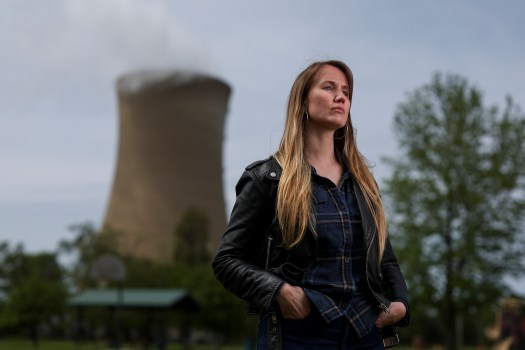
Kimberly O’Connor and Kimberly Cox have been working at the Lake County Jail close to for close to two decades.
It’s an untraditional path in public safety and law enforcement they would like to see more people consider.
“People just are not interested in corrections. It’s not something they never really heard about as a profession,” O’Connor said.
Both women began as corrections officers and have worked their way up to management. O’Connor serves as assistant warden while Cox is a deputy warden. Both women say while many have come to work at the jail as a part-time job or a steppingstone to other careers in law enforcement, they want people to know the job can be more.

“I think one of the hardest challenges we have is corrections is not an appealing job to people. It’s hard to try and convince people to come and work here,” O’Connor said. The public safety career often is overlooked as people gravitate toward more visible occupations like police officer, EMT or firefighter.
For the past year, as the county negotiates a new contract with the union representing corrections officers, O’Connor and Cox have been working with Sheriff Oscar Martinez Jr. on ways to make the job more appealing with discussions focusing on what it might take to improve hiring numbers and ultimately retention.
Currently the starting salary for a corrections officer is $45,112 with a 3% annual raise built into the contract. Cox said officers have affordable health care with family coverage for $37.50 a two-week pay period. Officers receive prescription drug coverage, Indiana PERF, life insurance, paid vacations and paid holidays.

O’Connor said while they are not part of contract negotiations, they have lobbied for things that may help make the job more attractive. Raising the pay to a more competitive level outside of the built-in raises is one of those measures.
“If we want to attract people who are going to stay here, those are some of the we’d like to see,” O’Connor said. Some suggestions include Increasing the clothing allowance, which is currently set at $700, and improving proficiency pay officers become eligible for after five years.
Cox said the jail needs to hire a significant number of officers to be completely staffed. The women have been reaching out in both familiar and new ways to let people know about the opportunity the field represents.
Billboards, Facebook, Indeed, yard signs, job fairs, colleges, radio ads and even old-fashioned flyers are being used to spread the word. For the first time the department is advertising on digital billboards in restaurants where people can scan a QR code for more information.
“We are doing everything to get the buzz out,” Cox said.
Lake County Council President Ted Bilski, D-Hobart, said officials are aware of the hiring challenges that exist for corrections officers and is working with the sheriff’s department and union to help make the job more attractive. The current hiring environment with all industries impacting by employee shortages, those challenges are magnified. Bilski said the department needs to hire between 30 and 45 corrections officers to be at full staff.
Councilman Christian Jorgensen, R-St. John, heads the negotiations committee. Jorgensen did not respond to a request for comment.
Bilski said council members are receptive to making changes they can afford.
“How do we create a scenario where this is a career you can pursue and retire from,” Bilski said. To get people to aspire to taking that position, issues need to be addressed, he said.
Along with the economics of the job, one of the biggest things they are trying to look at is scheduling.
“They are trying to develop a schedule that eliminates the burn out factor for correctional officers,” Bilski said. Due to staffing shortages, officers often have to work 12-hour shifts instead of the traditional eight hours and it is taking its toll on the officers.
Negotiations on the contract are ongoing, but he is hopeful something will be ready for the council’s consideration in March.
“Our goal it to have a good increase, have the hours they are looking for and that we can afford to have,” Bilski said.
Vince Balbo, chief of police with the Lake County Sheriff’s Department, said being a corrections officer is more than just watching the people who are incarcerated.
“It’s really important this job is a career path. This just isn’t a passing job,” Balbo said. Much has changed since Balbo first entered law enforcement in 1979, when all new officers in the sheriff’s department were required to work at the jail before they could move to the street.
Now the people tapped to work in corrections want to be there.
“We have come a long, long, long way,” Balbo said.
Corrections officers do more than just watch over the inmates residing in the jail.
“The COs play a big part in ensuring not only the mental health and physical health of the people housed there; they are counselors. They are people that develop professional relations with the inmate population,” Balbo said. Those relationships help improve overall safety for both inmates and staff.
Cox said the department has different activities to help foster relationships among the officers so the work is not so dark and heavy all the time.
“When you come to work in corrections, you end up building a bond at work that sometimes is more than at home,” O’Connor said. Co-workers become part of a tight-knit family.
“I like my job. It’s hard for me to explain why. I like coming to work every day. I like working with my co-workers,” O’Connor said.
For Cox every day on the job has the potential to make a difference.
“For every bad or rough day you may encounter, there is always one day where something I’ve done has made a difference. It’s rewarding,” Cox said
Carrie Napoleon is a freelance reporter for the Post-Tribune.