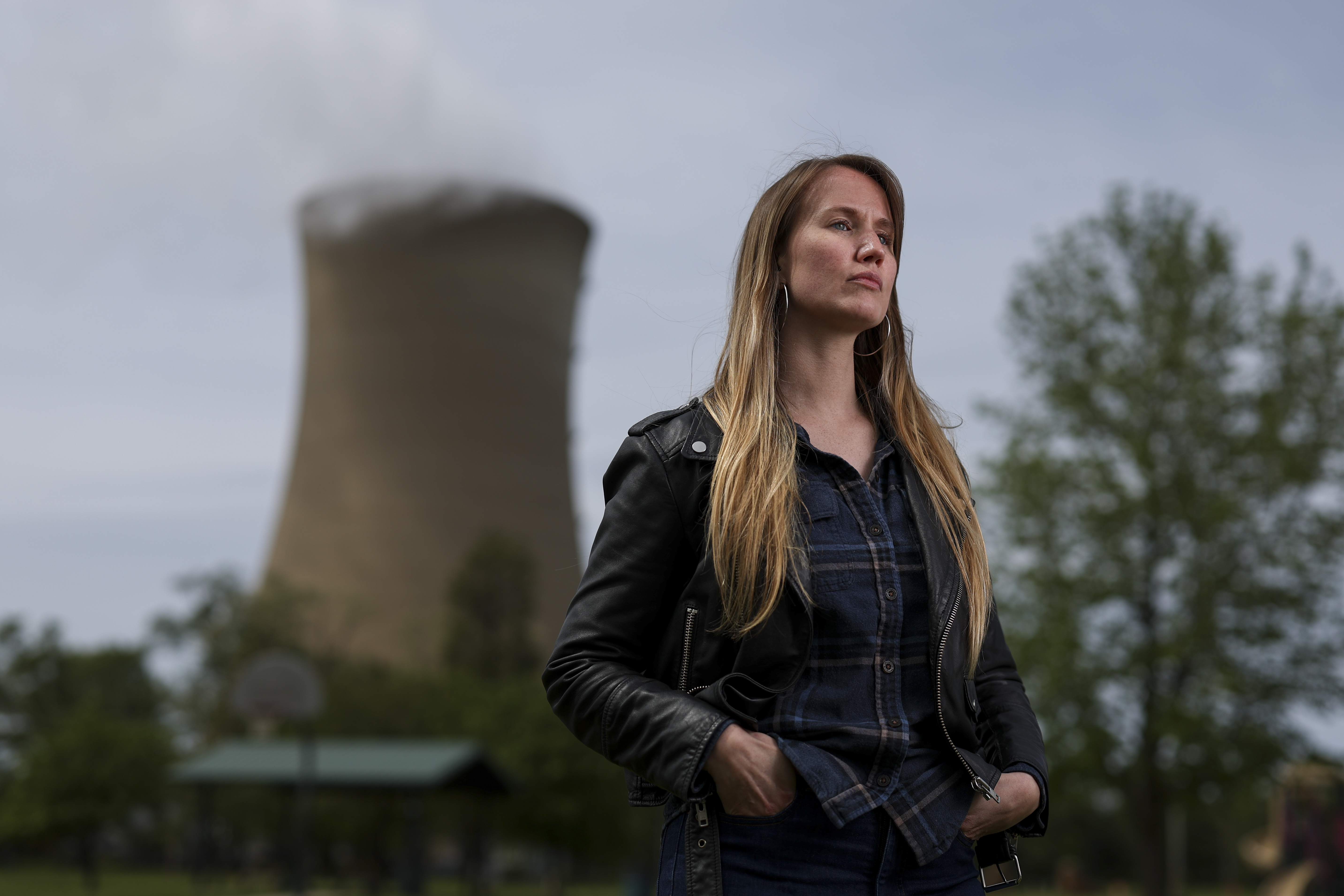
TOWN OF PINES, Ind. — In the herb garden beside her home on Colorado Avenue, Cathi Murray digs through the soil and pulls out two glittering black rocks.
They’re not ordinary stones, she said. They’re pieces of coal ash — waste from coal burned at the nearby Michigan City Generating Station, less than 3 miles away on the southern shores of Lake Michigan.
The rocks and dust she finds in her backyard and along the overgrown right of way behind her home — places where her two daughters played growing up — are a constant reminder of the contamination that has shaped life for the three decades Murray and her family have lived in Town of Pines, simply called Pines by residents.
“It’s everywhere,” Murray said.
Beginning in the late 1970s, the plant’s owner, Northern Indiana Public Service Co., distributed excess coal ash, which contains heavy metals and other pollutants, throughout the community as fill material for roads, landscaping projects and residential properties, according to the U.S. Environmental Protection Agency. Exposure to those substances has been linked to cancers, neurological disorders and other health problems, the National Institute of Health says.

Until the 1990s, the power company disposed of over 1 million tons of coal ash in an unlined storage area in Pines, later contaminating the groundwater that supplied the town of 700. More than 20 years after being declared a Superfund site, Pines is still struggling with pollution.
“Once you make a mess, it takes so long to right the wrong,” said Lisa Evans, senior counsel at Earthjustice, an environmental law nonprofit that has challenged federal coal ash regulations over the years.
As the EPA is poised to roll back portions of its 2024 coal ash regulations, environmentalists point to Pines as a grim reminder of what could happen if these regulations are scaled back. The changes are also especially worrisome for those living along the shores of Lake Michigan and other Great Lakes. According to an Earthjustice report, 88 sites used for coal ash disposal are situated within a 2-mile radius of the Great Lakes, including five in the greater Chicago region.
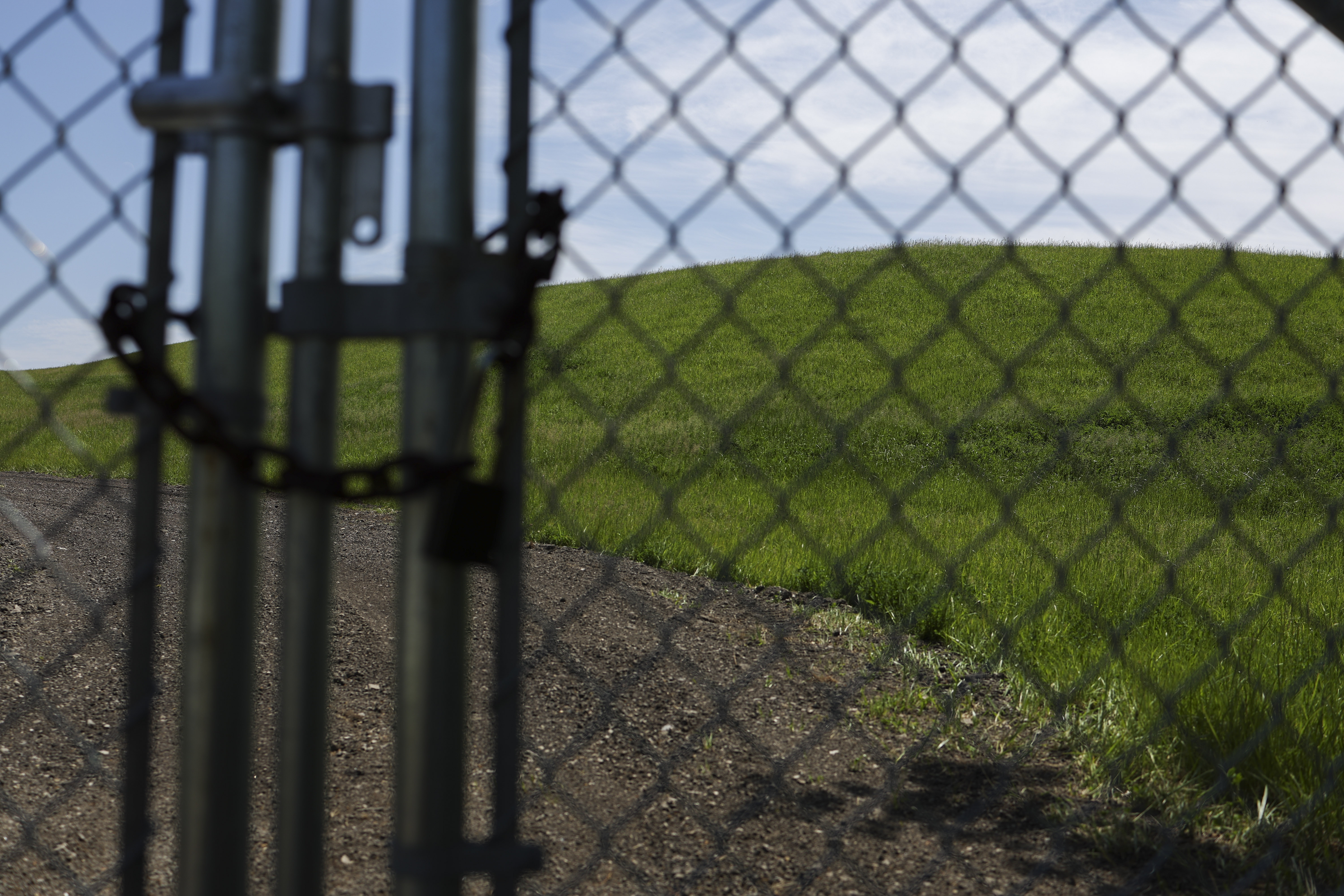
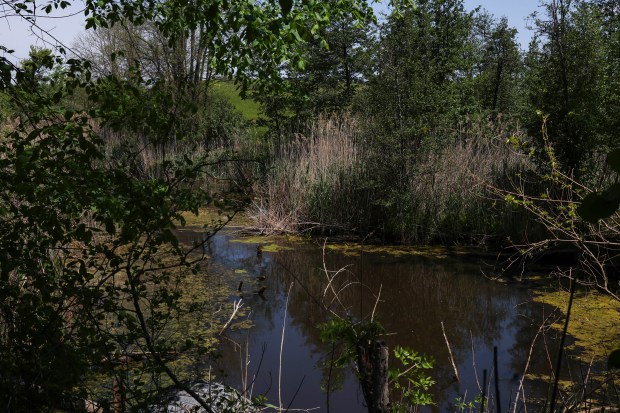
Among the changes proposed by the Trump EPA are delaying closure and cleanup requirements for active sites and weakening restrictions on coal ash reuse — potentially allowing practices similar to those that led to it being spread throughout Pines. In addition, the EPA wants to exempt hundreds of “legacy” coal ash sites — those that stopped dumping operations prior to 2015 — from cleanup requirements. Just two years ago, the Biden EPA closed this loophole.
“It’s incredibly sweeping in the destruction of safeguards,” Evans said.
In Michigan City, a 12-foot steel sheet-pile seawall, now 77 years old, is the only barrier protecting the lake from a breach of the power company’s coal ash sites, said Ashley Williams, executive director of Just Transition Northwest Indiana, a clean energy advocacy group based in Michigan City.
Williams said she often sees waves along the shoreline that top 12 feet in height during major storms.
“With the worsening climate crisis and these wave events, it’s only a matter of time,” she said. “It’s not if, but when that seawall fails.”
The Indiana Department of Environmental Management said in an email to the Tribune that it’s most concerned about groundwater seepage rather than coal ash spilling from the surface of the site.
A 2023 state law prevents Indiana from implementing coal ash closure standards more stringent than federal EPA requirements. So if the EPA weakens regulations, Indiana has no avenue to impose its own stricter rules.
“Indiana will never go above and beyond because it is enshrined into law,” Williams said. “We will be completely hung out to dry.”
In Illinois, millions of cubic yards of coal ash sit in three unlined ponds less than a thousand feet from Lake Michigan at the now-closed Waukegan Generating Station. According to Illinois Pollution Control Board, coal ash from the site has leaked into groundwater for at least 16 years.
Even so, Illinois has stricter state laws regulating coal ash than Indiana — a 2019 state law increased transparency and strengthened cleanup rules. While the law covers the three coal ash ponds, it leaves out legacy sites, a designation that applies to some of Waukegan’s other unlined storage areas.
A rollback “will have a terribly large impact in Illinois,” according to Earthjustice senior attorney Jenny Cassel.
“There’s no question that the (Waukegan) site is contaminated,” Cassel said. “So it really is a travesty that the federal government is abandoning these protections that will safeguard the water that, I imagine, you and I and so many other millions of people depend on for our drinking water.”
Debra Shore, a former administrator of the EPA’s Midwestern office who lives part time in Michigan City, said the federal proposal could create inconsistent protections throughout the Great Lakes — notably neighboring states like Indiana and Illinois.
“A state just across the river from another state may have more stringent regulations and may be affected by failures or groundwater contamination of neighboring rivers or downstream communities,” she said.
Cassel agreed. “This is a national problem,” she said. “It crosses borders.”
Shore said the 2024 EPA rule created momentum for long-overdue cleanup efforts at coal ash sites throughout the Midwest.
During her tenure overseeing environmental protection efforts in Illinois, Indiana, Michigan, Minnesota, Ohio and Wisconsin, Shore, who was appointed by former President Joe Biden, said utilities were beginning to develop closure and remediation plans for older disposal sites.
But now, she said, the EPA is “moving in the wrong direction.”
“There’s no reason to give them more time,” she said. “Companies can apply for extensions individually. But this administration is doing it with a broad brush.”
In a June 4 email to the Tribune, the EPA press office said the changes are a “common-sense approach” to promote resource recovery and regulatory relief, reduce regulatory burdens and combat rising energy costs while maintaining protections for human health and the environment.
“How does this protect human health and the environment?” Shore said. “If you’re looking at what they’re doing, not what they’re saying, it’s completely the opposite.”
Federal and state gaps
Coal combustion residuals, commonly known as coal ash, are the waste products left behind after coal is burned to generate electricity.
The material contains heavy metals and other contaminants, including arsenic, mercury, lead, lithium and molybdenum.
The EPA first adopted nationwide coal ash regulations in 2015 following the catastrophic 2008 coal ash spill at the Kingston Fossil Plant in Tennessee. More than 1 billion gallons of ash spilled into waterways and neighboring properties after a dike ruptured. The cleanup took years and cost more than $1 billion.
After a century of industrial pollution, Evans said it’s “unbelievable” that it took a massive spill for the EPA to take action.
“The agencies never had the backbone to regulate it and have now created this incredible mess,” she said. “There were no regulations to dispose of it properly, (so) utilities did it in the cheapest means possible, which means building a steel wall into a treasured lake and filling it with coal ash. That never should’ve been legal.”
The 2015 rules required utilities to monitor groundwater and impoundments, close leaking ponds and publicly disclose contamination data. Environmental groups, however, argued that those regulations left a major loophole: older disposal sites remained largely exempt from federal oversight.
“About half of the coal ash in the United States was left unregulated,” Evans said.
Indiana has the highest number of coal ash sites in the country, according to an Earthjustice report.
Indra Frank, a coal ash advisor for the Hoosier Environmental Council, called this a “dubious distinction.” She said her organization has worked to call attention to all the unlined coal ash sites across the state, the majority of which are in floodplains.
Of the approximately 100 coal ash sites in Indiana, 49 were classified as legacy sites.
Following litigation brought by Earthjustice and other environmental groups, the EPA in 2024 extended federal requirements to legacy disposal areas.
One of the sites brought under federal oversight was Michigan City.
Time for reassessment?
Along Trail Creek, a waterway that flows into Lake Michigan, anglers reel in catches across from the Michigan City plant’s aging seawall.
The power company built out the land at the plant through the 1970s with a mixture of sand, clay and coal ash to fill in the steel piling wall, according to a NIPSCO spokesperson in a June 5 statement, noting that 18% of the fill is coal ash. Many communities along Lake Michigan use this practice to extend their shorelines, the statement said.

In addition to the fill, there are five closed coal ash impoundments spanning 11 acres on the plant’s southwest corner, the statement said.
But those impoundments are legacy sites and would not be regulated under the EPA’s proposed rule changes, said Evans.
“The folks in Michigan City had welcomed the (2024) rule, thinking that help was on the way and that ash should be taken out of the lake, the land secured, you wouldn’t have a spill,” Evans said. “And should this proposed rule become law, they’re back to square one.”
During Shore’s tenure running EPA Region 5, she said the agency sought an independent review of Michigan City’s retaining wall, known as the Trail Creek seawall, after hearing concerns from advocates about the integrity of the structure. She said the agency’s Office of Research and Development, responsible for conducting the review, has since been eliminated.
Shore said the aging seawall is long overdue for reassessment.
Last year, NIPSCO reinforced the wall by adding a new sheet pile wall in front of the existing seawall, and the coal ash impoundment sites are not right next to the wall, said the Indiana environment department in an email to the Tribune. The agency said its main concern is groundwater.
Regardless of the proximity to the seawall, Evans said the storage sites and fill remain a threat.
“Whether the coal ash enters the creek via runoff or pipes or contaminated groundwater, the end result is the same,” she said. “The fish living in Trail Creek can’t tell the difference. And neither can the fisherfolk that eat those fish.”
For environmental advocates like Williams who fought for the 2024 rule, the EPA’s proposed rollback is “heartbreaking.”
“It’s the complete undoing of all of our efforts to date,” she said.
Williams moved to Michigan City and started the Indiana clean energy group a decade ago in part to advocate for coal ash cleanups and to push for the retirement of the Michigan City Generating Station.
NIPSCO says the plant remains on track to retire its coal operations by the end of 2028.
But Williams remains skeptical.
Between growing electricity demand, including the construction of a new Google data center in Michigan City, and the EPA’s proposed rollbacks, which would allow more time for utilities to address coal ash at the site, Williams worries coal generation could remain part of the local energy landscape for much longer than anticipated.
President Donald Trump’s administration ordered two Indiana coal plants, including NIPSCO’s R.M. Schahfer Generating Station in Wheatfield, to continue operating beyond their scheduled retirements to support grid reliability, according to the Department of Energy. The agency is expected to grant another 90-day extension for the Schahfer plant on June 21. However, NIPSCO said both generating units at the plant are awaiting repairs and have remained out of operation throughout the current extension period.
“It feels especially different right now in terms of the stakes,” Williams said. “Every community is being impacted specifically by the AI takeover and the build-out of more fossil fuel plants, keeping coal plants online, the breadth and depth of the contamination, and the impact and what we’re up against and the fight, I think, has never been so great.”
Court intervention
Mayra Mendez grew up in Waukegan, a city that is home to five Superfund sites, but she said she didn’t know about the history of these polluted sites until she went to college.
Shocked to learn about Waukegan’s toxic legacy, Mendez said she felt compelled to raise awareness about her community’s environmental burdens.
She founded Clean Power Lake County in 2013 to push NRG Energy to shut down the Waukegan Generating Station. It was closed in 2022. Since then, the organization’s mission has shifted to getting the remaining coal ash ponds capped and closed.
“There’s a lot of waste down there, and it’s immediately on the lakefront,” Mendez said. “So the water not only affects local residents here, it goes throughout the whole state.”

Even in a state where coal ash regulations exist, Illinois courts have intervened to ensure areas exempt from regulations, like legacy disposal sites, are addressed.
As recently as March, litigation involving the Illinois Pollution Control Board established that a disputed 10-acre field of coal ash in Waukegan is, in fact, a coal ash pond that NRG has to clean up and close.
But the proposed federal rollback would affect other areas at the site where legacy coal ash is stored.
“We have this now (potentially) unregulated mass of coal ash that is just relatively a few feet from a public beach with the groundwater flow rising and falling, and at times, flowing into Lake Michigan,” she said.
Mendez said her community is fortunate to have state regulators pushing NRG to address portions of the decommissioned Waukegan site, but she remains concerned about the future of these sites that fall outside the scope of the state law.
On top of that, Cassel said the burden this rollback would place on state regulators would further delay other cleanup efforts.
“It’s a concern to say, ‘Illinois EPA, you have to take on yet another job that the federal government should be doing under the law to protect us from pollution and from this whole other massive slew of coal ash dumps,’” she said.
Potential consequences
For environmental groups, one aspect of the EPA proposal that’s especially worrisome is changing how the agency qualifies coal ash as “beneficial use.”
This revised definition could make it easier to use coal ash as fill material — the same practice that caused decades-long contamination in Pines.
At the time, coal ash was widely viewed as an inexpensive substitute for clean fill. The consequences of those disposal practices took decades to emerge.

Murray moved to Pines to raise her daughters in the early 1990s, shortly before residents began learning the extent of the contamination.
“All hell broke loose,” she said.
Beginning in 2002, the U.S. EPA tested over 260 drinking water wells and dozens of residential properties found to contain elevated levels of toxins linked to coal combustion byproducts, including boron, molybdenum and arsenic.
In 2004, the EPA listed the town as a Superfund site. NIPSCO was later required to pay for cleanup under EPA supervision.
Murray was one of the founding members of People in Need of Environmental Safety (PINES), a local advocacy group, which has pushed NIPSCO to mitigate and properly test for arsenic levels and other pollutants linked to coal ash disposal.
She said seven original members, including herself, developed thyroid disease while living in the community.
Murray said she underwent surgery to remove more than 60% of her thyroid. While she said no direct causal connection has been established between her illness and coal ash exposure, Murray still worries about the years her family relied on well water later found to contain elevated arsenic levels.
“I sat with my glass of water from my well every time, nursing my daughters and drinking it,” Murray said. “I will never, ever know if I passed anything to my children.”

In a 2022 federal settlement, NIPSCO agreed to pay $11.8 million to clean up and monitor remaining groundwater contamination in and around Pines.
“NIPSCO is committed to working with the agency and residents as the process moves forward,” the company spokesperson said in a statement.
Environmental advocates say Pines demonstrates the potential consequences of loosening coal ash rules.
“We know so much about how damaging coal ash can be,” Frank said. “And yet EPA is proposing to go back to practices that left the Town of Pines a Superfund site.”
At an EPA public hearing last month, Williams spoke on behalf of the residents of Pines.
“We know the mass poisoning of our neighbors,” Williams told EPA officials during a public hearing last month. “The toxins are still there. In their wells. Their yards. Their roads. Beneath the feet of children and grandchildren.”
The EPA is expected to make a final determination later this year.
Shore warned that the effects of today’s regulatory decisions may take years to become fully visible in communities across the country.
“It’s going to take time and that’s the problem because people are going to suffer, the environment will suffer as these effects become more apparent,” Shore said. “The challenges are microscopic … And yet they’re harmful.”
In the meantime, advocates are planning their next steps if the EPA moves forward.
“I feel a sense of hopelessness sometimes,” Williams admitted. “But we can’t stop trying. We’re up against these behemoths.”