
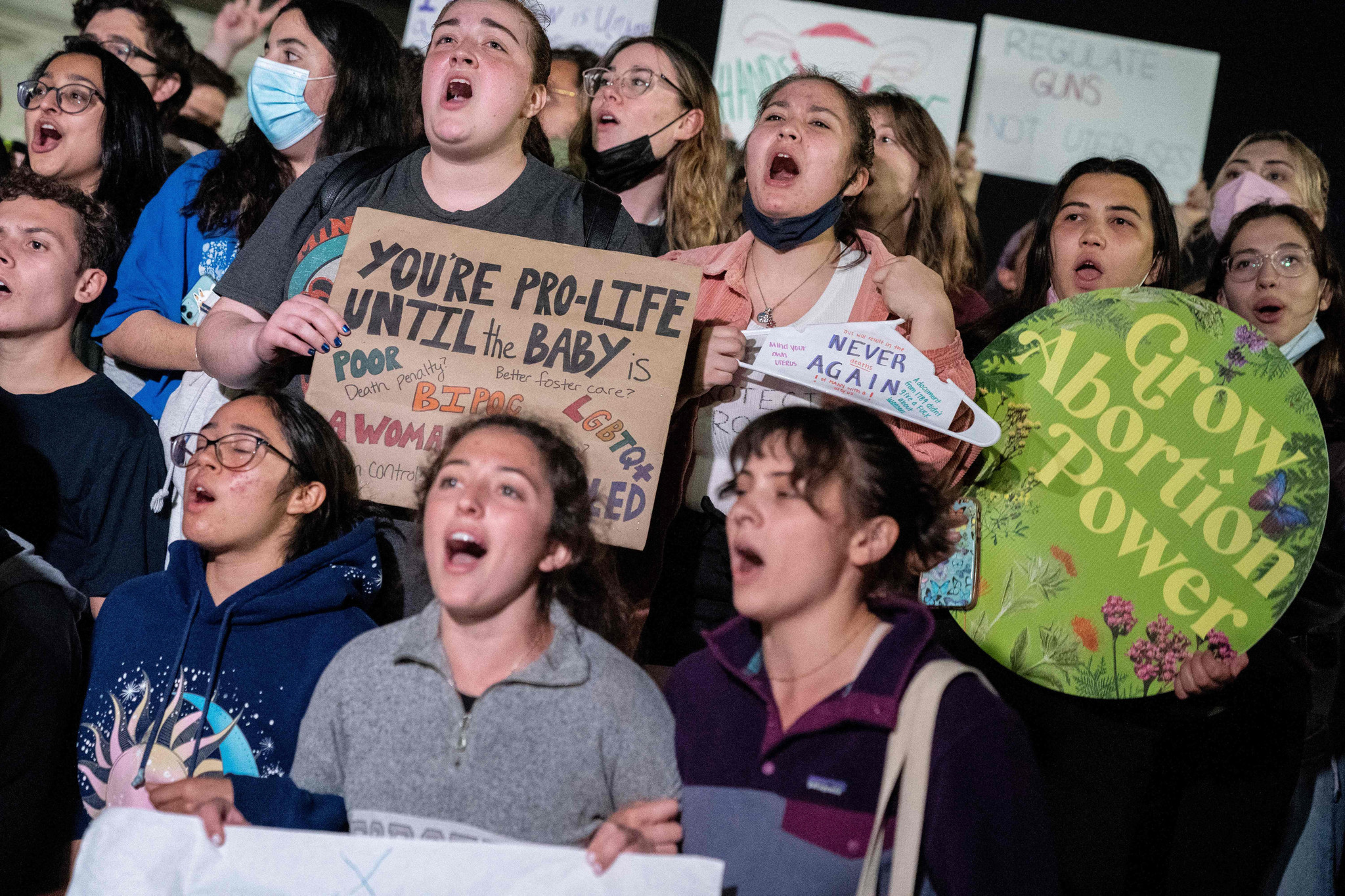


It appears likely that the U.S. Supreme Court will overturn Roe v. Wade and strip millions of American women of their right to make reproductive choices for themselves and their families. First of all, using the term “pro-life” to refer to one side of this issue is absurd. We are all pro-life. No one believes that abortion is an ideal solution to anything. Overturning Roe v. Wade and passing anti-abortion laws will not eliminate abortion. The fact is that as long as women have been conceiving babies and giving birth, there has been abortion. And as long as women continue to conceive babies and give birth, there will be abortion.
Our common goal should be to save lives by getting the abortion rate as low as possible. It has been proved that the best way to reduce the number of abortions is to provide safe, clean, accessible and affordable clinics for all women. These clinics also provide other medical services that are essential to improving the lives of women. Instead of working to strike down Roe, we should be working together to reduce the number of abortions by helping women of all income levels get the best reproductive health care possible.
Overturning Roe and closing down clinics is not the way to do this! It is a disastrous decision that will deeply affect all of us.
— Judy Weik, Oak Park
Pro-choice politics are pro-life
An unprecedented release of a U.S. Supreme Court draft opinion that would overturn Roe v. Wade has reignited a decadeslong fight for women’s reproductive right to abortion. To uncover what I call the “pro-life paradox,” we must distinguish between pro-life beliefs and pro-life politics. Pro-life beliefs often involve the idea that abortion is murder and therefore immoral; if argued in good faith, pro-life politics should involve researching and instituting policies that reduce abortion. But does the pro-life aim of outlawing abortion actually reduce abortion rates?
A study by researchers from the Guttmacher Institute, a leading authority on abortion, and the World Health Organization published in The Lancet Global Health journal “found no evidence that abortion rates were lower in settings where abortion was restricted.” In fact, the rate of abortion in countries where the procedure is “broadly legal” was found to be identical to the rate in countries where the procedure is “prohibited altogether.” These findings disprove the notion that outlawing abortion reduces abortion rates.
Zara Ahmed, associate director of federal issues for the Guttmacher Institute, argues in an op-ed published by NBC News that it is extremely dangerous to outlaw abortion. While legal induced abortions have a maternal mortality rate of 0.6 per 100,000, unsafe abortion has a maternal mortality rate of 30 per 100,000 in developed countries and 220 per 100,000 in developing countries. Outlawing abortion does not reduce the rate of abortion, but it does make abortion 50 to 367 times more deadly than if it were legal. If outlawing abortion isn’t the answer, what is?
A study from the Washington University School of Medicine found that providing free birth control “substantially reduces unplanned pregnancies and cuts abortion rates by a range of 62 to 78 percent compared to the national rate.” This should not be surprising: Abortions are largely in response to unwanted pregnancy, and contraceptive use aims to prevent unwanted pregnancies.
Pro-life politics aims to outlaw abortion and reduce contraceptive access, including by opposing the Affordable Care Act. All of these actions serve to either increase abortion rates or make abortion more harmful. Conversely, pro-choice policies aim to increase access to safe abortions and increase access to affordable contraceptives — the two biggest ways to reduce the maternal mortality rate and the number of abortions.
If you hold the pro-life belief of wanting to reduce abortions, you should be supporting pro-choice politics.
— Rohan Jaiswal, student, Loyola University Chicago
Defending ‘body autonomy’?
In a news segment, an Illinois lawmaker talked about the so-called U.S. Supreme Court leak and referred to “body autonomy” to support the removal or dismemberment of a growing human being — just like everyone reading this once was.
— Steven Durfey, Bartlett
Inhuman overreach
Are we really going to go back to illegal back-alley abortions during which women risked their lives to end an unwanted pregnancy? It is government overreach of an inhuman kind. If only men could get pregnant, such a change in a long-standing right would never occur.
— Mary F. Warren, Wheaton
Thoughts about a fetus
I recently asked myself, do I actually care about a fetus? Aside from all the rhetoric around abortion, do I actually care about any given woman’s fetus? I realized that I don’t care, and I don’t feel bad about not caring. I couldn’t care less what happens to a fetus that is inside of another human. It hasn’t been born, isn’t a citizen and has no meaningful consciousness.
Meanwhile, it is inside a fully sentient human being, attached down to the level of blood vessels. Fetuses can be remade very easily, and they can be destroyed with or without the government’s consent (or in the proper medical setting, for that matter).
Ask yourself: Do you really care about someone else’s fetus, and if so, do you care enough to have the government attempt futilely to ban someone’s right to do with their own body as they please?
— Ethan Feingold, Chicago
Join the conversation in our Letters to the Editor Facebook group.
Submit a letter, of no more than 400 words, to the editor here or email letters@chicagotribune.com.


