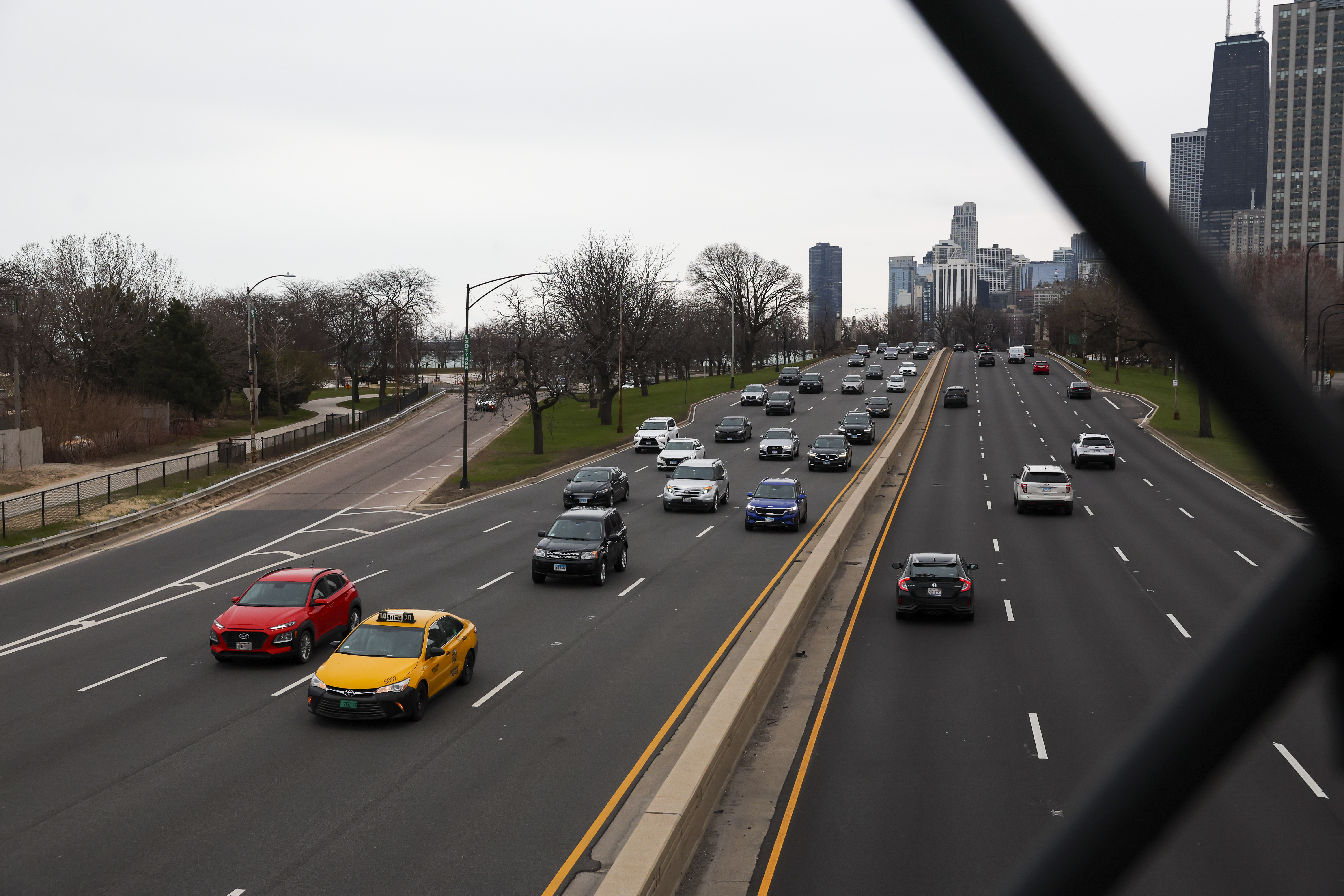

In late May, the Illinois Department of Transportation announced that it was revisiting its recommended proposal for rebuilding North DuSable Lake Shore Drive. Speaking as a Lakeview resident, a bike commuter and a cargo bike parent, I believe that restarting the process and potentially slowing down north-south travel on DuSable Lake Shore Drive is a mistake.
I don’t drive often, but a DuSable Lake Shore Drive that is an efficient mover of traffic has been critical for my family. Between 2020 and 2023, I was blessed with two trips to Prentice Women’s Hospital for the birth of my two children and had the misfortune of making several urgent trips to Lurie’s Children’s Hospital. It is hard to quantify how important it is to have the ability to move through the city quickly when you are rushing to the downtown hospital district or are driving home for a brief rest after watching over an infant who required hospitalization.
Zooming out, 150,000 vehicles use DuSable Lake Shore Drive daily to get to work, visit family or enjoy many of the entertainment activities Chicago has to offer. Making DuSable Lake Shore Drive less usable for cars will push more vehicle traffic to neighborhood streets and will increase travel times for Chicago-area commuters. Some people will counter that “it’s only a few minutes,” but these extra 10 or 15 minutes each way add up, robbing families of valuable together time.
We don’t have to imagine what a future that restricts vehicle travel on Lake Shore Drive would look like. Consider the massive travel disruptions caused by the Ridge Avenue work last summer or the current gridlock related to bridge work at Cortland, Halsted and Lake Avenue bridges.
DuSable Lake Shore Drive was recently named as one of the most beautiful roads in the world. It needs an update. The option recommended by IDOT in 2024 improves on the current design by expanding public spaces, making the lakefront more accessible and the road safer. Let’s stop stalling this project, proceed with IDOT’s excellent recommendation and keep the city moving.
— Roman Shuster, Chicago
Barrier to jury participation
Growing up as the son of a single mother who needed every cent of her paycheck to keep a roof over our heads, I understand firsthand that civic duty cannot exist in a vacuum; it must reflect and support the real lives of those asked to fulfill it.
I also know what it feels like to be on the wrong end of an unjust outcome in our legal system. That experience taught me that who sits in the jury box matters enormously and that when financial hardship determines who can afford to serve, justice suffers.
That is why I urge Gov. JB Pritzker to sign HB4844.
This legislation would require employers to pay employees their regular wages during jury service, a long-overdue reform that addresses one of the most persistent barriers to equal participation in our justice system. To protect small businesses, the bill sensibly exempts employers with 25 or fewer employees.
Jury service is a cornerstone of justice, yet Illinois currently pays jurors as little as $4 to $10 per day in most counties. Cook County pays just $35 per day. For working Illinoisans living paycheck to paycheck, those figures don’t cover lost wages — they don’t even come close. The predictable result is that hourly workers and lower-income residents seek hardship exemptions, fail to appear or struggle to comply with summonses altogether, while jury pools increasingly skew toward retirees and salaried workers who can more easily absorb the cost.
This isn’t just a fairness problem; it is a justice problem. When financial hardship determines who can afford to serve, juries stop reflecting the communities they are meant to represent. I have lived that reality on both sides.
HB4844 changes that. Pritzker should sign it.
— King Moosa, organizing manager, Citizen Action/Illinois, Chicago
Teaching kids how to swim
My organization and I appreciated the recent op-ed by Chuka Onuh and Dr. Amy Hanson highlighting the urgent need for drowning prevention and greater access to swim instruction for Chicago youths (“This summer, Chicago can help stop the tragedy of drownings,” June 1). Their opinion piece sheds important light on a preventable tragedy that continues to impact families and communities, particularly when children lack opportunities to learn critical water safety skills.
At Boys & Girls Clubs of Chicago (BGCC), we see firsthand how access to swimming lessons can change lives. BGCC operates four indoor pools in East Garfield Park, Uptown, Little Village and Bridgeport, providing aquatics programming that is free to club members year-round. Our pools allow young people to continuously develop and strengthen water safety skills in neighborhoods where access to swim instruction is often limited.
The need is significant. Learning to swim is a lifesaving skill, yet many children never receive formal instruction. In fact, nearly three-quarters of youths who participate in BGCC aquatics programs have never taken swimming lessons. Last year, we served more than 1,100 young people through aquatics programming.
BGCC also offers free learn-to-swim lessons, water safety education, recreational swimming opportunities and competitive swim teams.
Still, access remains a challenge. While BGCC operates four pools, five of our club locations do not have aquatics facilities. Transportation is often the greatest barrier preventing youths from participating in swim lessons. Last summer, when we provided transportation for young people from our club in Austin to the nearest pool we operate in East Garfield Park, 98% of participants were taking their first-ever swim lesson. We are planning the acquisition of our first passenger van — funded by a donor — to support transportation needs in Austin.
Drowning prevention requires communitywide solutions. We are proud to be part of that effort through year-round aquatics programming and encourage continued support for transportation and access initiatives that help ensure every child, regardless of ZIP code, has the opportunity to learn to swim.
— Susanna Wickham, president and CEO, Boys & Girls Clubs of Chicago
Ensure kids can access care
Children with rheumatic conditions, such as juvenile arthritis and lupus, rely on highly specialized care from a pediatric rheumatologist to treat and manage their disease. Pediatric rheumatology became a medical specialty 50 years ago, but there are still only about 400 of us nationwide and more than 300,000 patients who rely on our care. And now, limited federal Graduate Medical Education (GME) funding, uneven Medicaid reimbursement and restrictive immigration policies all threaten to make that shortage worse.
Since Medicaid reimbursement lags behind Medicare rates, and a much higher proportion of children in the U.S. are covered by Medicaid (more than 30%) compared to adults, pediatric subspecialists often earn significantly less than their counterparts in adult practice. This creates financial disincentives for graduating medical students and residents to enter the pediatric subspecialty workforce. Meanwhile, international medical graduates — who make up nearly 25% of the U.S. physician workforce — face visa restrictions that limit their ability to practice, especially in already-underserved areas. Cumulatively, these factors threaten to further reduce the number of pediatric rheumatologists in the years ahead.
Without action, children with complex rheumatic conditions may face longer wait times, delayed diagnoses and reduced access to life-altering care. Congress and state policymakers can help by expanding GME funding for pediatric subspecialties, ensuring adequate Medicaid reimbursement for pediatric care, and maintaining pathways for international medical graduates to enter and remain in the U.S. healthcare workforce.
Childhood is short, and kids demand timely access to specialized care. Improving these policy levers is critical to securing a sustainable pediatric rheumatology workforce to improve outcomes for children across the country.
— Dr. Brian Nolan, pediatric rheumatologist, Chicago and New Lenox
Submit a letter, of no more than 400 words, to the editor here or email letters@chicagotribune.com.