
To inform voters and to help the Chicago Tribune Editorial Board make endorsements, the board posed a series of questions to the candidates running for alderman. See their answers below. See how other candidates answered here.
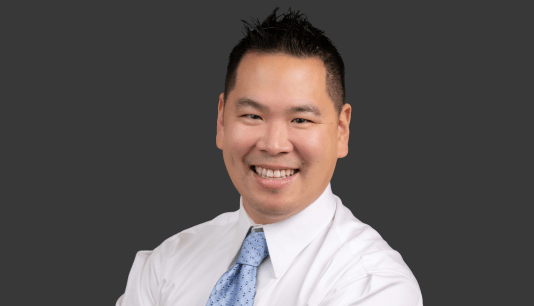
Name: James Suh
Ward: 45th
Current job: I have been a small business owner of a local automotive business (hand car wash, detailing, and vehicle sales) for the past decade. I am also the Director of Information Technology for a small financial services firm, Polaris7 Investments, and have worked in IT in the finance industry for the past 15+ years.
Previous political experience: My daughter attends Chicago Public Schools. I am an elected parent representative on my daughter’s Local School Council and VP of Fundraising for the school’s Parent-Teacher Association.
Education: I have a Bachelor of Science degree in Mathematics from the University of Illinois Urbana-Champaign and a Master’s in Computer Science from the University of Chicago.
Spouse’s occupation: My wife is a manager of Enterprise Services at Trading Technologies
Sources of outside income: I own my previous residence and currently collect rent from this property.
The rise in violent crime remains a top priority for City Hall. Homicides, shootings and carjackings are all unacceptably high. Tell us how city government can be innovative in combating crime, and explain what measures you would propose if elected.
Up until recently, decades of disinvestment in social services, mental health centers, violence prevention programs, and public schools have created the social condition that increases crime in our communities. To build safer communities, we need a comprehensive approach to public safety that includes addressing the root causes that increase crime, better training and support for public safety officials, and more collaboration with all community stakeholders.
Access to stable jobs, high-quality schools and social services, and clean and active public spaces make communities safer. I support current efforts which seek to increase funding for social services, first responders, mental health facilities, violence interrupters, and other modern approaches to public safety. This will increase both public safety and police officer safety. We must properly hire, train, and equip public safety officials ensuring they have mental health, and counseling resources while also increasing funding for alternatives to policing.
I will work with city agencies, neighbors, and all local stakeholders to build positive relationships and deliver the resources that make for safer and stronger communities. I would be an active advocate in city hall, a partner in continuing to educate the public on these issues, and ensure that my office and staff are trained in addressing social issues in the ward with a therapeutic and compassionate approach.
The CTA, one of the nation’s largest transit systems, remains a troubled agency grappling with issues ranging from violent crime and ghost buses and trains, to flagging ridership. Give us your thoughts on what specific measures CTA should take to make train and bus service safer, more reliable and more equitable for Chicagoans.
CTA ridership will increase when we can ensure our city provides safe and reliable service. If people can’t rely on the CTA to get them to work on time, those who are able will find alternatives. The CTA has reported that 700 to 900 train and bus operator positions remain open. We need workforce development programs and partnerships with public schools to find applicants to fill those positions. We can increase incentives for retired operators to help fill service gaps in the meantime.
An increased and visible security and public safety official presence on trains and platforms will decrease crime in the near term. More coordination between government agencies regarding public safety, emergency management, and public health will help us develop longer-term solutions and more comprehensive plans for coordinating care on our trains and buses.
Ten years ago, enrollment at Chicago Public Schools was 403,000 students. In September, enrollment stood at 322,000 students. Enrollment at CPS has dropped for 11 consecutive years. What specific measures should CPS undertake to reverse the trend of ever-dwindling enrollment?
We are only starting to address the vicious cycle of decades of disinvestment in our communities and social services. Historically, these divestments have led to decreased opportunity, a significant exodus of residents from the city’s south and west sides, and declining enrollment, which has then been followed by school closures.
We need to reinvest in our children, providing schools with what used to be basic resources, such as a library and librarian and music and arts programs. We need added staff to address mental health and social issues impacting students. We need our schools to be competitive in offering a comprehensive approach to student wellness and academic success.
Finally, we need better, more accessible programs that allow parents and community members to participate in the school community. One of the largest factors that impact school success, when you control for zip code, is locally community involvement. Schools are social anchor points in our communities and need to be invested in as such.
I will work with our local State level representatives to push for full funding of the Evidence-Based Funding for Student Success Act (EBF) which will provide the adequate funding necessary for our schools to be competitive with suburban counterparts.
Disinvestment on the South and West sides is a decades-long problem with myriad causes. Give us at least one innovative idea that you believe could play a role in reversing South and West side disinvestment, and explain why the idea is realistic and feasible.
I will work with the Department of Planning and Development and the rest of the council to enhance economic development and property tax incentives to provide greater benefit to those who bring thoughtful development and investment to those communities. These programs are already in place, but they can be enhanced to provide greater benefit to those willing to invest in the South and West sides without adding more layers of bureaucracy, which would further stall investment. If we are not experiencing investment in these areas then the current incentives, as they are written, are not doing what they were created to do, spur Economic Development. Offering greater tax incentives on developments, perhaps for longer terms, that will generate tax revenue is more realistic than retaining what is currently in place and continuing to watch a slow pace of investment.
Do you support giving Chicagoans property tax relief? If yes, please explain how you would accomplish it. If no, please explain why not.
I do support giving Chicagoans property tax relief. One of the ways I would work to accomplish this is by reducing the tax burden. By working with our local representatives in the General Assembly to push for full funding of the Evidence-Based Funding for Student Success Act (EBF) we will appropriately allocate state funding to our local public schools.
For Chicagoans, the largest portion of property tax allocation is funding Chicago Public Schools. Because EBF has never been fully funded by the state legislature, CPS received $1.4 billion less than it should have. With a fully funded EBF, Chicagoans (and municipalities across the state) would not have to shoulder that entire burden through their property taxes.
Give us your take on the city’s use of tax increment financing districts. Do you feel they have been useful, or do you feel that the problems associated with them outweigh their usefulness? What if any reforms would you want to apply to the city’s usage of TIFs?
The TIF program needs improved transparency and accountability into where and how dollars are spent. There must be stronger controls in place that determine the impact of a given TIF expenditure and the program as a whole. We must deeply scrutinize our interpretation of the “but-for” requirement to ensure we are only using these investments where the private sector would not otherwise invest .Funds must be applied in genuinely “blighted” areas where investment provides the best true and direct returns.
Lead in drinking water is a major health concern for the city. It is estimated that in Chicago there are roughly 400,000 homes and small apartment buildings with lead service lines. So far, the city has replaced less than 300 lead service lines. Do you feel the pace of lead service line replacement should be expedited, and if yes, what is the best, most feasible way to accomplish that?
The current replacement pace of lead service lines is abysmal. While it’s an incredibly expensive undertaking, it presents an even larger public health issue, which particularly puts children at risk. A new state law will require the city to replace lead service lines whenever there is a break or leak in a water line, which has increased replacement but it still isn’t enough.
We need to work with our state and federal partners to secure the funding to expedite this program. The city should be doing more outreach and education to those most impacted to help residents navigate this process to get in line for a replacement.
If you are an incumbent, please explain what is it about your service on the City Council that makes you most qualified for the job. If you have never served on the council, please explain what is it about your background that makes you most qualified.
I am most qualified to serve as the next 45th ward alderman because of my background, temperament, and unique experience. I have spent many years as both a small business owner as well as a professional in the corporate world, both of which have been high-pressure, meritocratic environments that helped me develop businesses that are service-oriented and meet the needs of our customers. I have been successful due to my ability to remain calm under fire, work with others to get things done, and I’m the only candidate in this race who has worked consistently over the past three years to hold our public officials accountable through our justice system.
I built my brick-and-mortar small business from the ground up nearly a decade ago, navigating a maze of city permits, licensing, and zoning requirements. I understand how difficult it can be to open and sustain a business in Chicago, and I can bring that personal experience to help others. My business has been successful because I understand the importance of delivering a high level of customer service and how to collaborate with others, even when we disagree, to get things done.
I believe strongly in actions over words and standing up for principle, even in the face of harassment and retaliation. Over the past three years, when I’ve seen our ward suffer from the effects of political retaliation and corruption, I’ve taken action. Whether it was to move stalled development projects forward, help replace the stolen belongings of a man who was unfairly targeted while being homeless, or hold officials accountable for civil rights violations.
I have the track record, temperament, and experience to provide the service 45th ward residents deserve.
What is the most pressing issue facing the people of your ward, and how would you address it?
The two issues I hear most about from residents are public safety and economic development, which go hand-in-hand. On most of the major arterial streets in the ward, you’ll find long vacant storefronts or demolished buildings with no plan in the works for future development. Without foot traffic, it’s difficult for small businesses to survive, and certain types of crime increase when streets are dark and sparsely populated. Likewise, when crime is up in the ward, as it has been the past few years, people may think twice about going out, and our businesses suffer.
I will work with our local chambers of commerce and neighborhood organizations to promote thoughtful economic development to create a climate that attracts new businesses to the area which fits with the needs and character of our communities. I will work with public safety officials, city agencies, neighbors, and all local stakeholders to build relationships, collaborate and deliver the resources that make for safer and stronger communities.
Sum up why should voters elect you and not your opponent(s)? (Please limit this to policy and approach, not a biography recitation.)
With my demonstrated track record of advocacy and involvement in the community, voters recognize my genuine commitment to ethics and to lead with integrity. I have been working to make our community better for a long time and this is an extension of my commitment to make this ward a better place for everyone. I believe the role of alderperson is to ensure timely and equitable city services, to work with community leaders to create and execute a shared vision for our communities, and to help craft public policy that improves the quality of lives throughout the city. I will be a fair and objective advocate for all community members through open and honest communication. I have advocated on behalf of our neighborhoods and created more community agency in the decision-making processes in the ward. I will be a responsive representative that truly welcomes constituent engagement and involvement.