
After 60 years of active service as a moderate Republican, I feel shunned by my party. Why? Because I am opposed to kids carrying assault-style rifles on our streets. I am also strongly opposed to abortion, yet am ultimately pro-abortion rights, as I will not play Big Brother to women I don’t know.
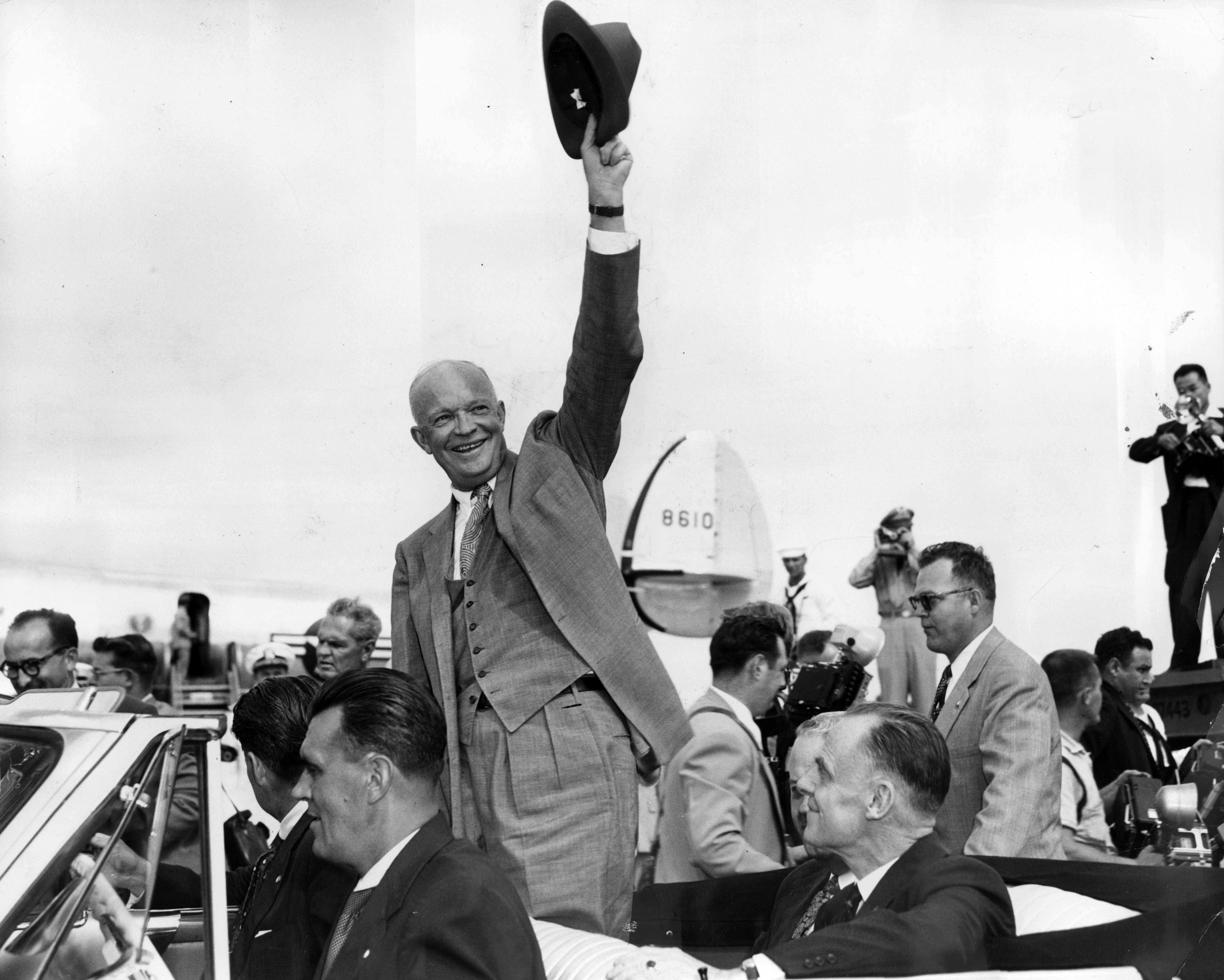
So, I am on a mission to claw back a significant role in American politics for moderate Republicans, whose pedigree goes back to Dwight D. Eisenhower, Nelson Rockefeller, Barry Goldwater and Ronald Reagan.
Moderates like me have been characterized as “Main Street Republicans”; that is, as good businesspeople, we have a need to deal with most everyone and solve problems. We believe in limited government, free enterprise, good schools, order, harmony and prosperity. Not a sexy platform, yet solid and fundamental.
We moderates are, however, a distinct minority within the Republican Party. A recent article by Nate Cohn in The New York Times parsed the GOP electorate into six groupings and found only 14% were of the “Moderate Establishment.”
Yet, we can play the game of politics much larger than our numbers suggest because, as Cohn describes our category, we tend to be “highly educated, affluent, socially moderate.” That is, we turn out for elections in much larger percentages than other categories, and we can generate lots of attractive, highly qualified, decently funded candidates.
So, how and where can moderate Republicans (let’s call us the Mod Squad, for “moderate” or “modern”) make our mark and become significant?
In the burbs.
In the six counties that surround Chicago and Cook County, a language other than English is spoken in one-third of the homes, according to the Chicago Metropolitan Agency for Planning. The burbs are no longer your white-bread, vanilla, GOP enclaves. Yet, there are lots of highly educated, socially moderate folks in the suburbs, of all hues.
The GOP brand in the burbs is tarnished by top-of-the-ticket statewide candidates who trumpet total gun freedom and strong anti-abortion rights positions. My suburban GOP friends find that many independents and some Republicans, while less than impressed with the Democratic candidates, often vote for the Dems because they can’t abide the GOP messages.
I propose that the Mod Squad proudly proclaim some version of the platform sketched at the top, then recruit and run candidates under this faction within the Republican Party.
But can Mod Squad candidates win some primaries and general elections in the suburbs? I say “yes.” To illustrate: In 2014, a moderate GOP candidate for governor won several middle-class Illinois suburbs 64% to 34%. Yet last year, the GOP candidate who was proudly pro-Donald Trump lost those same burbs by 2-1 margins to an uninspiring Democratic governor.
The big challenge for the Mod Squad in Illinois lies in the party primary elections. Turnout is low among moderate voters. On the other hand, to their credit, aroused Trump voters do turn out in the primaries. So, it will take money, organizational skill and focus on selected districts for the Mod Squad to win and grab a foothold.
Moderate Republicans will not become a majority faction in the party, certainly not while Trump continues to wield his Svengali-like powers within the party. So, how would the Mod Squad faction work effectively inside politics?
Legislative bodies at all levels have either competitive or lopsided party splits.
Where lopsided, tensions and differences often develop within a majority party caucus, which can give a faction outsize bargaining power.
Where the lopsided majority is Democratic, as in Illinois at present, the Mod Squad would find its decision-making influence limited. After all, the Dems rarely need any GOP votes, unless riven by their own internal factions.
Yet the Mod Squad could focus on solid policy development, an activity the parties seem to have forsaken to pursue negative “gotcha” politics. For example, educational achievement in the U.S. continues to lag that in other developed and some developing, countries. What is more important to our future?
Creating a constructive, potent moderate Republican faction won’t be easy, but I believe it possible to establish a beachhead of moderate elected officials, and claw back an important role on the American political stage.
It is worth the effort; our polarized world badly needs thoughtful problem-solvers.
Jim Nowlan is a former state lawmaker who lives in Princeton, Illinois. He has managed many largely successful political campaigns, including for moderate U.S. Senate and presidential candidates. Nowlan has worked for three unindicted Illinois governors. His latest book is “Politics — The Starter Kit: How to Succeed in Politics and Government.”
Submit a letter, of no more than 400 words, to the editor here or email letters@chicagotribune.com.