

Following 10 years of design, planning and construction Wilmette’s new $61 million Neighborhood Storage Stormwater Management System has already prevented the flooding of hundreds of homes in the village, officials said.
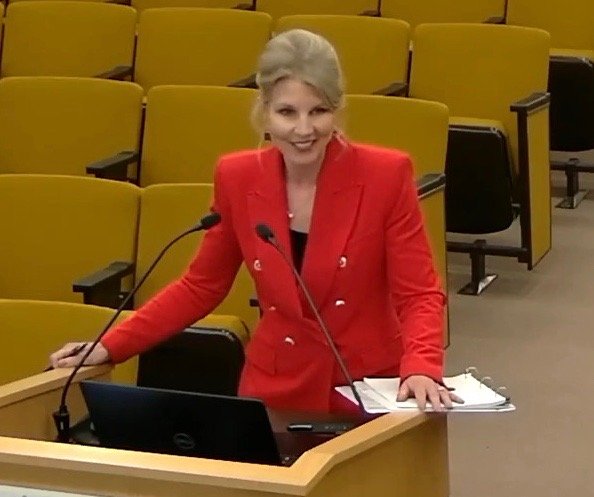
The completion of the mammoth engineering undertaking is a big feather in the cap for Brigitte Berger-Raish, Wilmette’s director of engineering and public works, who worked with staff, contractors, engineers and others through the COVID-19 pandemic to bring the village’s largest ever capital project in at $6.7 million under budget.

– Original Credit: Handout
“I’m having flashbacks to you standing in front of us … 10 years ago,” Village Board President Senta Plunkett said to Berger-Raish during a presentation on the project at the board’s Dec. 12 meeting.
“It’s just amazing. I kind of wish we were having a big party,” she added. “I think it’s fitting that you’re here. I can’t even imagine, and I’m wondering if you can imagine, you would be here 10 years later giving this report. I have to think this is even a better outcome than anyone could have ever anticipated.”
Berger-Raish said the village reduced the original $68 million cost of the Neighborhood Storage Stormwater Management Project through value engineering, creative design and conscientious construction and by locking in the price of materials before they sky rocked in the wake of the pandemic. She also gave a lot of credit to the village government and staff.
“It’s really in the first six years where the Village Board did all the hard work,” she told the board during its Dec. 12 meeting. “I really mean it when I say this project is made of blood, sweat and tears.”
Berger-Raish told the board she is confidant the village moved forward with the most cost effective plan. When the pandemic hit in March 2020, the village chose to continue with the project, rather than place it on hold, a decision she thanked the board for.
“It was the right decision,” she added.
Parts of the village have been plagued with serious flooding for decades and Village Manager Michael Braiman said the massive engineering project is historic.
“The village’s largest ever public infrastructure project coming in under budget is an outstanding outcome for our residents and a credit to the team responsible for managing the project,” he said. “This result, along with strategic debt issuances to capitalize on all-time low interest rates, will save Wilmette residents millions of dollars in debt service payments over the next 30 years.”
Much of the project was funded by a stormwater utility fee that went into effect in January 2020.
But Berger-Raish said the project’s overall success is about more than money saved. She said it’s also about giving residents peace of mind when dark storm clouds start to gather.
“I can’t tell you the number of conversations I had with your neighbors during and after storms … and they shared with me the physical, financial the emotional toll that these rain storms had on their livelihood,” she said.
Indeed, the benefits of the system were made very real last March during a 25-year rainstorm when 2 inches of rain fell in 30 minutes, Berger-Raish said.
10 years ago during a similar storm hundred of homes were flooded and many had sanitary backups. But during the March, 2023 storm no homes flooded and only 16 had sewer backups “which is really just tremendous,” Berger-Raish noted.
The four phase project included the construction of 21 Olympic pool sized underground stormwater storage areas at Thornwood Park, Hibbard Park and Community Playfield with the capacity to hold 13.8 million gallons of water and five miles of new storm sewers on the west side of the village and numerous engineering work arounds, Berger-Raish explained.
“We’re going to reduce flooding by almost two feet in the worst hit areas,” she told the board. “I think one of the most impactful ancillary benefits to this project is the reduction in sanitary sewer backups which on the spectrum is the worst thing that can happen to a homeowner is raw sewage in their basement.”
She said residents can take pride in the colossal underground engineering project.
“We’re going to continue to monitor every storm that comes through,” she said. “Like anything else there is a finite capacity to neighborhood storage. There is a 10-year design to it. It doesn’t mean it won’t inundate our system at some point, but for the majority of the storms our homes will be protected.”
Brian L. Cox is a freelance reporter with Pioneer Press.