

For as long as anyone can remember, Chicago has been blessed with a business and philanthropic community that has played critically constructive roles in making the city a more attractive place to live and visit — and in solving seemingly intractable problems.
In recent times, the creation of Millennium Park comes to mind — a dream of Mayor Richard M. Daley that blew through more than one budget but, once completed, was a downtown jewel. Chicago’s business community was mainly responsible for making that happen, even if plenty of the fundraisers themselves lived in the suburbs.
So it was in that spirit of city boosterism, in the best sense of that term, that a bevy of foundations, companies and prominent local businesspeople last week unveiled a plan to raise $400 million to solve the most vexing and important issue Chicago faces: the unacceptable level of violent crime. Some $66 million was pledged by familiar names such as the Pritzker and Crown families, bringing the pot of funding for this initiative to nearly $200 million.
Dubbed the Scaling Community Violence Initiative for a Safer Chicago, or SC2, the initiative puts real money behind efforts such as that of CRED, former U.S. Education Secretary Arne Duncan’s violence-prevention non-profit. CRED for years has recruited ex-gang members and others familiar with the streets of some of Chicago’s toughest neighborhoods to intervene with the youth of those communities who are at the highest risk of committing violent crime or falling victim to it. Participants are given training and support of multiple kinds, from life coaches to career counselors over the course of about a year, until they can be employed and become positive contributors to society.
The costs per participant are high given the labor-intensive nature of the work, Duncan says, but they’re far cheaper than prosecuting and incarcerating each criminal.
Duncan has preached for years to Chicago’s business elite and anyone who would listen about the work’s efficacy in neighborhoods such as North Lawndale on the West Side and Roseland on the South Side, but he has bemoaned the lack of resources necessary to do this at scale.
“I feel like we finally have a chance,” he enthused to us. “We’re in the game now.”
At the South Shore Cultural Center, Duncan and others, including Gov. J.B. Pritzker and Mayor Brandon Johnson, came together last week to trumpet the good news and to pledge their resolve. The goal is to reduce shootings in Chicago by a full 50% within the next five years.
Neighborhoods to be addressed in the near-term will include Austin, Englewood, East Garfield Park, West Garfield Park, Little Village and Humboldt Park. An amalgam of groups established to apply methods like CRED’s to those neighborhoods will get the resources to boost their impact.
At a time when public safety is front of mind for so many Chicagoans and several major corporations effectively have given up on the city by moving their headquarters out of town, it is encouraging to see the city’s business community step up to confront this scourge. And they’re doing it the way businesses solve their own problems. By focusing on methods that have been demonstrated to work and putting dollars behind them.
The philosophy behind this approach is to stop violence before it happens. Intervening in the lives of those who are on course to becoming violent criminals, most of us can agree, is far preferable to locking them up after the fact.
That’s not to say, though, that catching and prosecuting violent criminals isn’t a crucial part of making Chicago safer. Just a day before the announcement in South Shore, Chicago police Superintendent Larry Snelling appeared before a lunchtime crowd at an event sponsored by the Economic Club of Chicago.
Snelling was there principally to reassure business folk that he has a plan for reducing crime downtown and in neighborhood commercial strips. But it was a chance, too, for him to speak more broadly to the city at large about public safety in Chicago. And while the number of homicides and shootings fell in Chicago last year, which is modest good news given that the figures remain unacceptably high, what wasn’t encouraging was Snelling’s cherrypicking of statistics that offered a misleading picture of the department’s performance.
Snelling told the audience the department’s clearance rate for homicides had improved to 74%. That seemed impossibly good, given that the rate of closing homicide cases has been around 50% for the past several years. It was left to an audience member much later in the program to ask Snelling over what time frame that 74% figure took place. The month of January 2024, it turned out.
It’s certainly good news that the cops had such a good month. But Snelling surely wouldn’t want a single month’s poor clearance totals held against his department in the future. Hopefully a lesson learned by the new police chief. Better to tell people the truth, good or bad, than to try to convince them using dubious statistics.
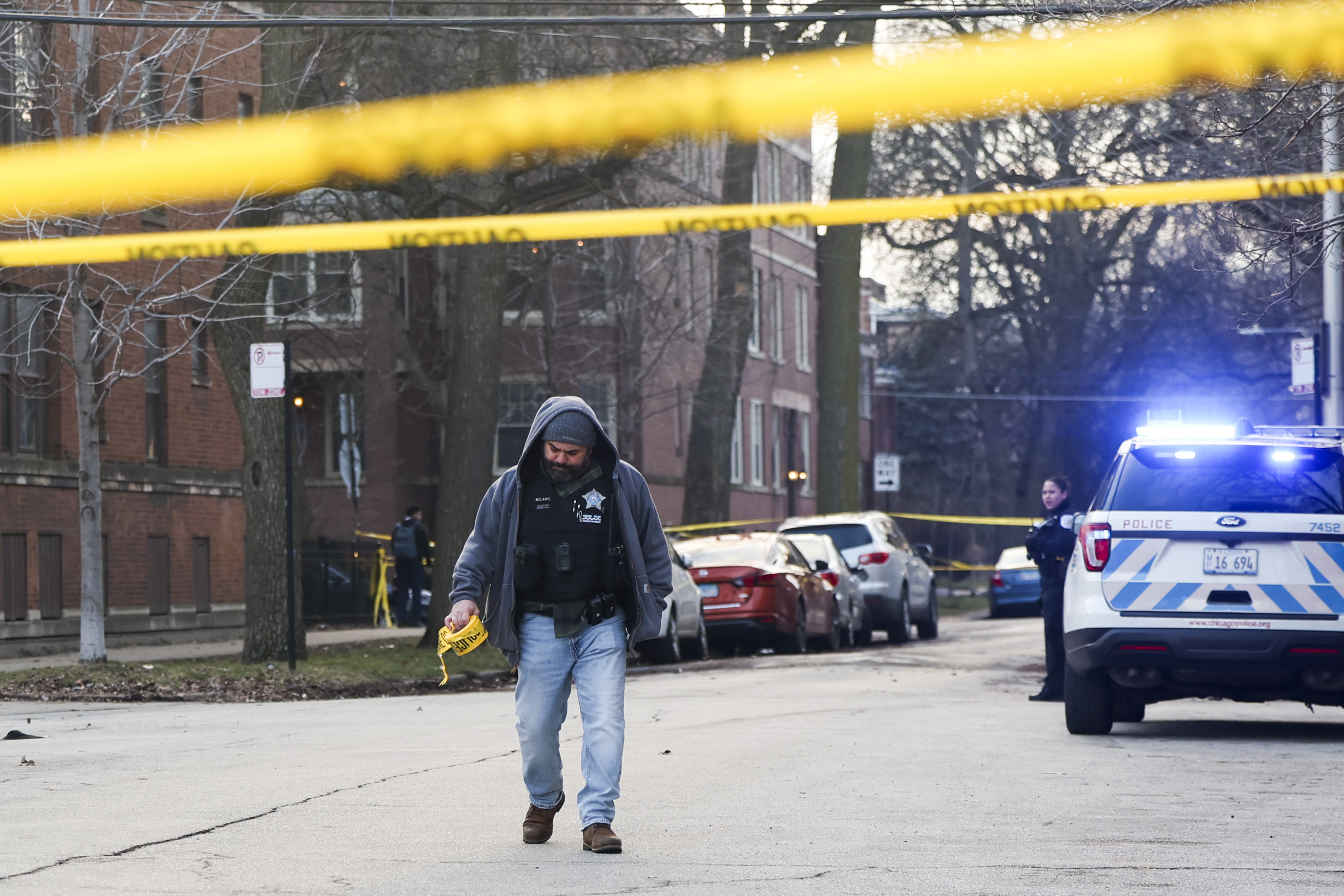
After all, the events of the last few weeks show just what a steep hill Chicago has to climb. The drive-by shootings of teen students in front of their high schools — first in the heart of Chicago on Wabash Avenue in front of Innovations High School on Jan. 26 and second by Senn High School in Edgewater just five days later — left three boys dead.
Make no little plans, Daniel Burnham famously said — a phrase that at times has been overused. He was dreaming about building things when he said that, and residents and visitors can see the fruits of his vision with their own eyes when they walk Chicago’s streets and jog or bike on its lakefront.
We live in different times. It might strike some as sad that the dreams Duncan and others like him now have are for the absence of something — violent crime — rather than bringing something new to life.
But those dreams are no less ambitious and every bit as critical. “You can’t be a great city if you’re not a safe city,” Duncan told us.
We could not agree more.


