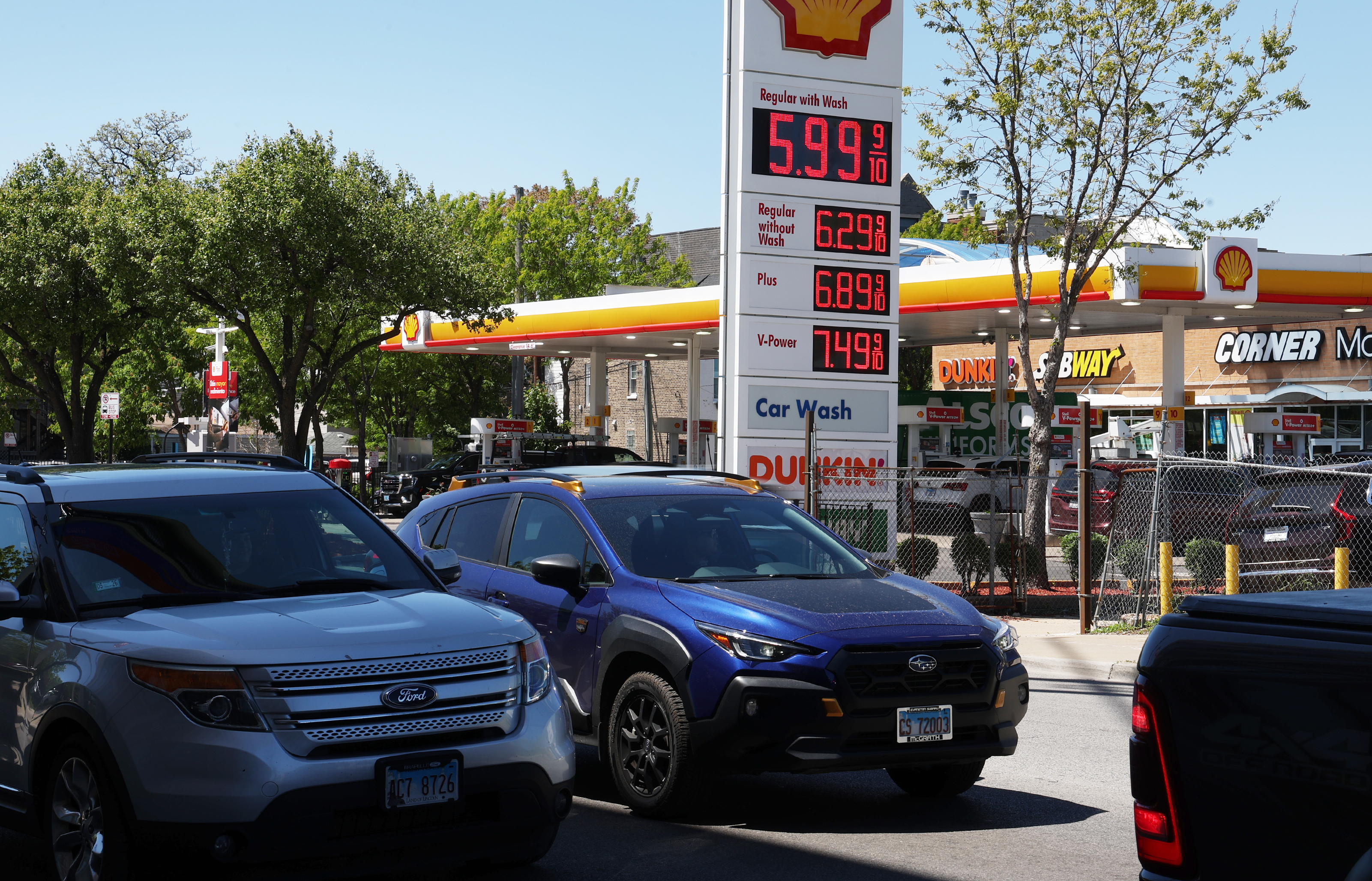

The Bureau of Labor Statistics’ latest consumer price report is here, and the data shows most grocery staples trending upward, electric costs at all-time highs and gas prices back above $4 per gallon nationally for the first time since 2022.
Overall, inflation accelerated in April, with costs rising 0.6%. Though steep, the monthly increase is slightly less than the 0.9% reported in March. Year-over-year, prices are up 3.8% — nearly double the Federal Reserve’s target of 2%. Elevated prices have been driven largely by soaring energy costs, accounting for over 40% of the month-over-month increase.
Higher energy costs, in turn, are a product of the Iran war. Amid fighting with the United States, Israel and surrounding Gulf states, the Islamic Republic has effectively closed the Strait of Hormuz, through which a fifth of the world’s oil and gas is shipped. In response, the U.S. Navy has implemented its own blockade of Iranian ports, tankers have been seized and the flow of fuel out of the region has trickled to a halt. As a result, global markets are experiencing upheaval and crude oil prices have remained above $100 a barrel.
Stateside, this has translated into higher fuel costs. Since the start of the war, retail gas prices have spiked more than 50% nationwide, and diesel, which trucks use to transport all kinds of goods and agricultural products across the country, has similarly sprung up 48%, according to data from the U.S. Energy Information Administration. And increased shipping and transportation costs? That means higher prices on everything from groceries to airline tickets and your morning latte.
How the Iran war and surging oil prices are affecting consumers at the gas pump and beyond
The Tribune is tracking 11 everyday costs for Americans — eggs, milk, bread, bananas, oranges, tomatoes, chicken, ground beef, gasoline, electricity and natural gas — and how they are changing, or not, under the second Trump administration. This tracker is updated monthly using consumer price index data from the U.S. Bureau of Labor Statistics.
To see the average U.S. price of a specific good, click on the dropdown arrow below and select the item you wish to view.
Eggs
Eggs are one of the few grocery items that saw a price drop in April. The nationwide average fell another 10 cents month-over-month, landing at $2.25 per dozen.
Costs have cooled significantly following a massive outbreak of bird flu last winter and spring, which disrupted the egg supply and sent retail prices soaring. Since then, the average cost for a dozen large Grade A eggs has declined more than 56% — or a difference of almost $3.
Milk
Now $4.14 per gallon, the price of fresh, whole milk increased by 7 cents since March. The average cost is higher than this time last year and roughly 3% more than it was when President Donald Trump took office in January 2025.
Bread
White bread is also getting pricier.
The average cost spiked 3% from the previous month to $1.87 per pound. While prices are up since the start of the year, bread remains slightly cheaper than it was 12 months ago.
Bananas
Banana prices, meanwhile, saw little change month-over-month. Costs fell by just a quarter of a cent to $0.65 per pound.
Still, prices are up more than 5% since Trump started his second term.
Oranges
As expected, oranges bounced since last month, increasing by 2 cents per pound.
A price bump was anticipated given the season: Oranges are cheapest in the winter, and prices normally bottom out in March or April each year. That means shoppers can expect costs to climb in the coming months, with prices eventually peaking in the early fall.
A pound of navel oranges now costs $1.50 — roughly the same as it was in April 2025.
Tomatoes
Tomato prices are skyrocketing. The average price leaped 19% in April to a new all-time high.
Such volatility is abnormal, but particularly so given the tomato market. Typically, prices fall in the spring as fresh tomatoes begin to be harvested domestically.
Inflated costs are likely a byproduct of tariffs. The vast majority of fresh tomatoes sold in the U.S. come from Mexico, and the Trump administration’s 17% import rate on Mexican-grown varieties is contributing to steeper retail prices. Additionally, increased expenses as a result of soaring oil and gas prices has compounded distribution costs.
Currently, a pound of field-grown tomatoes would set you back about $2.69. That’s a 50% markup year-over-year.
Chicken
The cost of chicken, meanwhile, was unchanged last month, remaining at $2.03 per pound of fresh, whole chicken.
Unlike other meat products, chicken has seen little fluctuation in recent months. In fact, the biggest price “spike” recorded in the last 12 months was a change of just 2 cents.
Ground Beef
One grocery item that is getting more expensive? Ground beef.
Prices rocketed back up in April following a momentary reprieve last month. With grilling season just around the corner, the cost of ground beef is now kissing the $7 mark, jumping another 24 cents from March to notch a new record.
The historically high prices seen this year are the result of declining beef production domestically. The U.S. cattle inventory is the lowest it’s been in 75 years, and the number of both calves and beef cows has dropped another 1%-2% from last year’s lows, per the National Agricultural Statistics Service’s latest cattle report.
Coupled with that, all live cattle imports from Mexico have been suspended since July due to an outbreak of New World screwworm, a flesh-eating parasite. The nation is typically a top supplier of cattle to the U.S., further complicating efforts to rebuild the U.S. herd and reducing the domestic supply of beef.
At $6.92 per pound of 100% ground beef chuck, prices have ballooned by 26% since the change of administrations — or an increase of $1.43 a pound.
Electricity
Electric costs are also surging.
At over 19 cents per kilowatt-hour, the current price of electricity is the highest on record — going back almost 50 years. With the average American household using roughly 899 kWh every four weeks, that translates to a monthly bill of approximately $175 before delivery charges, taxes and other fees.
Since January 2025, the national average price of electricity has increased by over 8%. For context, that equates to about a $13.50 surcharge per month for the average homeowner or renter.
However, some relief could be around the corner for Chicagoans: Local electricity delivery charges are projected to go down next year. Unfortunately for our downstate neighbors, prices are expected to go up in the interim. Ameren Illinois warned its customers in central and southern parts of the state that they could see drastically high electric bills again this summer.
Gasoline

Gas prices are continuing to squeeze drivers at the pump.
The cost per gallon of regular unleaded gasoline jumped another 42 cents month-over-month to $4.26. Locally, prices were even higher, shooting up 14% since March to $4.45 per gallon, according to EIA data.
The disruption of oil production and distribution in the Middle East has sent gas prices climbing stateside, and with peace talks at a standstill, initial data shows higher costs lingering into May. As of Thursday, the national average was $4.53 per gallon of regular unleaded, according to AAA, and this week, Chicago prices clocked in above $5 a gallon — rates not seen in the city for nearly four years.
On Monday, the president proposed suspending the federal gas tax. But that doesn’t necessarily mean such a move is certain. A nationwide gas tax suspension would require an act of Congress.
Across the country, prices are 33% higher than they were when President Joe Biden left the White House.
Natural Gas
Despite surging oil, diesel and gasoline costs amid the ongoing war, natural gas prices in the U.S. are actually declining.
The cost of piped utility gas, or natural gas, fell again in April, dropping by 1 cent per therm. Lower prices are a product of low seasonal demand and historic domestic production. According to EIA forecasts, U.S. natural gas production will reach record highs this year. This, along with increased storage levels is expected to “help meet demand and reduce the risk of price volatility,” per the agency’s Short-Term Energy Outlook released Tuesday.
Yet, on average, Americans are paying 8% more to heat their homes, ovens and stovetops than when Trump assumed power. Prices now sit at $1.68 per therm.