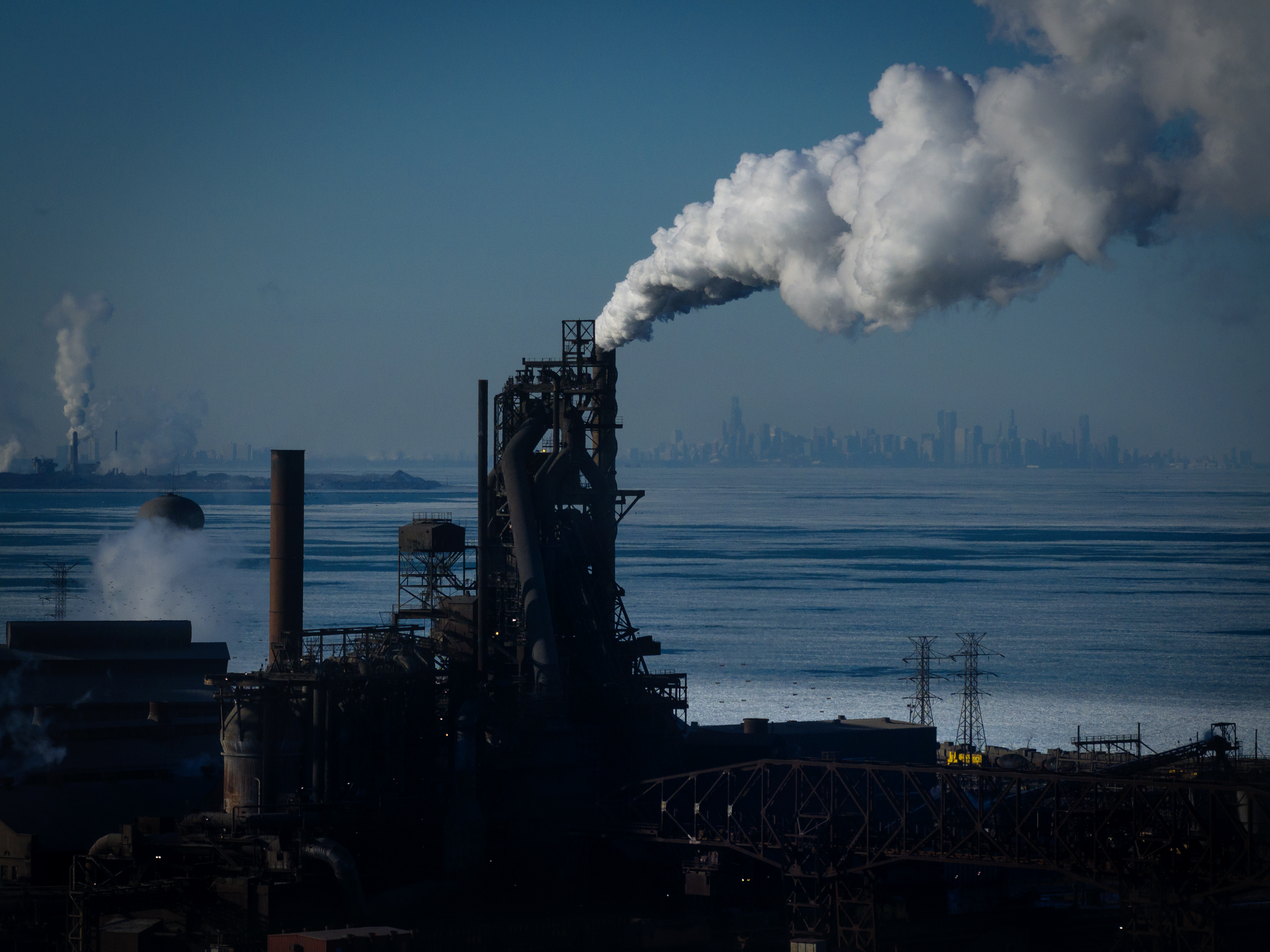

Northwest Indiana was included in a recent report about potentially dangerous levels of toxic pollutants at steel plants nationwide.
The Environmental Integrity Project, on Thursday, released a report titled “The Steel Industry’s Hazardous Air Pollution” that shows how President Donald Trump administration’s proposed delay or elimination of 2024 hazardous air pollution controls for the steel industry will threaten public health.
In 2024, former President Joe Biden’s administration’s Environmental Protection Agency issued regulations for steel mills and plants that produce coke, which is used in steelmaking, that would strengthen emission limits for hazardous pollutants.

Since Trump’s inauguration, implementation of the rules has been delayed and repealed. On Aug. 6, EIP and other environmental organizations — including the Hoosier Environmental Council and Just Transition Northwest Indiana — filed a lawsuit against the EPA and Administrator Lee Zeldin to challenge the delays.
Top pollutants reported at facilities include chromium compounds, benzene, polycyclic aromatic compounds, cadmium compounds, nickel compounds, arsenic compounds, quinoline, manganese compounds, lead compounds and naphthalene, according to the study. The emissions were self-reported by steel companies in 2023, according to the study, which claims actual emissions can be underestimated.
In 2023, 20 steel mills and coke plants nationwide emitted nearly 2.4 million pounds of air toxics, 289,772 tons of criteria air pollutants and 43.3 million metric tons of greenhouse gases, according to the study.
“It’s clear the steel industry needs common-sense rules to protect the health and safety of workers and the people who live downwind from plants, because of the dangerous chemicals they handle and release,” EIP Executive Director Jen Duggan said in a news release. “Instead, the Trump administration is bending over backwards to delay industry compliance with EPA regulations that better control and monitor hazardous air pollution from the steel industry, a true betrayal of the workers at these plants and their families and communities nationwide.”
Northwest Indiana plants included on the report include the Cleveland-Cliffs/SunCoke Indiana Harbor East location in East Chicago; Cleveland-Cliff’s Indiana Harbor West in East Chicago; Cleveland-Cliff’s Burns Harbor location; and U.S. Steel’s Gary Works plant.
The EIP study claims the Gary Works facility and both Indiana Harbor facilities have spent 12 quarters in noncompliance with the Clean Air Act, as of May 2025. Cleveland-Cliffs’ Burns Harbor facility, spent 11 quarters in noncompliance, according to findings.
A spokesperson for Cleveland-Cliffs did not respond to a request for comment.

The EIP study claims that in 2022, an air monitor at Gary Works registered levels of chromium at the fenceline were more than double the chronic health threshold identified in the report.
In a Thursday statement, a spokesperson for U.S. Steel said the EPA concluded existing rules from 2003 for integrated iron and steelmaking facilities “are protective of human health and the environment with an ample margin of safety.”
Gary Works and U.S. Steel’s Mon Valley Works facilities have achieved a compliance rate exceeding 99%, the statement said, which is “a testament to our employees’ dedication, skill and care for the communities they work and live in.”
“U.S. Steel supports revisions to regulations that are within EPA’s statutory authority, based on sound science, and are technically feasible,” the statement said. “The 2024 rules were not risk driven but were developed based on a misinterpretation and application of the Clean Air Act. Environmental stewardship is a core value at U.S. Steel, and we remain committed to the safety of our communities as do our more than 3,400 Mon Valley Works employees, and more than 3,400 Gary Works employees.”
U.S. Steel previously applied for two-year exemptions from hazardous air pollutant rules for integrated iron and steel, coke and taconite iron ore process, according to Post-Tribune archives. The EPA announced in March that corporations could apply for presidential exemptions to sections of the Clean Air Act.
The company challenged the rules because they were not supported by science or law and would impose significant costs while setting technically unachievable standards, according to a previous statement.
A representative from the Group Against Smog and Pollution, a southwestern Pennsylvania-based nonprofit, previously told the Post-Tribune that Cleveland-Cliffs also submitted an exemption request for its Monessen Coke plant, but it’s unclear whether a request was submitted for Northwest Indiana locations.
In April, Lake and Porter counties both received poor air quality grades from the American Lung Association after the release of its “State of the Air” report. Lake County failed in ozone pollution, 24-hour particle pollution and annual particle pollution, and Porter County only received a passing grade for annual particle pollution.
Ozone and particle pollution can cause premature death and other health effects including asthma attacks, heart attacks, strokes, preterm births and impaired cognitive function, according to the American Lung Association. The organization also found that particle pollution can cause lung cancer.
Terry Steagall, a Northwest Indiana resident and retired steelworker, said in a statement that residents need to demand a future with clean and sustainable steel.
“EPA’s decision to delay the critical rules designed to protect us from toxic emissions perpetuates the unfortunate trend of treating the region as a toxic sacrifice zone for industry to poison the land, air, water and people,” Steagall said. “The steel industry has to ‘do better to be better’ if we are going to have a sustainable steel industry into the future.”