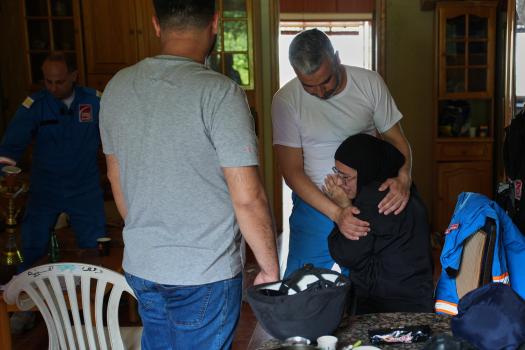

Ernestine Newell switches between the past and present tense when speaking of her partner of 16 years, Freddie Webster. No one, not her or their three children, has seen him in a decade. A boxer, he would jokingly fight with them to toughen them up. He’s a good guy, said Newell. He’s the type of guy who could always make his family laugh.
Newell, 79, recalled her time with Webster, 79, and their children fondly. She said she last saw Webster 10 years ago, after they had split. He came by to visit with Newell and their children. Newell said Webster seemed sad and told her he was going away for a while.
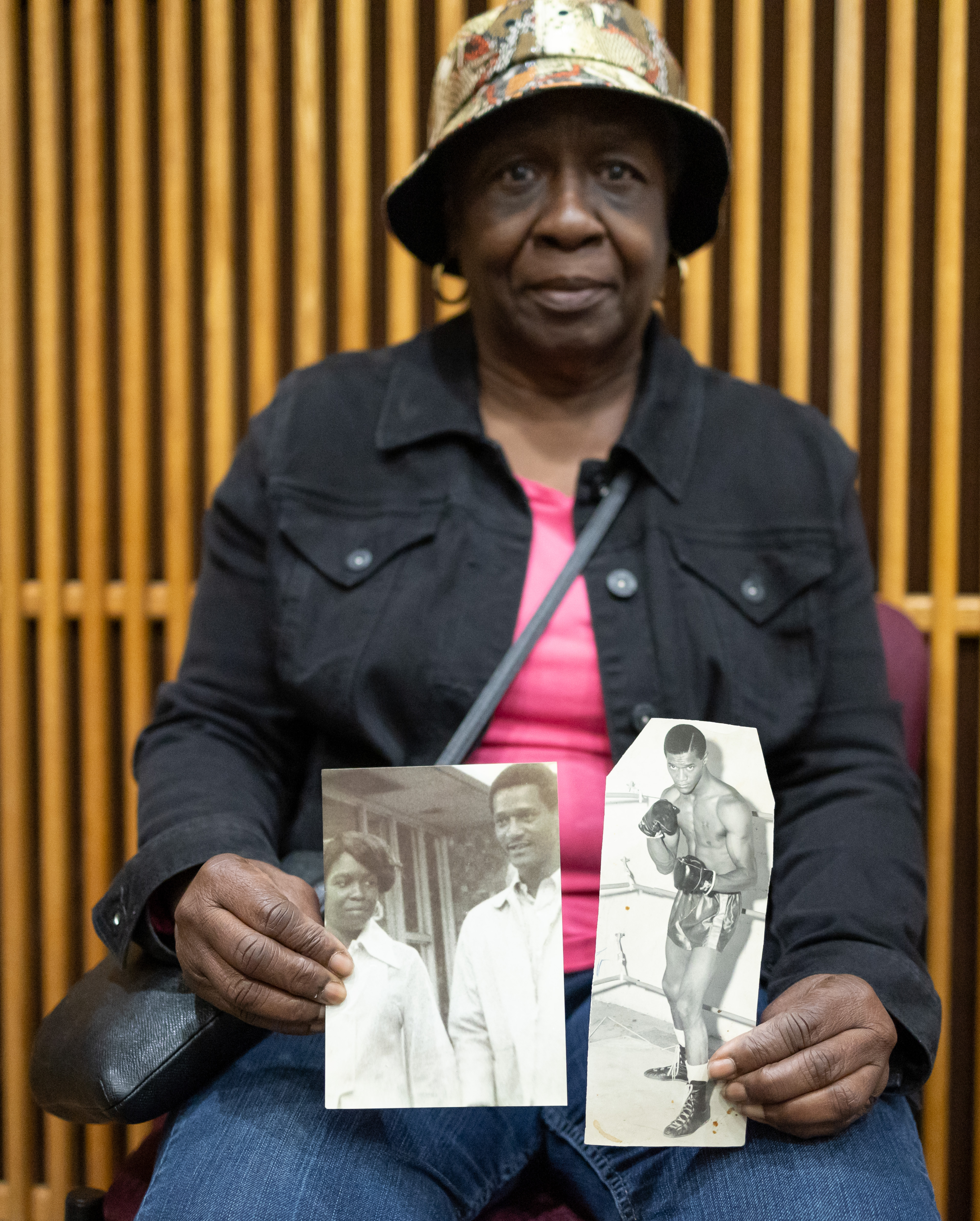
Newell hasn’t heard from him since. Neither had Webster’s family, she said. The lack of answers to her questions about where he is and how he’s doing has kept her up at night. “I just need to know,” Newell said. “It just hurts me because I miss him. And I don’t know where he’s at. I don’t know if he’s still alive.”
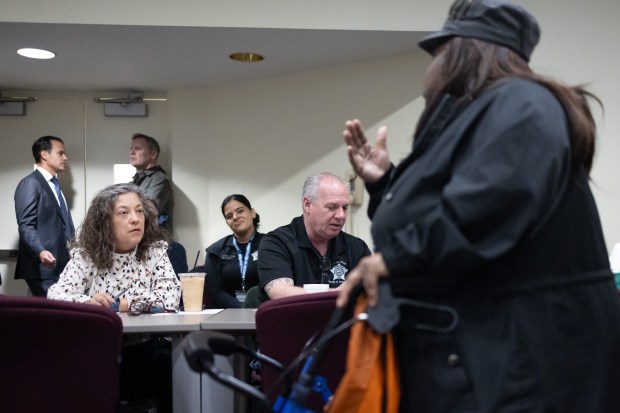
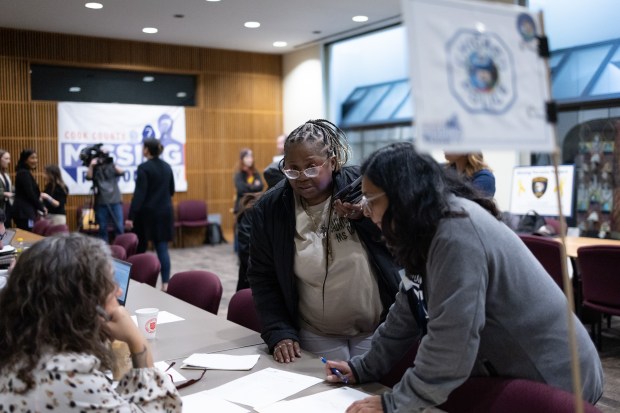
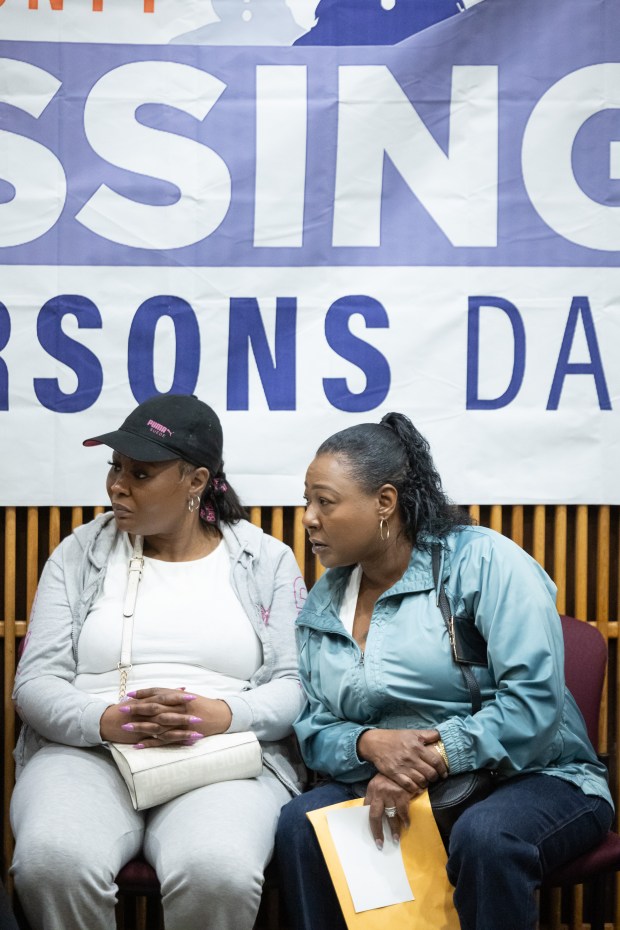
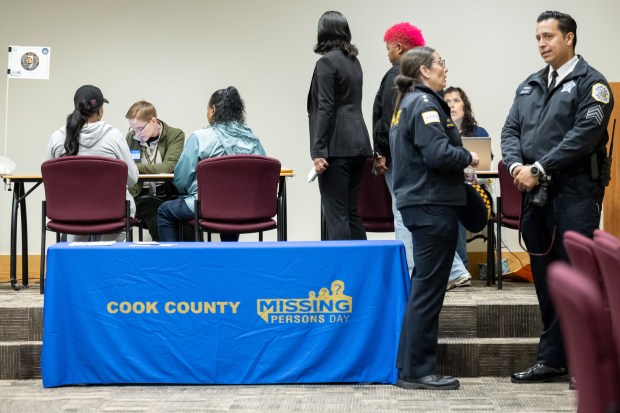
On Saturday, Newell filed a missing persons report and was one of 12 families to talk to police during the sixth Missing Persons Day event hosted by the Cook County medical examiner’s office.
“I ask myself, ‘Why did I wait so long?’” Newell said. “And sometimes it brings tears to my eyes.”
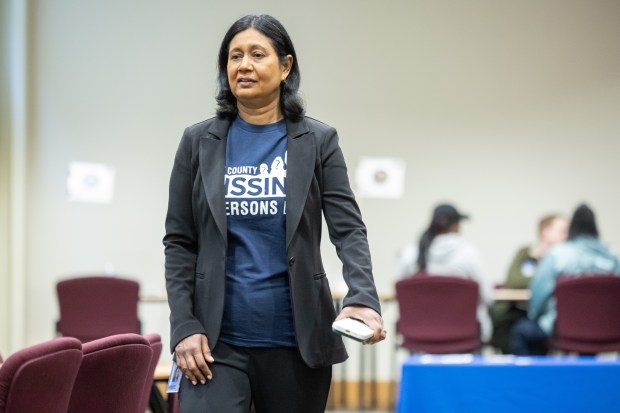
But as Chief Medical Examiner Ponni Arunkumar explained, it can be a great burden for families already going through grief and worry to file police reports and contact agencies on their own. Many don’t know where to start.
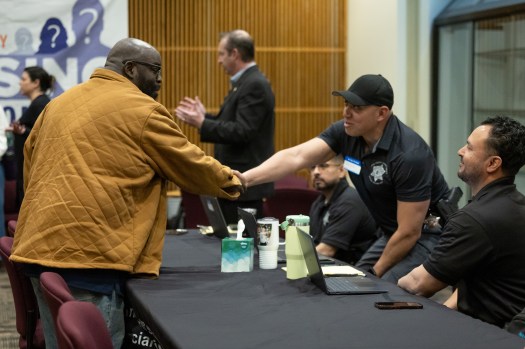
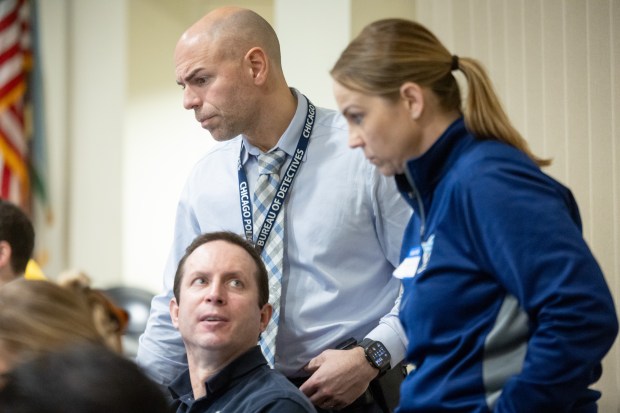
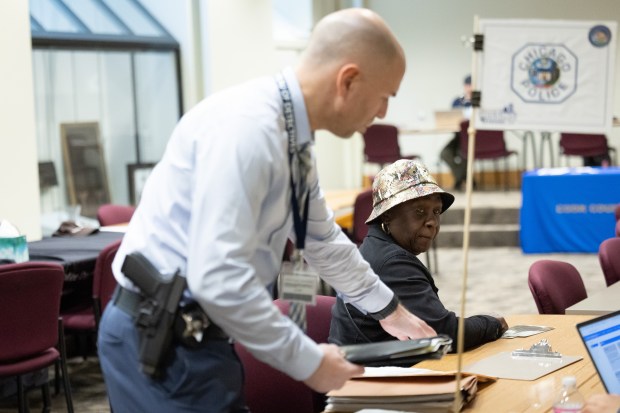
That’s why representatives from the Cook County sheriff’s office, Chicago police, Illinois State Police and the National Center for Missing and Exploited Children were in attendance during Saturday’s event to assist families in their search for answers, Arunkumar said.
Family members could provide DNA samples, file police reports and talk to law enforcement all inside the medical examiner’s office in the Illinois Medical District. Officials from the medical examiner’s office said they were able to give closure to one family at the event.
“All these families have done everything that they can to find their loved one, and that is what the goal of this is,” Arunkumar said.
Sisters Angela Sanders and Carolyn Brown came to the event hoping to find their brother, 49-year-old Anthony Sanders, who has been missing for more than a year. Brown, 56, filed a police report at the time after she and Sanders searched for their brother on their own for weeks.
The two described their brother as a “goofy” man who is always lending a helping hand. He’s close with his nieces and nephews, and Sanders, 44, said he’d come through her back door often with coffee or food to share.
“I had a dream that he was coming up on my back porch,” Sanders said. “And then I wake up and go out there, and there’s no one there.”
Sanders and Brown said detectives have been good about keeping in contact. They said it was difficult to get a DNA swab, though, and added that it would have been an out-of-pocket cost. They hope the one Brown gave today for free will lead to answers.
Unraveling the mystery of missing persons can be a flawed, imperfect process further muddled by complications such as missing identification for the deceased when they are found or misidentification due to bodily decomposition or incomplete reporting at the time of death.
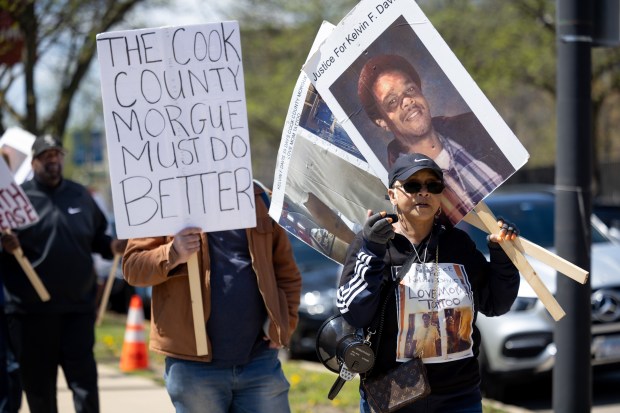
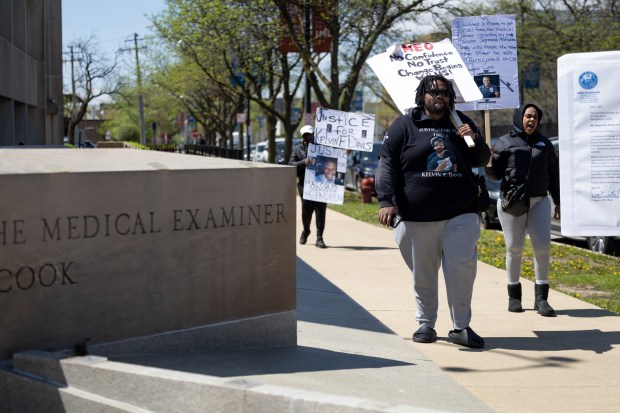
While the event was ongoing, around 20 protestors marched outside the building, also known as the Robert J. Stein Institute of Forensic Sciences, with signs and megaphones, alleging wrongdoing and longtime systemic problems in how police and the medical examiner’s office handled the deaths of their loved ones, whose bodies were at one point sitting unidentified or not properly identified in the morgue. Participants said it’s the seventh protest held on behalf of five families.
Ruthie Mckinnie said she was hurt by the way the Medical Examiner’s Office misidentified her son, Kelvin F. Davis — leading to an extended period of time without knowledge of what happened to him — and treated her during the missing persons investigation process.
“I said, ‘I have to do something,’” Mckinnie said. She’s now working with lawmakers in the Illinois House to pass legislation for reforms and more accountability in the process for identifying bodies.
Mckinnie and her family described their pain after receiving what they felt were unsatisfactory explanations of how her son’s death investigation was conducted, on top of the grief they previously endured while living without answers as to where Davis was.
It’s the latter type of pain that Newell described feeling now for Webster. She said she remained hopeful that Saturday’s event would bring her answers, and it would be a relief for her to get them.
“It will be peace here on earth,” she said.