

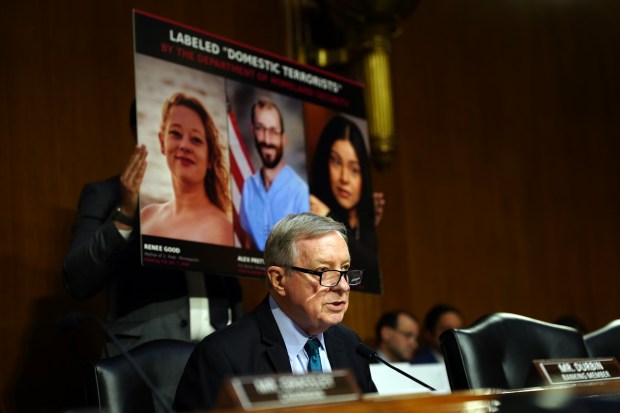





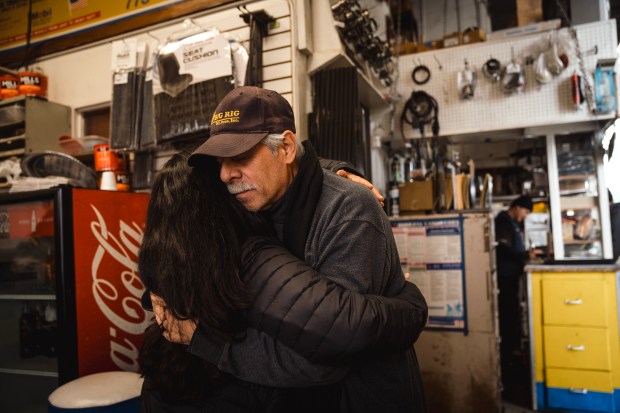
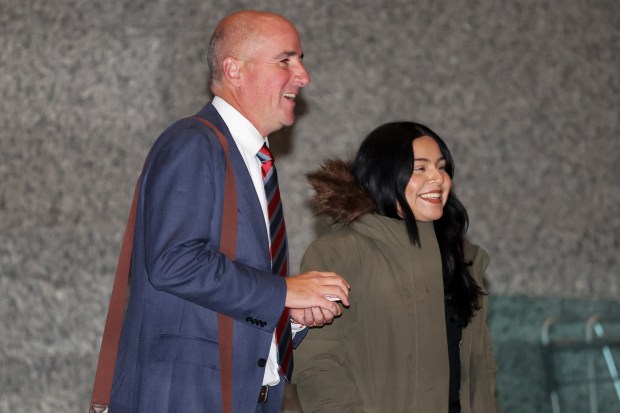

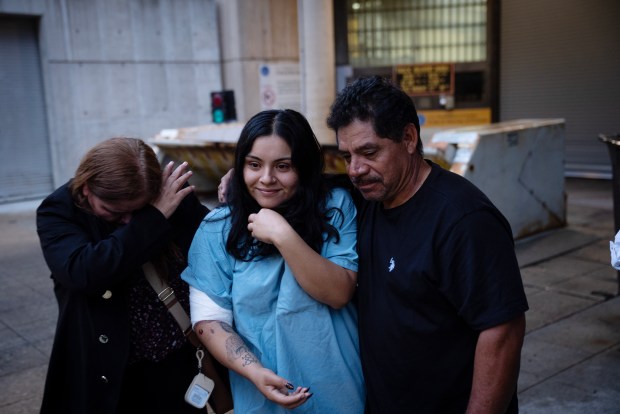


Marimar Martínez stood in front of members of Congress and took off her purple blazer, rolling up her sleeves to point to the spot where a bullet pierced her arm. She then pulled up her pant leg to show the scar left by another gunshot.
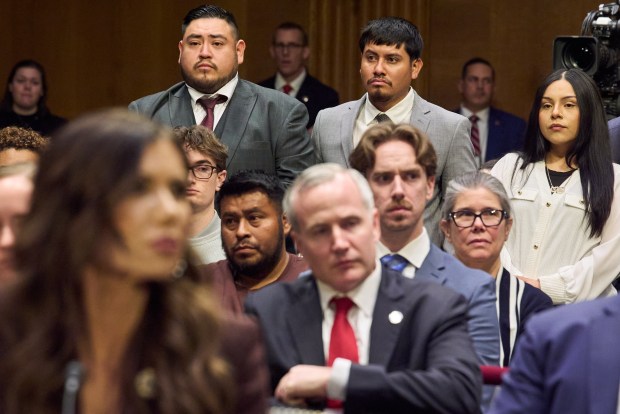
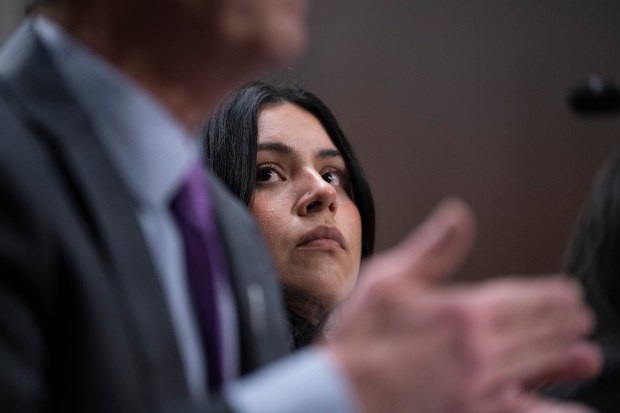
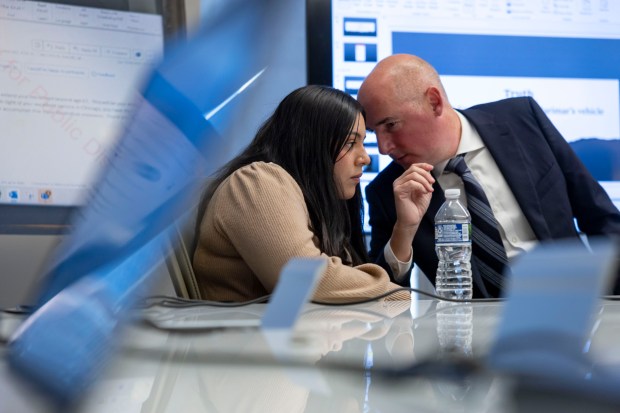
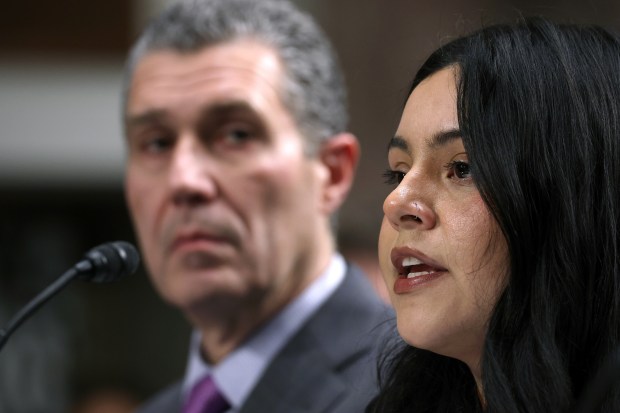
Martínez, who has become a prominent voice against aggressive immigration enforcement since being shot five times by a Border Patrol agent in Chicago in October, testified on Wednesday in Washington, D.C., before the Committee on Homeland Security during a hearing on oversight of the Department of Homeland Security while it remains shuttered amid clashes over funding.
Though Martínez has previously testified in the nation’s capital at a public forum, Wednesday’s appearance was her first in front of an official congressional committee hearing, during which House Democrats called for accountability measures for immigration agents who they said have committed violence against U.S. citizens in Chicago and other cities.
“I am a daughter of immigrants, a first generation Mexican American,” Martínez said. “We build and we dream … we learn to bloom in places that try to bury us.”
The full committee hearing came as Chicago-area residents continue to grapple with the aftermath of Operation Midway Blitz, during which thousands of immigrants were detained and citizens frequently clashed with federal agents on the streets and outside the immigration processing facility in Broadview.
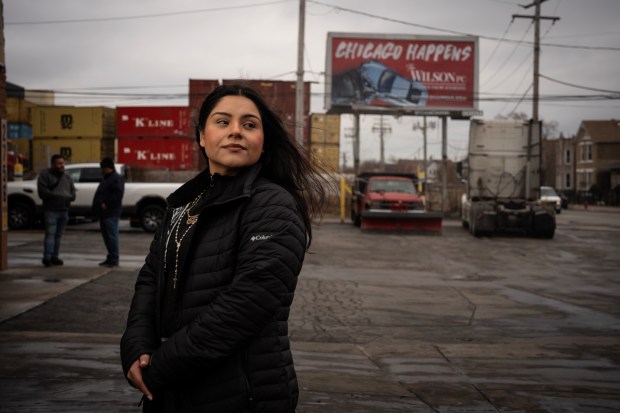
Martínez, a U.S. citizen who is a teaching aide at a Montessori school, was shot by Border Patrol Agent Charles Exum on Oct. 4 after she was involved in a traffic crash on the 3900 block of South Kedzie Avenue in the Brighton Park neighborhood. She was on her way to drop off a bag of clothes and shoes at a nearby church when she saw the vehicle with only an out-of-state plate on the back bumper and began honking and shouting to warn others that immigration agents were nearby.
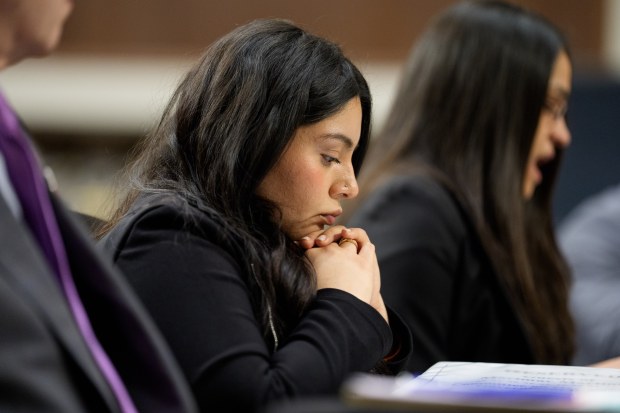
Martínez called for charges against Exum, accountability for the agencies at large and answered questions from lawmakers, occasionally getting teary-eyed. She was joined by a fellow Chicago resident, the Rev. David Black, who testified about being shot in the head with pepper-ball rounds at the immigration processing center in Broadview, along with two other citizens.
In an opening statement, she recounted the day she was shot, describing how the Border Patrol vehicle began to swerve into her lane, then sideswiped her car.
“At that moment, I believed I was in danger,” she said.
She tried to drive around the agents, saw someone pointing a gun and felt “burning sensations” in her arms and legs as she was shot, she said.
During the hearing, Democratic lawmakers lambasted White House border czar Tom Homan and Stephen Miller, deputy chief of staff for policy and Homeland Security adviser, for failing to attend despite invitations to the rare “minority day hearing,” which allowed congressional Democrats to invite witnesses to testify. The committee’s chairman, Rep. Andrew Garbarino, was the lone Republican in attendance.
U.S. Rep. Delia Ramírez, D-Ill., said during the hearing that she was “extremely disappointed” that only one Republican attended to hear from Martínez and the other speakers.
Ramírez asked Martínez: “As someone who has experienced this violence firsthand … what would you say to Tom Homan and Stephen Miller had they had the courage to actually show up today?”
“I would say, when is enough enough?” Martínez answered. “How many more children gotta be traumatized? How many more families gotta be separated? Us Americans, we just want honesty, transparency and accountability. That’s it.”
Martínez was one of two people shot by immigration agents in the fall in Illinois, prompting calls for investigations by local agencies as federal officials dubbed the victims domestic terrorists. Silverio Villegas González was killed in Franklin Park by an Immigration and Customs Enforcement agent during a traffic stop. Scores of other citizens have reported that they were detained without probable cause and sometimes injured by immigration agents.
Federal prosecutors initially filed charges against Martínez, alleging she was part of a convoy of civilians who were following agents when she rammed Exum’s vehicle near 39th Street and Kedzie Avenue, prompting Exum to jump out of his Tahoe and fire five shots, wounding Martínez.
But Martínez’s attorneys argued it was Exum who sideswiped Martínez and that his extreme use of force was unjustified. They also alleged evidence tampering, saying Exum was inexplicably allowed to drive the Tahoe more than 1,000 miles back to his home base in Maine, where a Border Patrol mechanic attempted to “wipe off” some of the scuff marks from the crash.
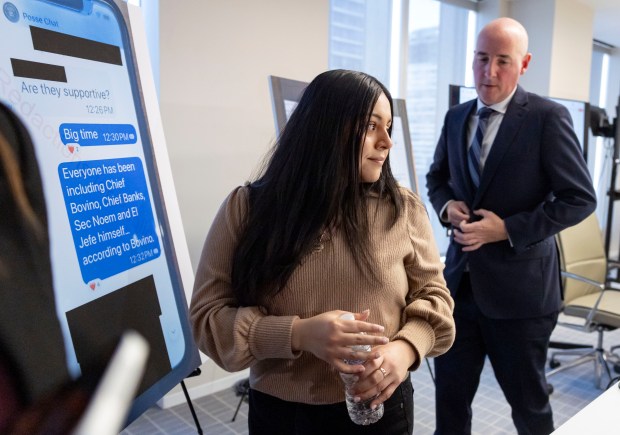
Prosecutors later dropped charges against Martínez, and investigative material later made public revealed that Exum joked and bragged about the shooting in a text chat with colleagues, was called a “legend” by one of his fellow agents and even received praise directly from his boss, Border Patrol Cmdr. Gregory Bovino, as Martínez lay badly wounded in a hospital.
“I want the world to see my pain, my trauma. It’s not something to joke about,” Martínez testified.
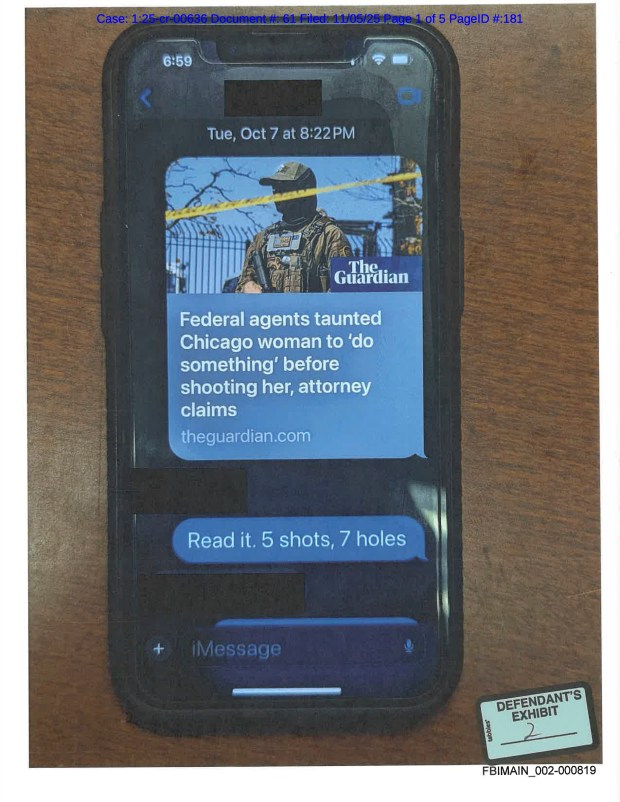
She was asked about a text message sent by Exum that read: “I fired 5 shots and she had 7 holes. Put that in your book boys.”
“No empathy, no nothing,” Martínez, “like I was disposable to him.”
Martínez also detailed being arrested shortly after she was shot, telling members of Congress that she was whisked away from the hospital by federal agents, only to have to be hospitalized again when blood soaked through her bandages.
Later, her charges were dropped, but Martínez told lawmakers that the government has never corrected the record after calling her a terrorist. She said she wants to see Exum investigated and charged.
“On Friday, I was teaching young children at the Montessori school,” she said. “And on Saturday my own government was calling me a domestic terrorist.”


