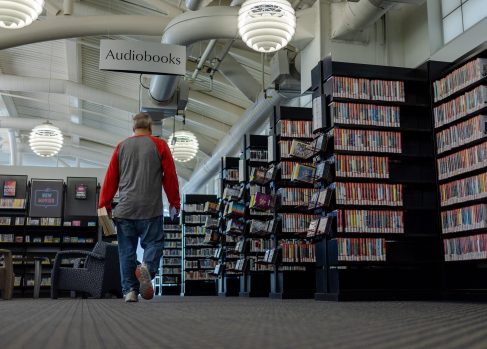

SPRINGFIELD — Public libraries offer readers the chance to enter into worlds of horror through classics such as Mary Shelley’s “Frankenstein” or Bram Stoker’s “Dracula.” But Illinois librarians say a real horror story haunts them: e-book and audiobook licensing.
Libraries in Illinois pay more and receive less, said Monica Harris, executive director of the Reaching Across Illinois Library System. Some are being charged up to seven times more than the general public for identical e-books and audiobooks.
Unlike physical books, e-books and audiobooks are not owned by libraries but instead are temporarily licensed to them. After a set time or number of checkouts, libraries must repurchase the item or lose access to it — a repetitive and costly cycle that eats away at budgets.
“More and more taxpayer-funded library budgets are being eaten up by this licensing at unreasonably high prices,” Harris said. “The hold list gets longer and longer for the constituents who are trying to, you know, use these materials and many libraries are now spending almost 50% of their collection budgets on e-books and audiobooks.”
That growing cost is why librarians are pushing lawmakers to pass legislation that would prohibit publishers from offering electronic licensing agreements that restrict what they call “customary” library functions.
The bill, which passed the Illinois House without opposition last week, would prevent publishers from charging libraries more than the public for the same item or imposing checkout limits on temporary licenses. Publishers would also be prohibited from restricting interlibrary loans or limiting the number of e-book or audiobook licenses a library could purchase.

Author and publisher associations say the bill puts the economic livelihood of the people whose books fill library shelves in jeopardy.
“Digital access thrives nationwide today, and this bill threatens to undermine, not increase, digital access for library patrons. When publishers cannot comply with the bill’s extreme and restrictive mandates, libraries risk losing access to digital books entirely,” Association of American Publishers CEO Maria Pallante and The Authors Guild CEO Mary Rasenberger said in a joint statement. “Authors, independent bookstores, and artists across music, film, and literature all depend on the licensing framework this legislation attempts to dismantle to protect them from piracy and safeguard the modest promise of remuneration for their work.”
Kate Hall, executive director of the Northbrook Public Library, said the current system limits the number of books people can find while forcing libraries to repeatedly repurchase the same titles. With more money to work with, Hall and other librarians said they would look to expand their libraries’ digital book collection. For patrons, Hall said this would mean shorter hold times with libraries able to purchase more copies and more books from mid-level authors.
“The pot of money that we’re using for us would remain the same, but what we’re able to provide for our community will expand exponentially,” Hall said. “Publishers aren’t going to see us spending less money, they’re going to see us buying more.”
Illinois’ effort mirrors legislation passed in Connecticut last year. Virginia, Massachusetts and Hawaii are considering similar measures.
Concern over library licensing practices comes as more people, post-pandemic, are taking an interest in e-books and audiobooks. Nearly 1 in 3 Americans read an e-book in the last year and nearly 1 in 4 listened to an audiobook, according to the Pew Research Center.
To meet the growing demand, public libraries across Illinois have expanded their e-book and audiobook collections since the pandemic.

At the Glen Ellyn Public Library, patrons can borrow digital titles through several apps and platforms, and read or listen to them on their own devices, Director Dawn Bussey said. When the pandemic shut library doors, Bussey said e-books and audiobooks were what kept the local community well-read.
“As you can imagine, usage of those types of items went up, which was a good thing. We’d always been trying to figure out a way to make people aware that we had these,” Bussey said. “And since then, I feel the demand just continues to ramp up.”
While she’s glad to see more public interest in reading, Bussey said the growing demand has coincided with growing frustration over the library not having certain items and long hold list times. Bussey said her library pays three to four times more for e-books and audiobooks than the public and that some publishers outright refuse to sell new popular e-books to them.
At the Normal Public Library, digital content proved indispensable during a 16-month renovation that temporarily closed the building. Checkouts of digital content rose from 10% of total circulation in 2023 to 35% at their peak.
But Tech Services Manager Jennifer Williams said actually obtaining and keeping digital content is a major hurdle. Publishers typically limit her library to 26 checkouts per e-book license while restricting the number of digital copies they can buy. For some e-books, Williams said hold times can stretch to 84 weeks.
Contributing to the high cost of the library’s digital book collection is the lack of alternative ways to buy digital titles, Williams said.
With regular books, she said, “I can check other bookstores” but “with the digital content, they’re all the same. I think it’s the same price on every platform, the publisher sets the price, and then so there’s not an opportunity to shop around or get any discounts.”

While the e-book version of “Theo of Golden” by Allen Levi can be bought for $11.99, Cook Memorial Public Library District Collection Development Manager Cyndi Hamann said they have to buy a $60 version that expires in two years.
Although costly, Hamann said patrons of her library district, which includes two libraries in Libertyville and Vernon Hills, as well as their roaming bookmobile, have a major interest in digital books. In March, they received 17,000 downloadable checkouts for e-books, audiobooks and other digital content.
“Both the e-books and the audio are things that our patrons have been very clear that they want. We see high checkout numbers. We get asked for them all the time. And as a library, our goal is to meet our patrons where they’re at,” Hamann said
For libraries whose budgets are often targets of cost-cutting measures, every dollar counts. Cynthia Robinson, executive director of the Illinois Library Association, said greater resources would bring even more people into reading who otherwise couldn’t afford it.
“Not everybody can afford to go and buy books, right? So you can buy an audiobook from lots of places, but they’re also very expensive,” Robinson said. “Libraries can support everybody. All you need is your library card and that doesn’t cost anything.”