
Northwest Side Ald. Jim Gardiner is suing Chicago’s top ethics watchdogs for defamation, arguing their investigations into his alleged targeting of a political opponent were bad-faith efforts to politically damage him.
Gardiner sued the city, the Board of Ethics, the Office of the Inspector General and former Inspector General Deborah Witzburg in Cook County Circuit Court on Monday. He is seeking $1 million.
He argued in the lawsuit that a series of investigations into allegations that he used city resources to retaliate against a constituent were a malicious ploy “to harass, punish, and drive him out of elected office.”
The Ethics Board fined Gardiner $20,000 in 2023 for his conduct, only to later clear him and drop the case.
Gardiner, 45th, did not immediately respond to a request for comment on the suit. Law Department spokesperson Kristen Cabanban said her department does not comment on pending litigation. Witzburg did not respond to requests for comment, while Ethics Board Executive Director Steve Berlin declined comment and said the board had not been officially notified of the suit.
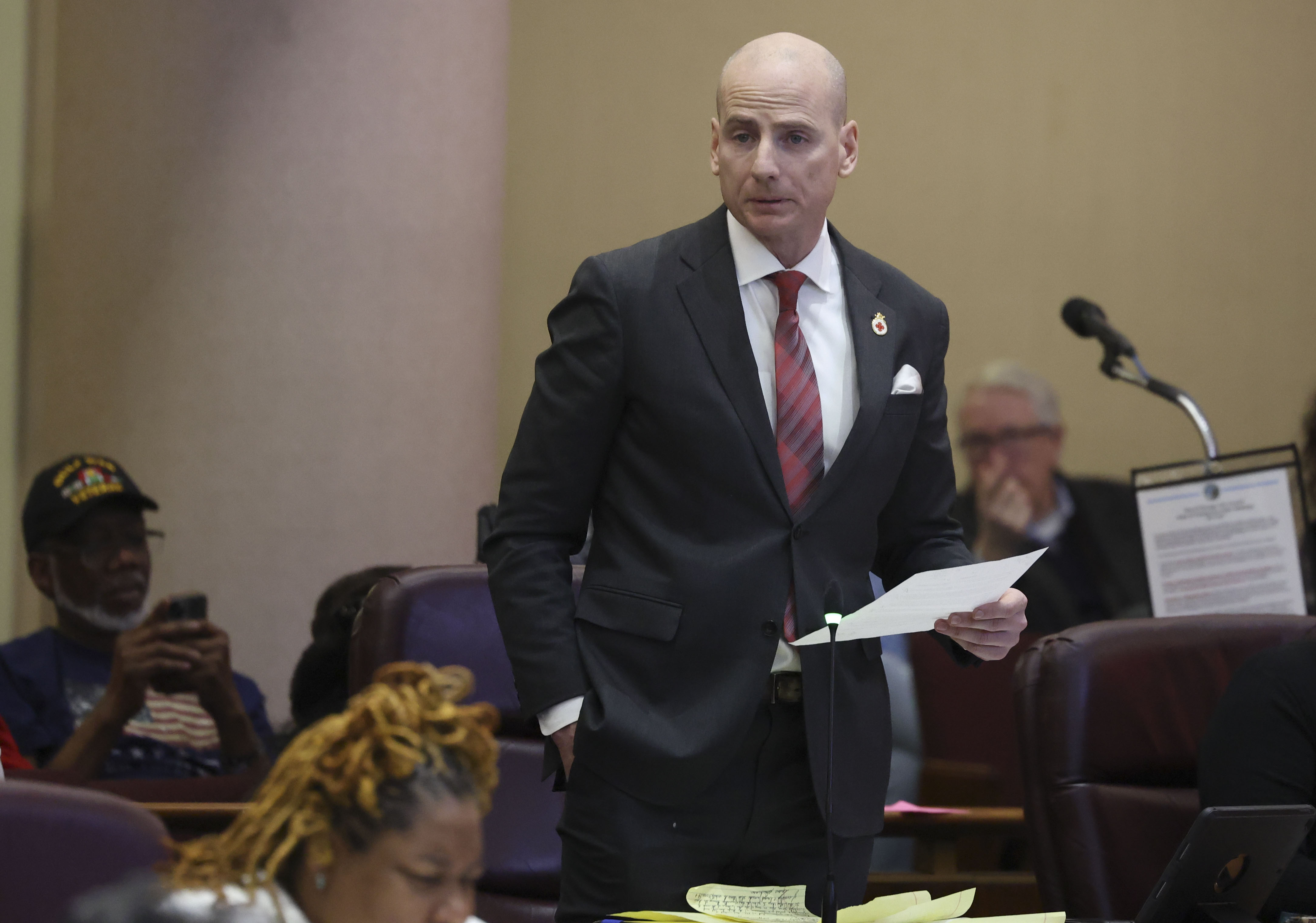
The highly unusual step — a sitting alderman accused of punishing critics with his official powers then filing suit against the city — follows years of Gardiner repeatedly focusing on the situation in the City Council chambers.
In numerous lengthy floor speeches, the alderman has carefully directed conversation to the allegations he faced, lambasting Witzburg and city attorneys.
Witzburg’s office concluded in 2023 that Gardiner violated the city’s ethics code, alleging he conspired with ward staffers who later worked at the Department of Streets and Sanitation to write bogus citations against Pete Czosnyka — a vocal online critic of the alderman’s — for overgrown weeds and rodents at his home.
Months later, the Board of Ethics fined Gardiner $20,000, a decision Witzburg noted marked the first time a Chicago inspector general’s investigation resulted in punishment for a sitting elected official.
“That’s a big deal,” she said at the time. “I have made a commitment that we will more rigorously investigate violations of the ethics ordinance. … This is us making good on that.”
But the fine didn’t stick. After four years of investigations, the Board of Ethics cleared Gardiner last June.
The about-face came after a discovery issue led an administrative judge to find the city “failed to establish by a preponderance of the evidence” that Gardiner was liable for any of the alleged violations.
Gardiner told the Tribune he was “really happy to see the truth come to light,” shortly after the board’s decision. He has since repeatedly touted the decision while speaking on the council floor, describing it as proof that he is innocent.
The alderman argued in his lawsuit that Witzburg’s case was “fabricated” and that exculpatory evidence was withheld, including data and deleted messages showing a witness lied.
Gardiner’s attorney, Craig D. Tobin, said in a statement Thursday that Gardiner is the one who actually faced political retaliation. The defendants “acted with profound malice, fabricating a case, suppressing evidence, and intentionally using false testimony in a concerted effort to destroy Alderman Gardiner’s career,” Tobin said.
“This lawsuit is about holding those in power accountable for weaponizing city agencies and violating due process to attack a political critic.”
It’s an aggressive move by the alderman, who has faced a string of controversies in recent years.
In late 2024, he agreed to pay more than $157,000 to settle a federal lawsuit filed by six Northwest Side residents, including Czosnyka, who accused him of violating their First Amendment rights when he blocked them and deleted their comments on his official government social media account.
Gardiner previously said he had been advised by Berlin to block the followers due to the “harassing comments.”
He also publicly apologized for what he described as “offensive” texts using derogatory language against City Council colleagues and women.