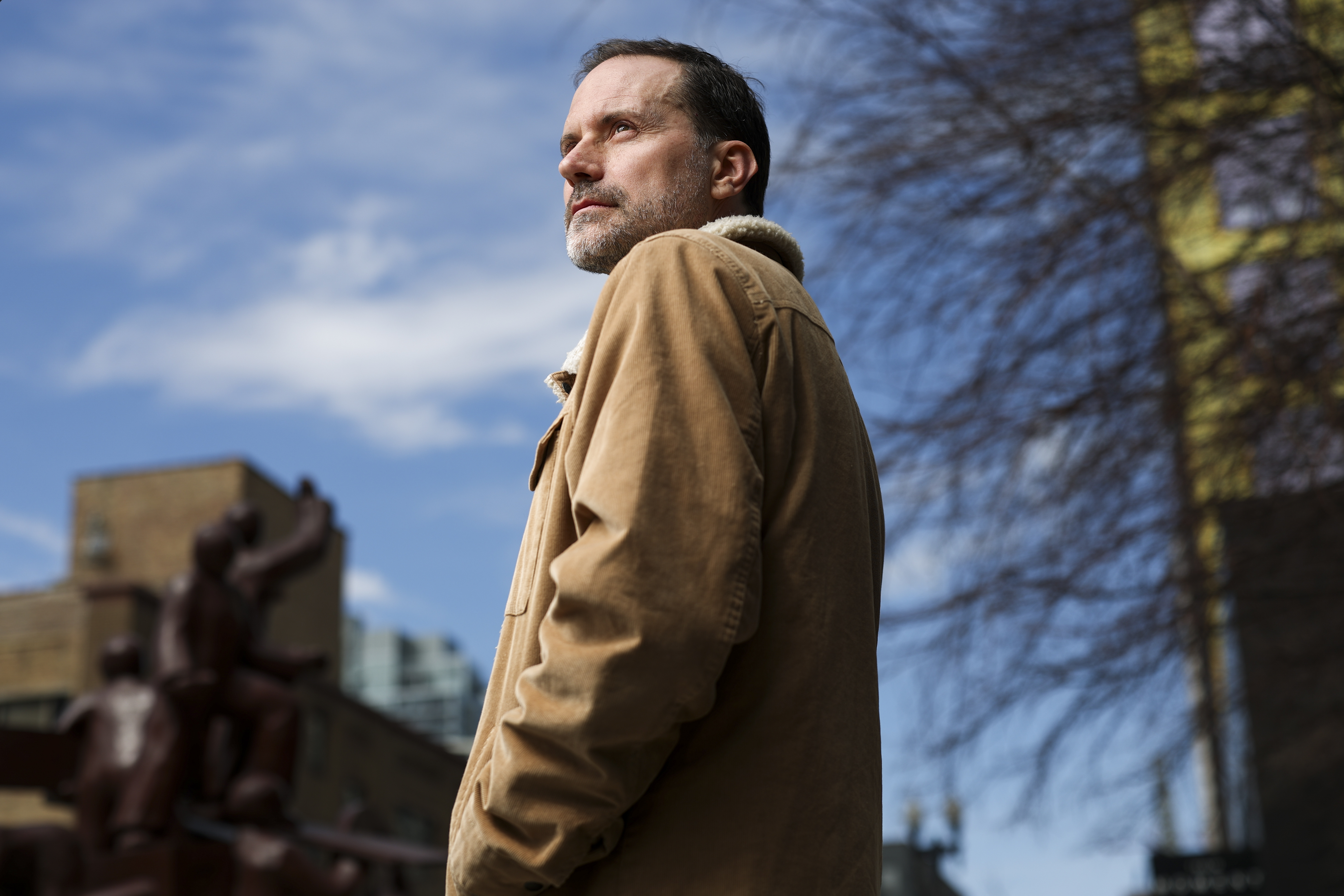
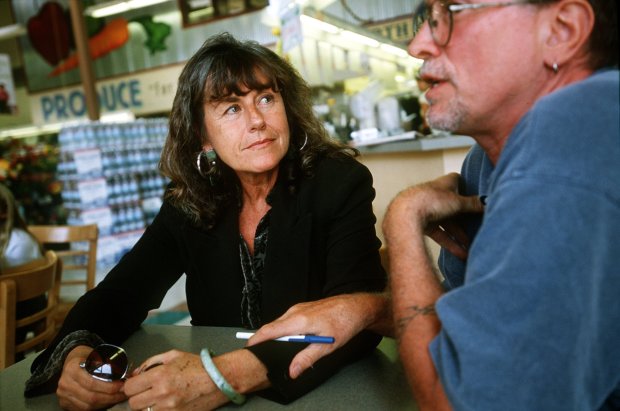
Zayd Ayers Dohrn picked up my phone and read the email. He removed his sunglasses and leaned into the screen. I had a bunch more just like it, I told him, the general message all the same, that Zayd Ayers Dohrn is the son of domestic terrorists from Chicago, and why write a story about someone from a family like that? The emails came last fall, just after I wrote about Tom Morello of Rage Against the Machine and “Revolution(s),” the musical that he and Dohrn premiered at the Goodman Theatre. The focus of that story was Morello, but almost none of the emails mentioned Morello at all. They zeroed in on Dohrn and the history of his notorious family.
“Yeah,” Dohrn said, “it’s always been like …”
His voice trailed off, reading on.
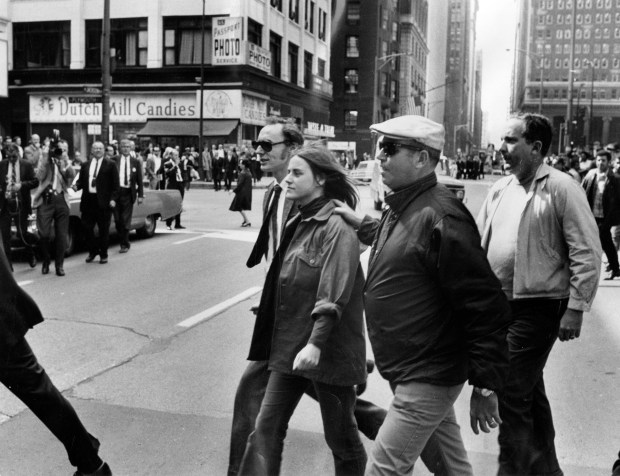
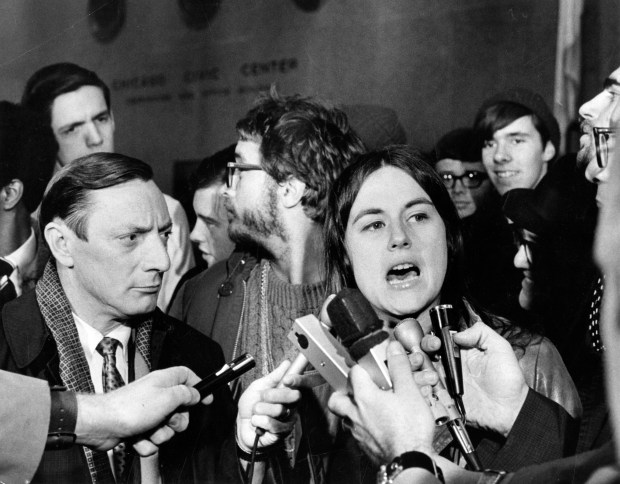
Specifically, reading a reminder of the time in 1969 when his mother, Bernardine Dohrn, leader of the militant Weather Underground, made a speech in Flint, Michigan. She was angry about the police killing of Black Panther Fred Hampton in Chicago, angry her group didn’t burn down Chicago in retaliation, angry no one tore apart the court as the Chicago 8 stood trial. Then her speech took a turn, to the Manson killings that August: “Dig it. First, they killed those pigs, then they ate dinner in the same room with them, then they even shoved a fork into a victim’s stomach? Wild!”
Dohrn handed my phone back.
“It’s typical,” he said. “People always go to the Manson thing. As if somehow, because I’m part of that bloodline, I should forever have to answer for everything my mom ever said. Every play I write, the theater hears: ‘Why are you supporting a child of terrorists?’ Fox News did a piece on me during the (pro-Palestinian) encampment at Northwestern and the only connection was that I work at Northwestern University (as director of the MFA program for stage and screen writing). I always find it sort of weird. I didn’t make my parents’ decisions. That speech was a low point for my mother. And I am not justifying it. She’s taken a lot of (expletive) for it — and deservedly so.”
She said it.
“She did,” he replied, “but one speech doesn’t define her life.”
We stood in front of the Haymarket Memorial in the West Loop.
“Actually, my parents blew this up — twice,” Dohrn said, meaning, rather, the police memorial that once stood here. In 1969, then one year later, the Weathermen, protesting war in Vietnam and police violence against Black Chicagoans, blew up a statue of a policeman that marked the spot where, in 1886, seven policemen and four onlookers were killed by a bomb during a labor protest; that bomber was never found, but police rounded up local anarchists, seven of whom were hung. The first time Weathermen blew up the statue, the legs sailed across the Kennedy Expressway. It was a symbolic gesture. They took their slogan seriously: “Bring the War Home.”
A Chicago police sergeant obliged, telling reporters: “We now feel that it is kill or be killed.”
J. Edgar Hoover declared Bernardine Dohrn was “the most dangerous woman in America.” Over the next five years, the Weather Underground led the “Days of Rage” riots throughout Chicago, then bombed the United States Capitol in 1971, then the Pentagon in 1972, then the State Department in 1975. No one was killed (the explosions were timed for off-work hours), but three Weathermen died in a New York townhouse in 1970 while constructing more bombs. For a decade, Bernardine Dohrn and then-partner Bill Ayers — she didn’t marry Zayd’s father until 1982 — were on the run, the leaders of what the FBI categorized as a domestic terrorist organization.
They emerged in the early 1980s.
Five years ago, Zayd Ayers Dohrn, born in 1977, now an established screenwriter and playwright in his 40s, decided to wade into the topic he long avoided: his parents’ activism and notoriety and life underground. First, he made “Mother Country Radicals,” a 10-part podcast, a history of the Weather Underground. That led to more once-radical activists and their children stepping forward. Which led to the FBI releasing more than 7,000 pages of wiretap transcripts and interviews about their long, failed manhunt for Bernardine Dohrn. Which led to a lot of uncomfortable conversations with his parents. All of which bristle through “Dangerous, Dirty, Violent & Young: A Fugitive Family in the Revolutionary Underground,” Zayd’s remarkable new history and memoir, arriving May 19, as an unsettling portrait of the idealism of one Chicago family.
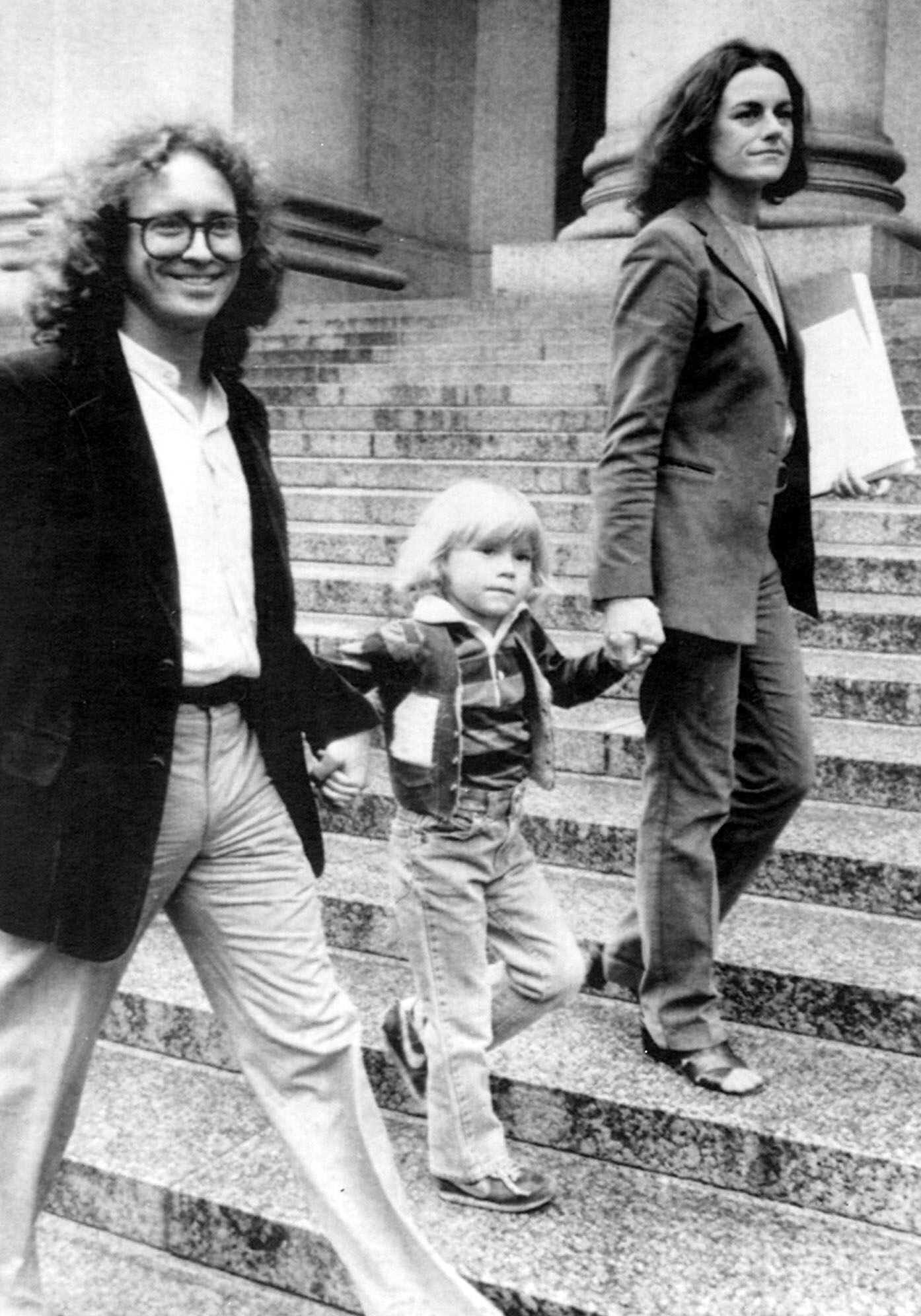
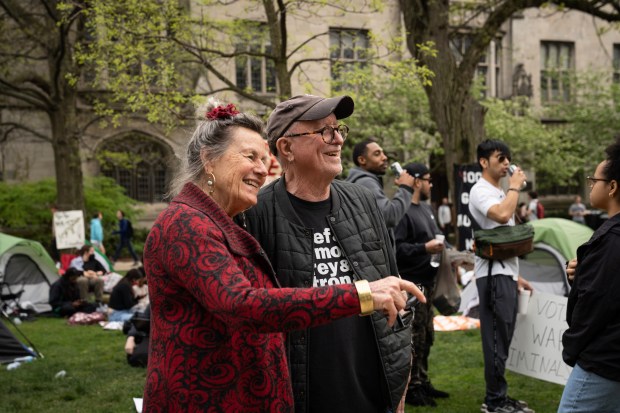
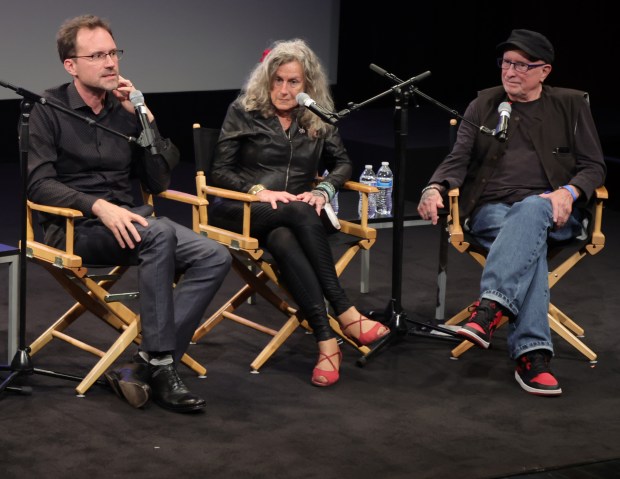
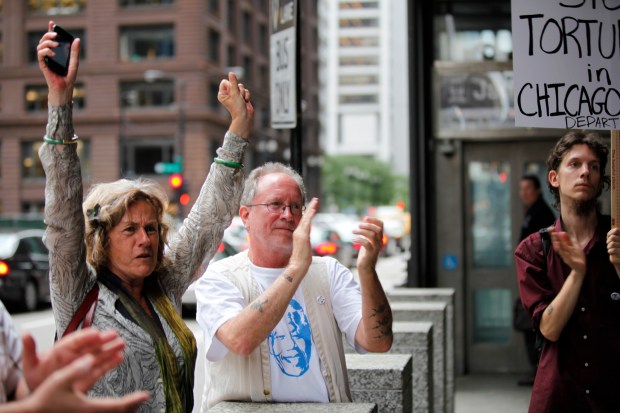
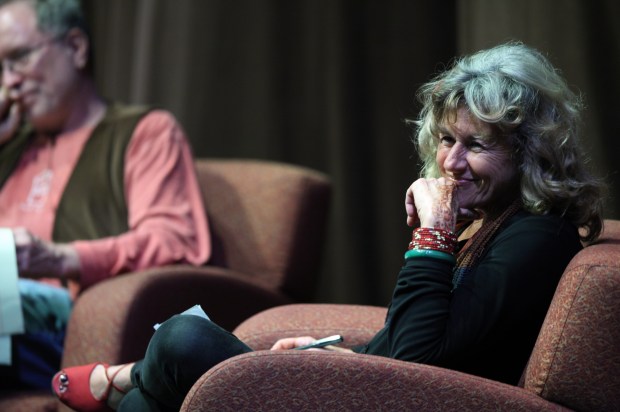
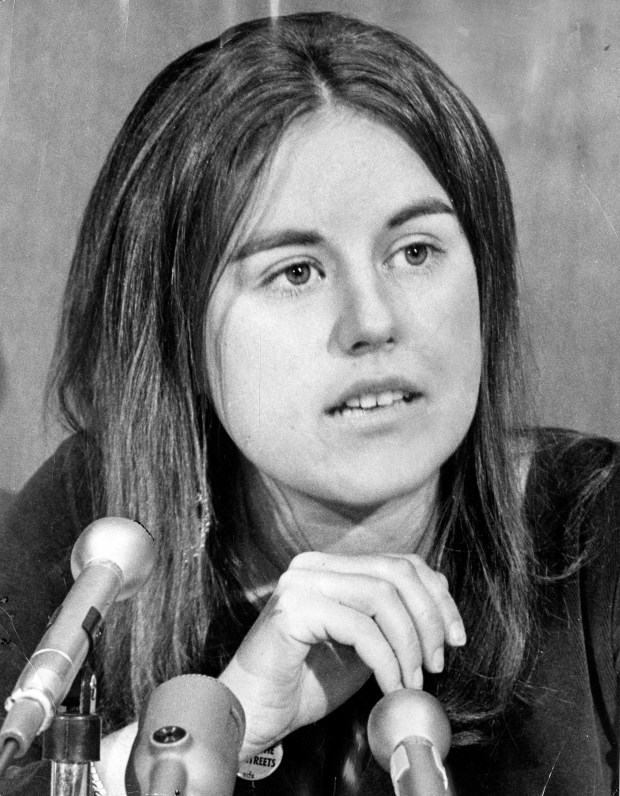
What it’s not is the history you might expect from the son of radical activists, both of whom went on to academic careers and are now retired in Hyde Park. “Dangerous, Dirty, Violent & Young” presses Bernardine Dohrn and Bill Ayers on morality and violence; it’s never shy about questioning their means (including that speech in Flint). It’s no lionizing of revolutionaries. Or a refutation of activism — Zayd admires his parents’ commitment. But their sacrifices never rested easy. It’s the work of an adult with children himself, now wondering: Knowing the peril, why did my parents have kids? How much can you risk to change the world?
He writes, “The origin story in our family — like all families we had our own founding myths — was that my birth changed everything. … But like all origin stories, this one was largely a myth.”
He told me, “I grew up knowing my parents were activists, and I was born underground, that they bombed buildings and fought police. I knew my mom was on the FBI’s most wanted list. But I was always taught that once my parents had kids, they were parents first, that they wouldn’t risk their lives in the struggle anymore. What I learned writing this book shook that understanding.”
At the Haymarket Memorial, Zayd nodded at the street corner, Desplaines and Randolph.
Even while the family was in hiding, during one of many cross-country trips, whenever they passed through Chicago to visit friends and family, they swung by this spot to pay homage.
“The funny thing is, by the time I was born, my parents looked different. My dad had a beard and long hair, my mom had short dyed hair. We were a family with a kid. You didn’t think much of us. We were living in the open. I went to preschool. My parents had jobs. We went on picnics. We lived this very normal, mundane existence — punctuated by moments of unbelievable fear.”

“Dangerous, Dirty, Violent & Young” is far from the only narrative that gathers an unsettling accounting of the personal price of radical activism. You could even argue it’s becoming its own genre, the Post-Revolution Reckoning. Some of these stories, such as Paul Thomas Anderson’s “One Battle After Another,” which won the Oscar for best picture in March, are ultimately optimistic about the future of radical activism, suggesting decades after a revolutionary network splinters, your convictions and idealism don’t always have to dry up. The movie is a loose adaptation of “Vineland,” the 1990 Thomas Pynchon novel. A couple of years earlier, Sidney Lumet’s “Running on Empty” took much of its inspiration from the story of Dohrn and Ayers.
Ambivalence is the engine in most of these stories.
Bsrat Mezghebe’s recent novel, “I Hope You Find What You’re Looking For,” deals painfully with the guilt and legacy of a soldier in the Eritrean People’s Liberation Front, who flees Ethiopia with her daughter, knowing that the comrades left behind will never leave “unless their mission was achieved or they died trying.” Juan Gabriel Vásquez’s “Retrospective” (2023) tells the harrowing biographical story of a Colombian man remembering his wealthy, disillusioned parents who pick up the family and join Mao’s Cultural Revolution and Red Guard. “Say Nothing,” Patrick Radden Keefe’s acclaimed portrait of Irish Republican Army members across decades (later adapted into a Hulu series), is partly about the ways that idealism can curdle.
But what these stories often share is a focus on the children of revolutionaries, who are usually portrayed as a kind of collateral damage, both haunted and haunting figures, unwitting benchmarks for whether or not their parents were truly ready to give everything to the cause.
Fictional and not, there are echoes.
In “The Hill,” a wrenching upcoming novel (May 5) by author Harriet Clark — whose actual mother spent 37 years in jail for driving the getaway car during a deadly robbery — we learn a mother once took her daughter on a trip during which she planned a robbery. Dohrn tells an eerily similar real-life version in “Dangerous, Dirty, Violent & Young.” He discovers that one of his favorite camping vacations had actually doubled as a scouting mission for his parents, who were planning to help break a member of the Black Liberation Army out of prison.
He’s floored, disturbed.
He asks his mother whether her loyalty to her children ever outweighed her loyalty to her friends. He asks his father if he had ever considered how catastrophic it could have been to their family to bring a toddler on a reconnaissance trip. He never does get simple answers from them.
Ayers told me, “It was a fun camping trip! So to tell you that it was only one thing would be nonsense. When you’re a child, you look at your parents one way, then realize later they have this whole life. And it can be shocking. In that sense, there’s no denying many things were happening in this family on many levels, all at once.” Ayers also told me he loved the book: “Anyone can check things in terms of facts, but there’s an emotional truth and it’s Zayd’s and it certainly rings honest.”

Indeed, the Weather Underground story became a prototype for these kinds of narratives. Bernardine Dohrn studied law at the University of Chicago; Bill Ayers studied education at the University of Michigan. They met at a conference in Michigan for SDS, Students for a Democratic Society.
“But by the time the Weathermen began, they’d been protesting a decade,” Zayd said.
They’d grown frustrated by the lack of social change. At a gathering of activists at the Chicago Coliseum in 1969, Dohrn led a march out of the stadium, a splinter group that felt the time was right for militant action against the government. The Weathermen were created, and promptly went on the run, living and plotting actions from safe houses around the country. They found they could forge new identities by finding gravestones of dead children whose dates roughly corresponded to their own and just asking for replacement driver’s licenses. Dohrn herself became something of a countercultural sex symbol. As the New Yorker put it: “It was sex and violence and, more specifically, the sexiness of violence that the group contributed to the revolutionary cause.”
The Nixon Administration was unnerved.
Zayd interviewed several retired FBI agents who had been charged with finding the family. “The FBI and the Weathermen developed a mutually reinforcing relationship,” he said. “The FBI needed a symbol of the dangers of generational rebellion. My mom, in particular, became the ‘pretty white girl gone wrong,’ raised Republican, Milwaukee suburbs, all-American — ‘How did we go wrong?’ I spoke a lot with Bill Dyson, the agent in charge of wiretaps in Chicago, and he was almost rueful, like ‘We all sort of went over the edge then.’ Understand, a lot of people in the FBI thought (the Weathermen) might have the capability and desire to assassinate the president or blow up Congress. So you end up with a lot of people saying, ‘We need to protect our country. We need to do SOMETHING.’ Which is exactly what the Weathermen were saying.”
We drove to the home of Fred Hampton on the West Side.
A couple of blocks away stood a large mural of the Black Panther leader. But here, at the actual home, only a small picture of Hampton was taped in a window. Zayd studied the facade, the tall, slender brownstone behind an iron fence and nest of tall grass. “You know, for a long time there wasn’t even that, Fred didn’t have the popular legacy back then,” Dohrn said.
As a kid, his parents would drive him and Malik, his younger brother, here and explain that Chicago police shot their friend in bed, up there. Family vacations were like that. Some go to Wisconsin Dells. They wore disguises, avoided the FBI and visited “sites of resistance and rebellion.” John Brown’s cabin in Harpers Ferry, West Virginia. The site of Nat Turner’s slave rebellion in Courtland, Virginia.
Radical movements tend to discourage families — the movement will be your family now, et al. But children are also an unescapable reality, and so Zayd was a Weather Kid, whose friends were mainly Weather Kids and Panther Cubs, the name given to the children of the Black Panthers.
As a child, he knew how to ditch someone tailing him. He knew how to identify an undercover cop. He knew everything should be paid for in cash, and why they didn’t have family photo albums. He knew he could be woken up in the middle of the night without notice, and so he always kept a backpack stocked with “Star Wars” action figures, comic books and crayons. He knew, as his parents explained, they were a kind of rebel alliance, pushing back an empire.
After the family settled in Hyde Park years later, Zayd didn’t become an activist or feel an intense commitment to radical action. He became a writer. When the Writers Guild of America went on strike in 2023, he was the Chicago strike leader. His theater and screen work — he’s writing new series now for Peacock and Netflix — often deal with social justice, but he admits he’s not nearly as likely to march in a protest today as his parents are, who are both in their 80s. He spent years attempting to carve out his own identity.
But then the FBI had 280 boxes of Bernardine Dohrn files, a story largely untold.
“My parents were surprised I wanted to interview them,” Zayd said. “My dad was immediately ‘Sounds great,’ and my mom was ‘I don’t want to do it, I don’t want to do this, no — no, I am not participating.’ Once I made clear I wanted to tell my story, she came on board. My father has written two memoirs, but my mother had never really talked about her private life.
“I said I need to be able to ask anything and I would be as honest as I could about what I found. While we talked, my mom would be intense and my dad kind of jokey. She is single-minded, stubborn and gets intensely ideological — being her son could be hard for that reason. My dad is transparent to a fault and can get glib. But they never set guidelines on this, or asked for any changes (to the book). They had basically decided, in the end, this was really my story to tell.”
The Weather Underground crumbled by the late 1970s, in ways that evoke the purity tests of today’s activism. In 1976, Bernardine Dohrn was brought before a splinter faction of young, new Weathermen and told to renounce her latent white supremacy and male chauvinism; she was told that the group’s old guard — just slightly older — were homophobic, racist and against feminism. Essentially, even as she is hiding from the FBI, she is accused, Zayd writes, of thought crimes.
He remembers: “When I brought it up, my mother said, ‘Do we have to?’ Her group had imploded, her friends betrayed her, now she was home alone with my dad and didn’t know who she was anymore. I remember from my childhood, distinctly, my mother being really sad a lot.”
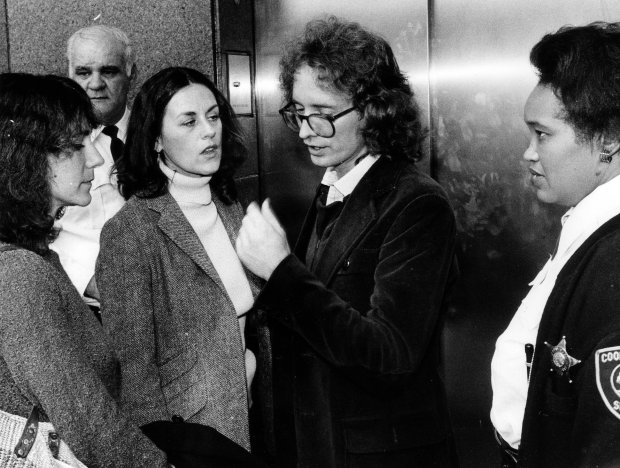
By the end of the 1970s, Dohrn and Ayers had two boys and were looking for an out. In 1980, they surrendered themselves to Chicago police. By then, federal charges had already been dropped because of government misconduct, illegal wiretaps and illegal home searches. Dohrn faced only the local charges stemming from the original “Days of Rage” riots in 1969. She received three years’ probation and a $1,500 fine; Ayers wasn’t charged at all.
But a year later, former Weathermen, Black Liberation Army members and white militants robbed an armored bank car in New York, and two police officers were killed. Dohrn refused to testify against her comrades and she was jailed for seven months. When two of the Weathermen, a married couple, Kathy Boudin and David Gilbert, got 75-year sentences, Dohrn and Ayers adopted their infant son, Chesa Boudin. Chesa told me that he shared a lot of his brother’s hard questions — compounded with difficult questions for his biological parents. “From an early age, I was painfully aware that Bill and Bernardine could have easily been Kathy and David — was it luck, judgment?”
Chesa Boudin, the former district attorney for San Francisco, and now executive director of the Criminal Law and Justice Center at the University of California at Berkeley, said he often asked his parents why they both had to drive the getaway car. “I think I asked them that every year, my entire childhood.”
The rest of this story is relatively ordinary, if full of irony.
Dohrn and Ayers went on to work with children.
Ayers taught education at the University of Illinois at Chicago. Dohrn founded the Children and Family Justice Center at Northwestern. Their lives grew quiet. Unless you count that time in 2008 when Ayers became part of the presidential election news cycle after he and Barack Obama were linked through mutual Hyde Park social circles. (Ayers was the terrorist that Sarah Palin said Obama was “palling around with.”) They are both retired now in Hyde Park. Zayd writes that one of the reasons he decided to tell their story was because his mother has dementia.
He said his mother does have regrets — “the unhinged rhetoric, the self-righteousness” — but his parents still believe, tactics and posture and tone aside, they were on the right side of history.
“And they were,” he said.
He has some of the swagger of his parents back in the day, the easy confidence.
Just none of the certainty.
“There is a contradiction fundamental in my family, and it’s fundamental in mass movements,” he said. “To start a revolution, to launch a movement, you subordinate yourself to the group. That’s necessary to build a like-minded organization. But I like being alone. And I like having my own thoughts. And I like not agreeing with a group of people. And I never could reconcile those two sides. Which I suppose means why, at the end of the day, categorically, I became a writer.”
cborrelli@chicagotribune.com