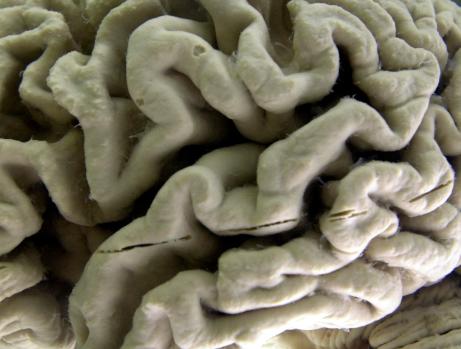

An estimated 7 million Americans are living with Alzheimer’s disease or a similar form of dementia, but there is no cure or treatment that can stop or reverse the disease and the memory loss that comes with it.
However, researchers at UC San Diego in La Jolla say they recently uncovered new insights into a protein that has emerged as a potential molecular “switch” that may determine whether Alzheimer’s-like brain changes lead to memory loss. Decoding this natural resilience could pave the way for earlier detection and new strategies to prevent memory loss before symptoms begin, according to UCSD.
“This is a huge finding; we are very excited,” said the study’s co-senior author, Sushil Mahata, a professor of medicine at the university.
Mahata has been studying the protein Chromogranin A, or CgA, for more than three decades and seen how studies of it have had implications for everything from hypertension (high blood pressure) to longevity.
In 2005, he was in the midst of a study of how the protein affects hypertension and how, and for how long, mice survived with hypertension depending on their levels of the protein. Exploring further, Mahata started looking at whether CgA levels have an effect on the brain, especially memory and memory-related disorders.
He recently found in mouse studies that removal of CgA protected against Alzheimer’s-related damage, he said. The protective effect was even stronger in females.
“We found out that when the protein [was removed from] the mice, there was no dementia or memory loss,” Mahata said. “The mice’s memory was perfectly fine.”
However, confirming that in humans is more challenging, given that human brain cells that can be manipulated to test the findings are of the deceased.
Using an advanced artificial intelligence-based framework developed by co-senior author Debashis Sahoo, an associate professor of pediatrics and computer science at UCSD, the team identified consistent molecular patterns linked to disease progression — and protection — across multiple independent datasets.
The findings led to the discovery of peptides that work with CgA to affect memory. One peptide can “overexpress” cognitive decline and another can reduce the expression of memory loss as a way to “find clues as to what defines Alzheimer’s disease,” Mahata said.
“There is no dementia when we treat [mice] with this ‘good’ peptide,” he said. “If you give this peptide [therapy], the disease never develops.”
“With these findings, we can identify those that are susceptible to Alzheimer’s disease and give them this peptide and they would not develop it,” Mahata added.
“We are not treating Alzheimer’s with our model; we are looking at ways to prevent it. This changes the whole trajectory as to how to handle Alzheimer’s disease.”
The treatment is “very safe,” based on mouse studies, Mahata said, pointing out that he tested it at very high dosage levels and none of the mice died.
“We are still trying to see how this will [express] in humans,” he said. “There is no way to manipulate the human brain, so we are manipulating mouse models with different peptides.”
Though Mahata said further studies and funding are needed to advance the work, the study introduces a powerful computational and experimental framework to accelerate the discovery of other preventive therapies for Alzheimer’s disease.