
Bettye Odom enjoyed successful careers as a nurse, model, actress and local talk-show host before embarking on a new journey as a longtime Hyde Park spa owner and evangelist for Black skin care.
Odom spent 48 years running her spa, building a reputation as an expert on skin care for African Americans and developing products through her own product line, Skins of Colour, after she was dissatisfied with other products available.
“I remember Bettye Odom as one of the smartest, most enlightened and brilliant women that I have ever met,” said Jacqueline Jackson, a longtime friend and the widow of the Rev. Jesse Jackson. “She was an outstanding human being.”
Odom, 90, died of natural causes on March 25 at her home in Chicago, said her daughter, actress Lorrie Odom. Odom had been a longtime resident of the South Shore neighborhood.
Born Betty Banks in Vicksburg, Mississippi, in 1935, Odom added the “e” to the end of her first name for her acting career. She later took the surname Mason after her stepfather.
During her early childhood, Odom lived in New Rochelle, New York, a New York City suburb, before returning to Mississippi, where her grandmother, Susie Bush, raised her. After graduating from Bowman High School in Vicksburg in 1954, Odom earned a bachelor’s degree in theater from Fisk University in just two years. She then earned a bachelor’s degree in nursing from Meharry Medical College in Nashville in 1959.

While in nursing school, Odom served in the U.S. Army Nurse Corps as a first lieutenant, where she was both a psychiatric nurse and an operating room nurse. After her military service ended in 1962, Odom moved to New York. That same year, she married, and the couple soon moved to Chicago, settling in South Shore’s Jackson Park Highlands area.
With a theater degree and having taken classes at the American Academy of Dramatic Arts in New York, Odom pursued work in the acting and modeling fields. She had an uncredited role in “Mickey One,” a 1965 film shot in Chicago and starring Warren Beatty. She also acted in “Nightwatch,” a 1965 pilot TV episode for a series shot in Chicago that CBS never picked up, that starred Carroll O’Connor and Michael Murphy and was directed by Robert Altman. “Nightwatch” finally aired in 1968, when the network broadcasted the pilot episode under the name “Walk in the Sky” as part of its “Premiere” anthology of failed pilots.
For a time, Odom hosted a one-hour luncheon radio show on WBEE-AM from the Lake Meadows restaurant in the South Side Douglas neighborhood.
Perhaps Odom’s highest-profile entertainment role was co-hosting “Sunday in Chicago,” a weekly 90-minute public affairs and talk show on WMAQ-Channel 5, a role she held from 1969 until 1974. Odom co-hosted the show with Bob Hale, and it featured a variety of segments, including showcasing children in need of adoptive parents. Hale and Odom also interviewed in-studio guests like local politicians, made visits to local hospitals and explored a host of other topics like parapsychology, ecologically oriented homes, cystic fibrosis and Parents Without Partners.
Upon “Sunday in Chicago’s” cancellation in 1974, the Tribune’s Tower Ticker columnist Aaron Gold wrote that Odom “is so good that she should be signed by another station immediately.”
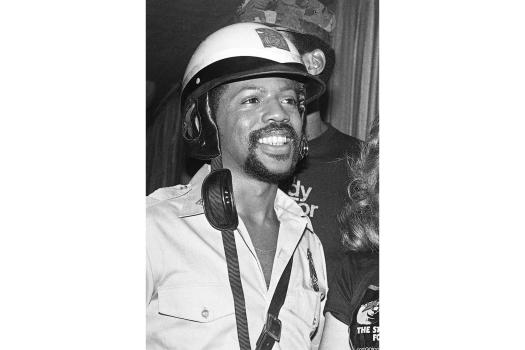
Odom’s modeling work included appearing in magazines and working at major auto shows in Chicago and Detroit. She was one of the first Black models to work the Chicago Auto Show, her family said.
In the mid-1970s, a friend and fellow model, Irma Denson, moved to New York. The friends stayed in touch, and Denson, who had modeled for Ebony magazine, began working in skin care and offering spa treatments, including facials. Denson encouraged Odom to consider the same kind of work, noting that Odom’s training as a registered nurse would be helpful.
With that, Odom moved briefly in 1977 to Paris, France, where she took skin care classes. She returned to Chicago and in 1978 opened Le Beau Visage, a salon in rented space in a wig salon on 75th Street on the South Side.
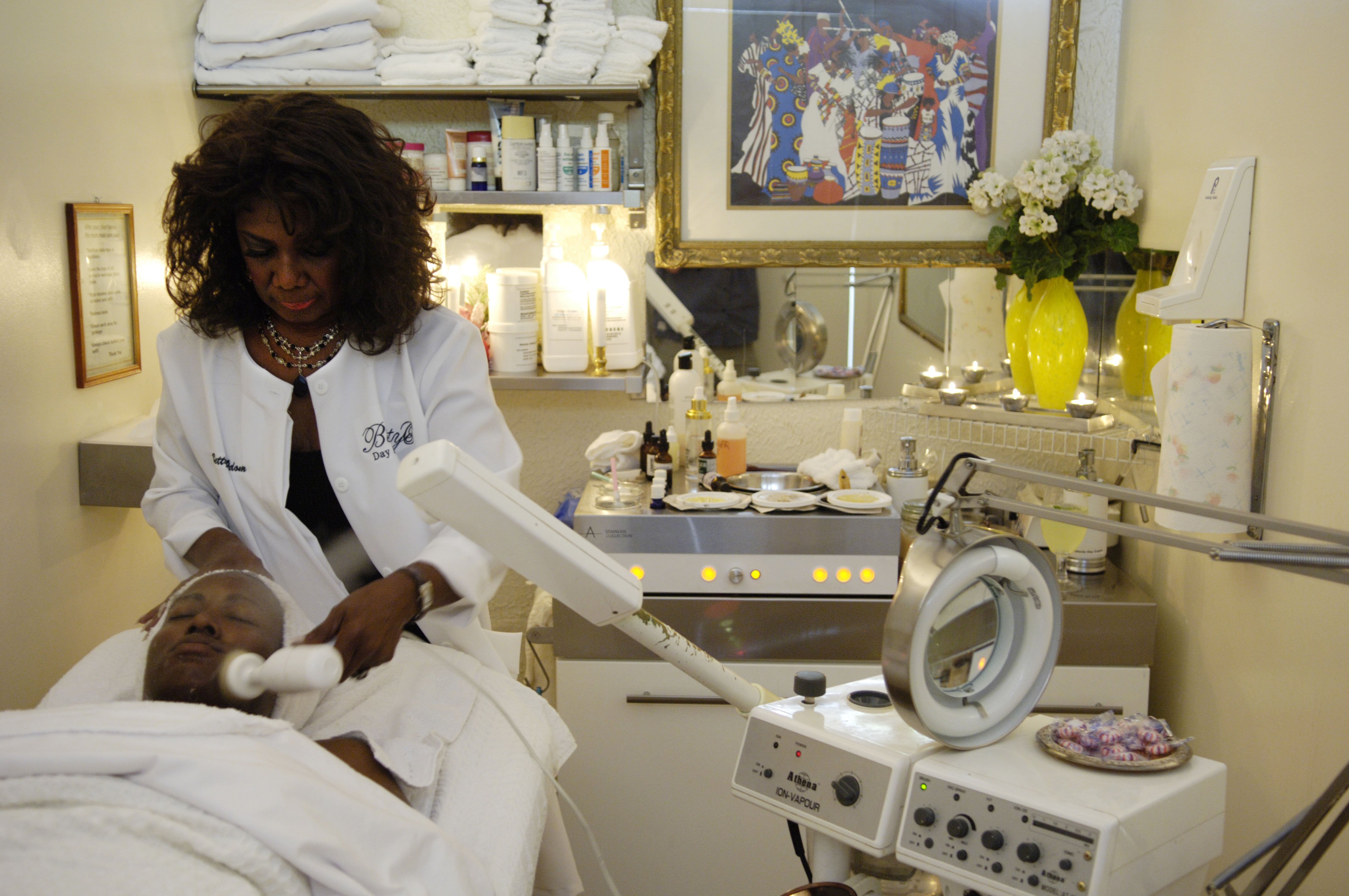
From there, armed with a financial investment from her ex-husband, Odom in 1980 opened her own salon, Odom’s Cosmetique, in the Harper Court complex at 5200 S. Harper Avenue in Hyde Park. In 1985, she renamed her salon Bettye O Day Spa.
“She was one of the first to have a spa for skins of color,” Odom’s daughter said. “There were not a lot of places for African American women to go for skin care. They would go to the salons, but there were a lot of people working at salons who had no idea, who were not educated with skin care, especially with African American skin.”
Odom took pride in educating Black people about skin care, her daughter said. That included developing a line of products, Skins of Colour, specifically for melanated skin.
“We don’t think about it now because everybody knows and goes and gets facials and so on, but she was a trailblazer,” said Nancy McKeever, 89, a longtime friend.
Odom often told others that “skin is the garment you wear your entire life,” her daughter said, adding that she considered her work a way to provide others with dignity, confidence and self-worth.
“Bettye O’s resembles a cozy Southern cottage more than it does a hospital, loaded down with silk flowers, wicker furniture, Ionic columns, gilt frames, twinkle lights and a bird chirping away in a cage,” wrote the Tribune’s Emily Nunn in 2004. Odom “runs the plan with the good manners of a Southerner and the charming insouciance of a Parisian.”
Odom herself performed spa services until November 2024, and she remained actively involved after that point in the spa, which her daughter now manages.
Dating to the 1960s, Odom was part of the civil rights movement, offering nursing services during Chicago Freedom Movement marches. She appears in the 2018 documentary “King in the Wilderness,” marching alongside Martin Luther King Jr. and wearing a riding hat, she told her family, to protect her head from any projectiles thrown.
“She was forward-thinking and loving, caring and so open to new ideas and to everyone,” McKeever said. “She took in everybody. You’d go to her house at Thanksgiving, and she’d have all the people who had no place to go. I think she saw the good in all of us and maybe in people who didn’t even see it in themselves.”
Outside of work, Odom had been a member of the Don Nash Community Center Park in South Shore since the late 1960s, and she both served on the facility’s board and swam there each weekday. She also taught other seniors there how to swim.
Odom often lectured high school students about careers, self-motivation and confidence, and she was a frequent traveler, eventually visiting all seven continents.
Odom authored two books: a 2003 self-care book, “Bettye Odom: Face to Face,” and a 2006 fiction book, “Colored Grits: Colored Girls Raised in the South,” which explores the lives, experiences and relationships of Black women growing up in the South.
Odom was divorced from Herbert Odom, a prominent Black South Side dentist and amateur boxer. He died in 2005. In addition to her daughter, Odom is survived by a stepdaughter, Kyle Odom.
Odom chose to donate her body to science, her daughter said. There were no services.
Bob Goldsborough is a freelance reporter.