

There’s growing community resistance against a hyperscale data center project in the village of Grayslake — what could be the largest single development in Lake County’s history — but with work already underway on the multi-billion-dollar campus, officials do not seem likely to change course.
Known as T5 @ Chicago IV, if fully built out, the campus would bring more than 10 million square feet of data center space to the village’s “central range,” a region of farmland Grayslake has envisioned for development going back decades.
But as the second largest data center project in Illinois, T5 has caused a stir among both residents who feel blindsided by the development and a newly formed community organization born from a growing resistance to data centers.
T5 Data Centers CEO Pete Marin previously indicated the data center campus could include up to 20 buildings, with the first going up as soon as 2027, with a full build-out as early as 2029. Mayor Elizabeth Davies and Marin previously gave varying estimates for the cost of the full buildout; Davies said about $8.5 billion, but Marin estimated it could be as much as $12 billion to $18 billion.
He said the campus will have 1.2 gigawatts of leasable power. For reference, according to numbers from the U.S. Energy Information Administration, the average residential customer needs about 1,200 watts; 1.2 gigawatts could power about a million households.
T5 would be the second-largest data center project in the state. A recently approved 795-acre data center in Joliet would consume 1.8 gigawatts of energy, enough for all Chicago households according to a developer representative.

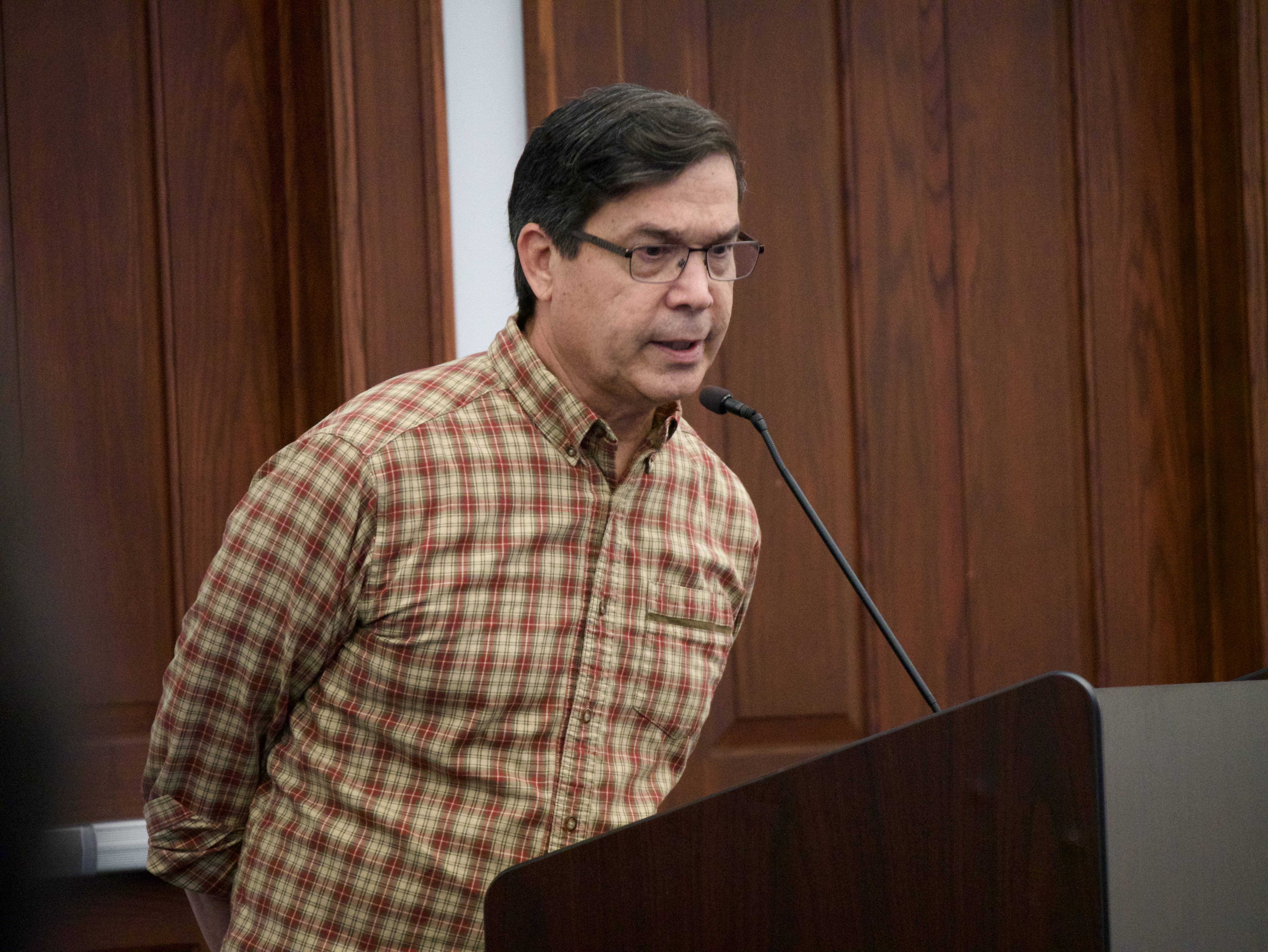
On Tuesday, the Grayslake Village Board meeting brought out an unusually large number of people, as it had last month, with residents voicing both their concerns and outright opposition to the data center, even as construction moves forward.
A common sentiment voiced by many speakers is how sudden it all seems. Many learned about T5’s existence only after the data center project had been approved. Mass grading for the initial 135 acres of the property began in February.
Davies is actually inheriting the development issues from former Mayor Rhett Taylor, who ended his tenure in April 2025 after choosing not to run for reelection. But she’s been a Grayslake trustee since 2014, and spoke at length in support of the project after Tuesday’s meeting.
Davies said the village has been “very transparent,” and “met all requirements” in regards to communications and open meetings, but acknowledged “how people get their information today varies.”
“The tax benefit is so tremendous that we were very, very open about it,” she said.
Additionally, Davies said the property was set up for such a purpose years ago, meaning the project was able to move forward quicker.
Back in 2009, the village approved Cornerstone of Grayslake, a 640-acre business park meant to incorporate “light industrial, research and development, office retail and residential,” according to the village website.
According to village documents going back to Nov. 14, 2024 — when the proposed T5 development was about 225 acres total between two properties — only minor planning steps were required to accommodate the data center campus.
That speed has left some residents concerned. During public comments, a general sentiment emerged: Given the scale of the project, where were the newsletters, public notifications and opportunities for feedback leading up to approvals?
In a statement, Jess Ortiz, a member of the newly created Lake County Data Center Opposition Coalition, expressed a view hinted at by some comments shared Tuesday.
“I think the Grayslake Village Board doesn’t know what they approved,” she said. “Either they’re being lied to by T5, or they’re all lying to us. I hope they listen to the community and remember who they’re supposed to serve.”
Michael Smith, a resident of North Barrington and a fellow member of the new coalition, said they were looking at “every avenue” to stop the Grayslake data center.
As he framed it, T5 is building a power-hungry data center, in line with similar projects in the region that would strain the state’s power grid and hit everyone in their electric bills. During public comments, he criticized the board.
“I think the board failed to really be in good faith, transparent and communicate with the village of Grayslake and the surrounding communities that this was coming,” Smith said.
Kathryn Ross, a Lake County resident, was also critical of what she perceives to be poor transparency and communication. She called for additional environmental impact studies to get a full understanding of the consequences for the community.
‘Already vetted’
The property had been open farmland owned by the Alter family, which also owns the Chicago Sky Women’s National Basketball Association team. The land is within the broader “central range,” an area in the southern portion of Grayslake that has been envisioned for development going back decades.
The village has been “setting the table” for a development like T5 for years, Davies previously said, working to improve infrastructure in the central range, such as building a new water tower and helping expand Peterson Road. After the arrival of Medline just a few years ago, the “coal cart in the mine” began to move, she said.
If fully built out, T5 will bring 1,500 permanent positions, she said, as well as hundreds of construction and trade jobs during development. Even after construction, the data center will create new jobs in the area to support the campus, such as HVAC.
According to Davies, a “conservative estimate” is $300 million over 20 years in tax revenue for all the local taxing bodies, including the village. All this without having to give tax incentives to the developer or sign any nondisclosure agreements, she said — a FOIA request for any NDAs with the developers or operators of T5 came up empty. There will also be connection fees for water and sewer, although those will be comparatively small.
This is all while the data center will have minimal impact on roads and traffic, she said, a constant concern for any new development.
While the village is “happy” to listen to input from residents, many of their “fears and concerns are things that we’ve really already vetted,” she argues.
A common issue in conversations about data centers is water usage. The Lawrence Berkeley National Laboratory estimated that in 2023, data centers across the country consumed 17 billion gallons of water per year for cooling, and projects that those figures could double or quadruple by 2028.
Davies argued T5’s design sidesteps that by using air-cooled chillers. Once filled with water, it doesn’t need to be constantly refilled and so it won’t consume much water, she said.
But air cooling is more power-hungry, a representative with Alliance for the Great Lakes previously said, simply moving water consumption to the power plant generating the energy. According to the Lawrence Berkeley National Lab report, the indirect water footprint of the country’s data centers is nearly 800 billion liters per year.