

Shorn of the stars and gimmicks that undermined its wacky Broadway premiere, Amy Herzog’s taut version of Henrik Ibsen’s “An Enemy of the People” sits beautifully in TimeLine Theatre’s brand new black-box theater complex in Uptown.
Indeed, director Ron OJ Parson’s fast-moving, high-stakes production emphasizes all of the qualities that have led this bold, 40-year-old company to this affirmative new home: Its stellar, ensemble-based, Chicago-style acting, its clarity of purpose, respect for an audience, unpretentiousness and deep commitment to truth.
Aside from the considerable pleasure of seeing an earnest Chicago company that I’ve watched strive for decades for a theater of its own, this rich production would stand out regardless of the celebratory surroundings.
For those of us who saw the wildly uneven 2024 Broadway version, it’s as if the Herzog adaptation finally gets the chance to reveal itself as both a formidably compelling new translation and a clear-eyed look at how the clash between politicians, journalists, business interests and whistleblowers in Norway in 1882 still resonates, especially in a city where utilities remain profoundly political.
“An Enemy of the People” is not the flashiest of the Ibsen dramas and, in the wrong hands, this story of a doctor who figures out that the lucrative but contaminated town spa will lead to illness or death can come off as a predictable moral melodrama — with the righteous medic fighting to get the word out as self-serving business and publishing sectors move to stop him from ruining their livelihoods, a group that includes the town mayor, who just happens to be the doctor’s power-loving brother.
That is indeed the basic dramatic action here and, over the years, moral crusaders have found resonance in this play whenever those in positions of power have lacked the courage or the willingness to subsume personal interest to do the right thing.
The COVID-19 crisis is just one salient example. As, of course, are any number of corporate denials or minimizations of situations that can harm people: the groundwater contamination that sparked the 2000 movie “Erin Brockovich” is another scenario that comes to mind, with the various issues involving environmental pollution within the Pilsen industrial enclave adding local resonance.
But Ibsen was a smart enough writer to know that the actual drama lay in how empathetically he depicted the soul-sucking process of moral compromise; if this Dr. Thomas Stockmann is merely fighting against monsters, the play is uninteresting.
Herzog’s unfussy adaptation clearly understands that, especially in its depiction of a crusading newspaper editor who is very much on board with bringing the facts to the people until he slowly realizes that the price he will have to pay might well include the end of all he holds dear. People have to make these kinds of relative choices — is the juice worth the squeeze? — every day, and they are complicated often by their not knowing whether they are dealing with a truth-telling whistleblower or an over-exaggerating crank whose agenda may not be as pure as it seems. And, of course, people’s livelihoods matter.
Such are the way humans in local politics operate as the great Norwegian scribe so richly understood.
Herzog makes this feel like a contemporary script even though she maintains the Norwegian setting and period. Parson, long known for his obsession with pacing, treats the piece as whip-fast realism for the most part, which is what it needs, but with a subtle morphing into expressionism as the situation, and Stockmann himself, devolve.
The best way I can explain the vibe here is to say that you watching something that moves with Aaron Sorkin-like currency but is underpinned by the old-school honesty and vulnerability we associate with top-tier Chicago theater.
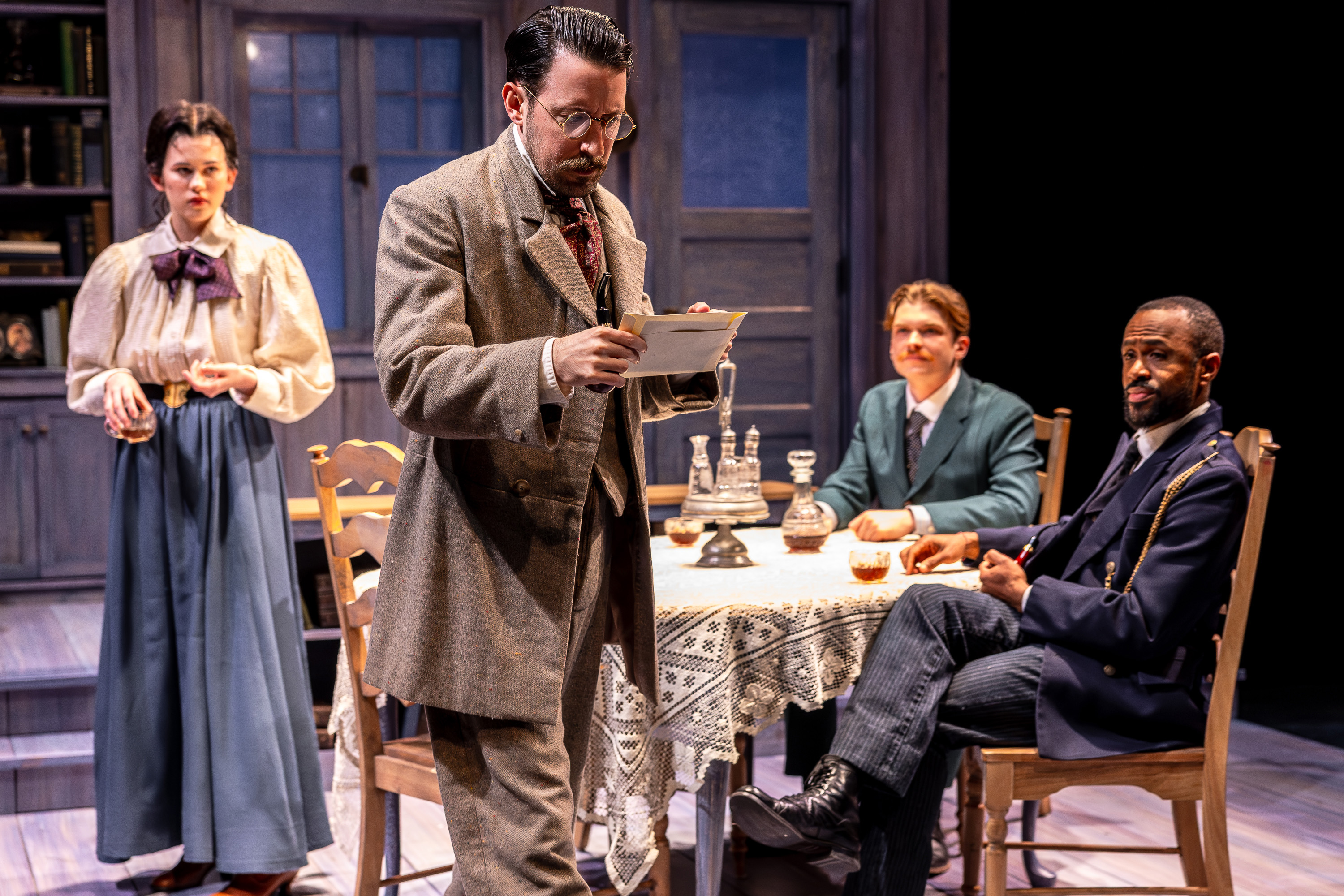
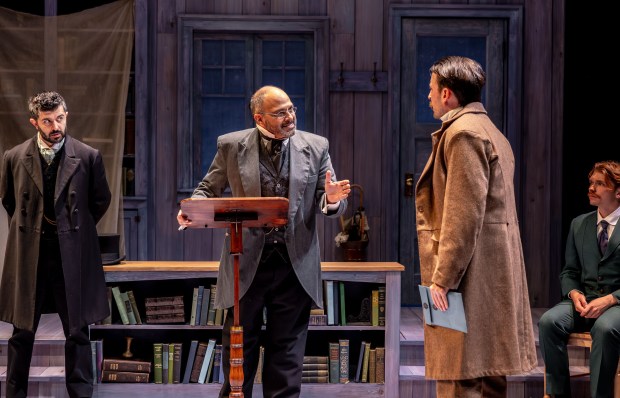
All of the cast is excellent, which I know can be a toss off for critics to say, but it happens to be true in this instance because of the directorial focus on ensemble/ (Parson honed this skill directing August Wilson plays.)
Will Allan’s Stockmann is just underplayed enough to calm any hysteria and is all the more moving and potent for that. Grayson Kennedy and Anish Jethmalani play characters who appear to be disappointing themselves most of all, which is just how it should be, and Behzad Dabu, who plays the principal mayoral antagonist, is strikingly multi-layered. Campbell Krausen, a talented newcomer to this company who plays Petra, the spokesperson of the regular folks in many ways and also the embodiment of the promise of a younger generation, is both crisp and alive in the moment. You get the sense the Petra will change all of this one day, unless she too is seduced by power. You really don’t know. You really should not know.
https://bancodeprofissionais.com/2026/05/15/inside-new-timeline-theatre/
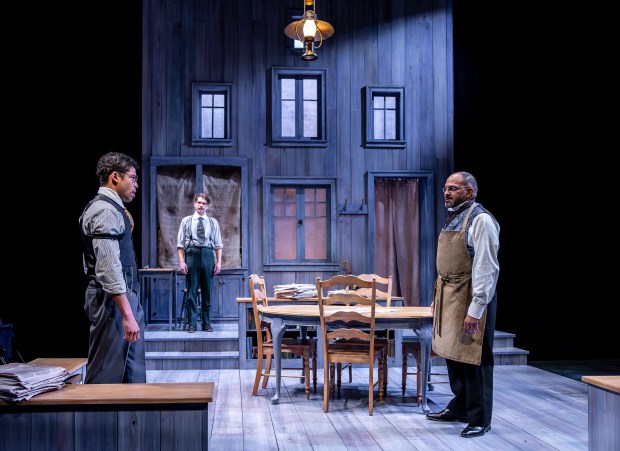
TimeLine’s comfortable new space is a traditional black box and designer John Culbert’s angular and evocative setting sits in its center, putting the characters under the microscope. Parson also has figured out immediately that audience interaction is going to work very well in this theater and he gradually indicts the whole community, revealing once again how the courageous and far-sighted find themselves spurned, squelched and spit out to where they can do nothing but watch.
Chris Jones is a Tribune critic
cjones5@chicagotribune.com
Review: “An Enemy of the People” (4 stars)
When: Through June 14
Where: TimeLine Theatre, 5035 N. Broadway
Running time: 2 hours
Tickets: $62-$95 at 773-281-8463 and timelinetheatre.com