
Chicago has always been many things at once.
But if we ask what will ultimately define Chicago in 2050, the answer may be simpler and more powerful than we think: culture. Culture is our North Star. It shapes how the city grows, how we welcome the world and how we understand ourselves.
Cities already compete on identity. They compete on the stories they tell, the experiences they offer and the sense of belonging they create for residents and visitors alike. In the decades ahead, competition will intensify. Cities that succeed will be places that feel alive, where creativity, authenticity and shared experiences shape everyday life.
Chicago begins with an extraordinary advantage. Few cities possess our cultural depth or history: Jazz and blues that reshaped American music. Theater stages where Broadway productions are born. Museums that rival any in the world. Architecture studied across continents. A symphony, ballet and opera among the great cultural institutions of the world. Neighborhood festivals that transform summer weekends into celebrations of culture and community.
These showcase the beating heart of our city. They’re why people come here. They’re why people stay. And they’re why Chicago continues to matter.
There’s a term for influence that doesn’t rely on force or economics. It’s called soft power: the ability to inspire, attract and influence through ideas. For generations, America’s greatest soft power has been culture — music, art, literature, film and the open exchange of ideas. Chicago has played an outsize role in that story.
As we look toward 2050, Chicago’s cultural depth is our great differentiator.
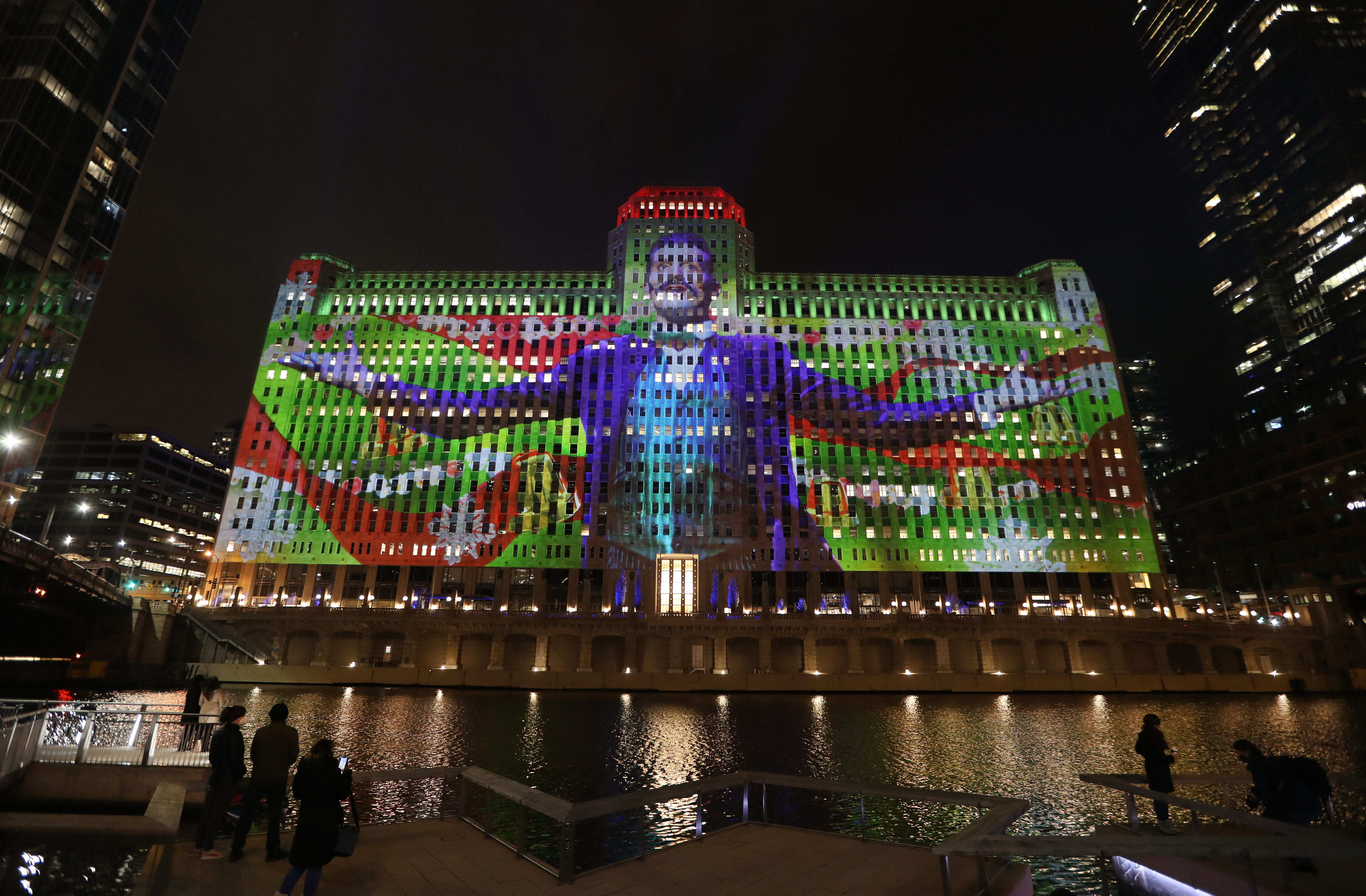
It’s walking along the Riverwalk on a summer evening or skating in Millennium Park on a winter day. It’s surveying the Midwest from atop the Willis Tower or standing under the Alexander Calder sculpture at Federal Plaza. It’s dining in one of 20 Michelin-starred restaurants or chowing down on street food. It’s standing in front of “Nighthawks” at the Art Institute or watching Art on the Mart.

Experiences can’t be manufactured overnight. They grow over generations.
Culture over the past century has lived primarily inside institutions: museums, theaters, concert halls and galleries. These institutions remain essential. Chicago of 2050 presents an opportunity to expand where culture lives so it becomes visible everywhere.
Imagine storefronts that double as galleries and retail experiences driven by art. Vacant office floors become artist studios and incubators. Dormant spaces are reclaimed as celebrations of life.
This essay is part of a series developed in collaboration with World Business Chicago wherein accomplished authors envision what Chicago could and should look like in 2050.
Even overlooked layers of the city can be transformed: The Pedway becomes a nighttime theater of immersive light and sound. A section of Lower Wacker Drive evolves into an urban festival where music, performance and projection art animate the space underneath the city. Beneath Block 37, the long-dormant Superstation becomes a hydroponic garden and food-to-table marketplace.
And what if the river were to become a stage? Floating farmers markets, a pop-up library and a performance barge move along the Chicago River, connecting neighborhoods. In spring and fall, festivals of light and sound illuminate bridges and buildings, extending the tourist season and filling the river with energy. Students flock to Chicago not only for its universities but also for the vibrancy of the city itself.
Two signature opportunities exemplify this transformation.
The first is something I call the Trove. For decades, more than 90% of the art owned by museums and cultural institutions has remained carefully protected in warehouses but rarely seen. The Trove would create publicly accessible art storage where collections from museums and institutions across Illinois can be experienced. Visitors would walk through floors of visible collections. Paintings, sculptures, artifacts and archives would reveal the extraordinary depth of cultural holdings that have long been out of sight.
The Trove would represent both discovery and invitation, a place that sparks curiosity and beckons visitors to explore the home institutions of those collections. Museums would recognize the Trove not as competition, but as a partner that elevates them all, a cultural crossroads where neighborhoods, cities and downtown connect — a shared asset.

A second signature moment I envision would unfold on LaSalle Street.
For generations, this street represented financial power. Now imagine the block leading to the Chicago Board of Trade Building as the center of a different kind of currency: a vaulted marketplace of creativity beneath a luminous glass canopy inspired by Milan’s Galleria. Weekend markets fill the center of the street with art, books, food, music and performance. Throughout the year, exhibitions, installations and cultural gatherings animate the corridor. What was once a financial district becomes a civic gathering place anchoring LaSalle’s transformation into a vibrant mixed-use neighborhood. Cafes spill onto sidewalks. Galleries and rehearsal rooms share blocks with restaurants and retailers. LaSalle is reborn. Energy breeds energy. Streets feel safer because they are alive.
Visitors who once came only for a convention or weekends would begin to imagine something more expansive. Suburbanites drawn by the vitality of the city would begin to see downtown increasingly as a place to live, not just visit. Downtown would become something larger than a business district. It would become the place where the city gathers: a shared civic stage for residents, visitors, artists and entrepreneurs.
A stadium for culture.
Chicago has always been a place where creativity and hard work meet. We invent things here. We make things here. We tell stories here. Culture gives those efforts meaning. It turns buildings into landmarks, neighborhoods into communities and public spaces into stages where life unfolds.
In the decades ahead, cities around the world will compete for talent, imagination and attention. The cities that rise will be those that feel alive. Chicago already knows how to do that. Because culture has always guided this city forward. It is our North Star. And in the end, culture is what makes Chicago, Chicago.
The only thing necessary to convert vision into mission is a shared commitment by business and philanthropic leaders, arts and cultural institutions, labor unions and elected officials to engage, embrace and collaborate. We have done this before and can do it again.
Lou Raizin is president and CEO of Broadway in Chicago.
Submit a letter, of no more than 400 words, to the editor here or email letters@chicagotribune.com.