
The skies over Lake Michigan over the last week or two have matched its vivid blue waters as boats from out-of-area harbors have been tracking lunker salmon. They’ve been quite successful, according to reports from charter boat captains.
Early May fishing on the Big Lake has been “exceptionally strong,” according to social media accounts. Charters and recreational anglers have been catching limits of coho salmon out of Waukegan Harbor and North Point Marina in Winthrop Harbor.
Netting coho, or silver salmon if one prefers, in late April and early May is fairly normal for Illinois waters, along with steelhead, brown and lake trout. Catches of the bigger, trophy-sized Chinook salmon, aka king salmon, come in the warmer months of July and August.
Salmon fishing on Lake Michigan is a significant economic contributor to Waukegan and Winthrop Harbor. Recreational angling contributes to communities by providing employment and tourism spending. The state has nearly 100 charter boat operators in Lake and Cook counties, according to the Illinois Department of Natural Resources.
One study by the Illinois-Indiana Sea Grant estimated the total economic impact of Lake Michigan recreational fishing in Illinois and Indiana at more than $44 million. Not considered is what on-shore anglers spend trying to catch salmon species, which are stocked by Great Lakes states, including the Illinois DNR, and non-profit fishing organizations.
Overall, the federal government estimates that the Great Lakes region has an economic impact from fishing and boating of $20 billion.
Illinois began stocking millions of salmon and trout species in the late 1960s in an attempt to cut down on alewives, a nuisance bait fish that salmon have taken a liking to. A bonus to adding predators to the lake to eat invasive alewives was the growth of the sport-fishing industry on Lake Michigan from Chicago north to Winthrop Harbor and into Wisconsin.
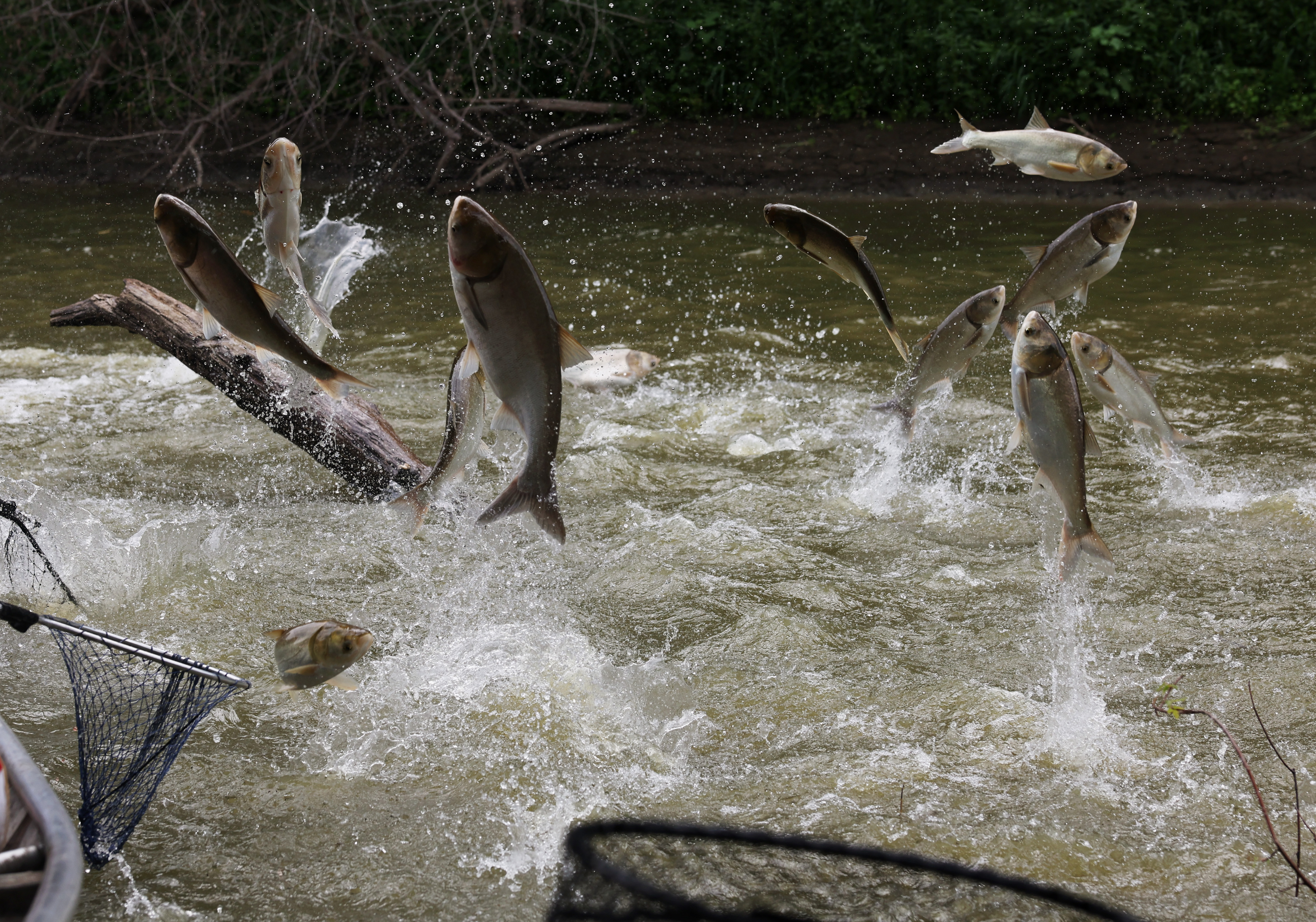
All that could be lost, like a coho throwing a lure in a spectacular jump, as federal bureaucrats have dallied over implementing a defensive line to keep invasive Asian carp — mainly silver carp — from entering Lake Michigan. Last month, the Army Corps of Engineers finally awarded the second contract.
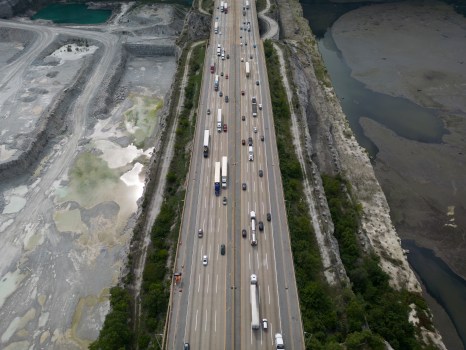
That will complete the first phase for a “pinch point” at the so-called Brandon Road Project, which is near a lock and dam on the Des Plaines River near the confluence of the Illinois River close to Joliet and Romeoville in Will County. The long-delayed plan is worth some $1.15 billion in government expenditures to block invasive carp and other aquatic nuisance species from moving upstream toward Lake Michigan and farther into all the Great Lakes.
Various engineering techniques, including an electric barrier and flushing stations to rid boats of invasive free riders, will be used to stem the carp tide. The ravenous carp are prolific in the Illinois River. Finding their way into Lake Michigan could decimate the salmon fishery, we have been warned.
Some may remember that a few years ago, the Illinois DNR tried to rebrand the invasive carp as copi, giving the species a more palatable monicker. The aim was for restaurants to prepare the fish for diners as is done in the Far East, where eating carp is considered a fine-dining experience.
About the same time the Army Corps awarded the contract, Adam Telle, assistant secretary of the Army for Civil Works, announced on April 9 that he was transferring lead management of the project from the Rock Island District to the Detroit District. At a dig in Illinois, in a news release, Telle noted Michigan “has been a model non-federal sponsor for this project to date.”
The move has bewildered Illinois officials who have pushed for years to finish the Brandon Road work. Telle claimed in a social media post that the management’s move to Michigan was because Illinois was “an unreliable partner, delinquent on its payments and real estate commitments.”
President Donald Trump and his minions, for some odd reason, don’t like Illinois. Or, perhaps it is Gov. JB Pritzker whom they don’t like (or fear).
The administration seems to be transferring the carp project to Michigan as punishment for all sorts of imagined slights that state officials and their fine residents have committed. Illinois officials are wary of the project’s move to the Detroit area, threatening to add to the numerous lawsuits that have been filed against the Trump administration.
Playing politics and expanding Trump’s feud with Pritzker is no way to control an ecological and economic threat to Lake Michigan and protect the Great Lakes from a devastating invasive species.
The Brandon Road project is in Illinois. It deserves to be managed from here, not Michigan.
Charles Selle is a former News-Sun reporter, political editor and editor. sellenews@gmail.com. X @sellenews